
Mid-July in North Myrtle Beach is the inflection point of the lawn and landscape season. The easy spring momentum is long gone, the relentless summer heat and humidity have been working on your turf and ornamentals for two months, and there is still half of the summer’s most demanding stretch ahead before the relief of September arrives. This is the moment when staying on top of the right things — and letting go of the wrong things — makes the largest difference in how your property looks when fall finally comes.
At KeckCo Turf and Ornamental Services, this checklist represents the mid-summer assessment we run through on every property we service throughout North Myrtle Beach and the Grand Strand. Use it as a systematic walkthrough of what needs attention right now, what can wait, and what warning signs require prompt action before small problems become expensive ones.
Turf Condition: What to Look for Now
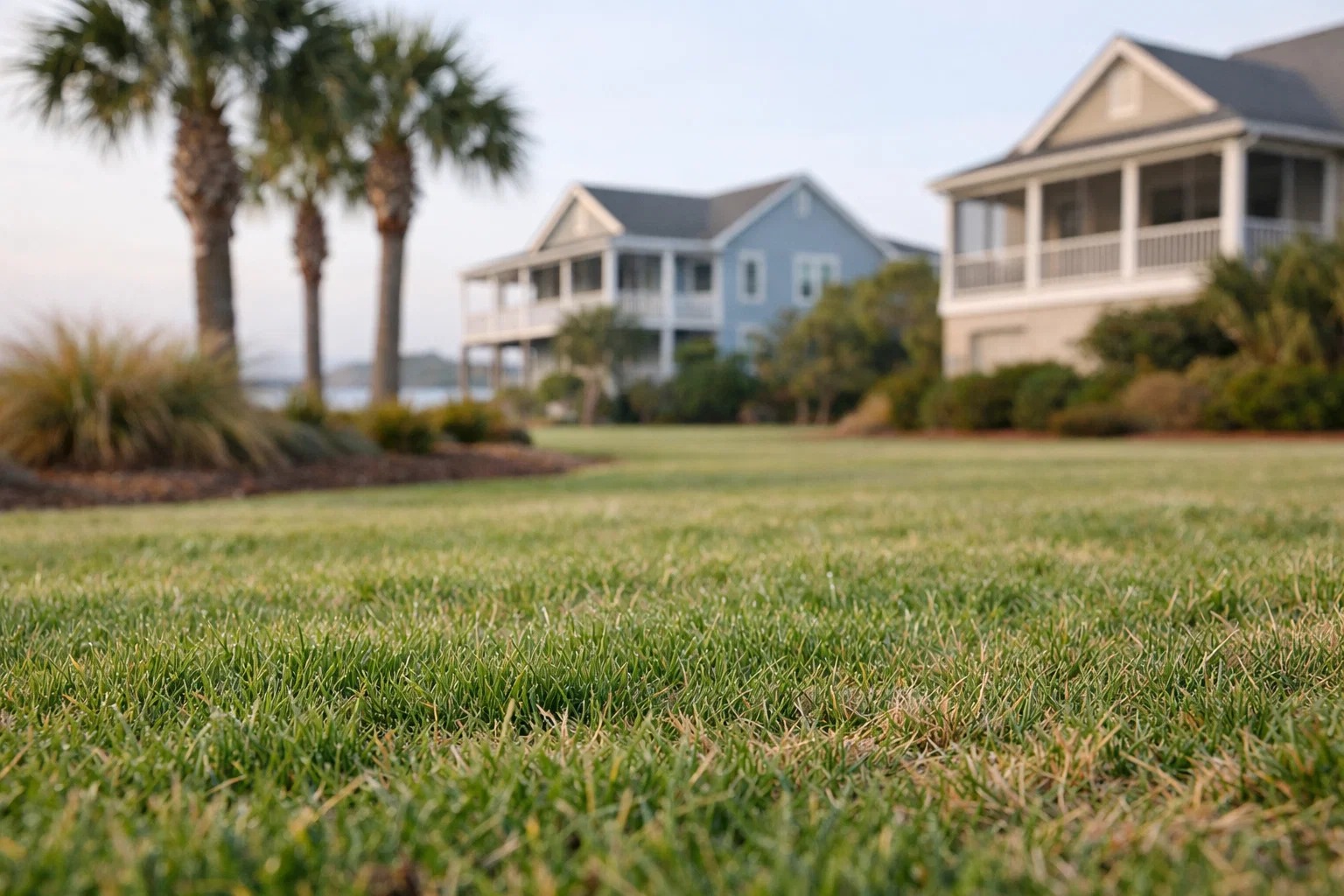
Start your mid-summer assessment by walking the entire lawn and looking for patterns rather than individual problem spots. Circular brown areas suggest fungal disease — brown patch in particular, which is at peak risk in North Myrtle Beach’s July humidity. Irregular yellow patches concentrated along the sunny margins of the lawn, especially near sidewalks, driveways, and hot western exposures, suggest chinch bug pressure. Large sections of turf that lift away from the soil or that feel spongy underfoot point toward grub activity. Uniform yellowing across a zone may indicate an irrigation problem specific to that area.
Identifying the pattern before treating anything is critical — the wrong treatment for the right symptoms is a very common and very expensive mistake in summer lawn care. A homeowner who applies fungicide to a chinch bug problem and irrigates a grub-damaged area has spent money without addressing either issue, while both problems continue expanding.
Irrigation: A Quick Mid-Summer Check
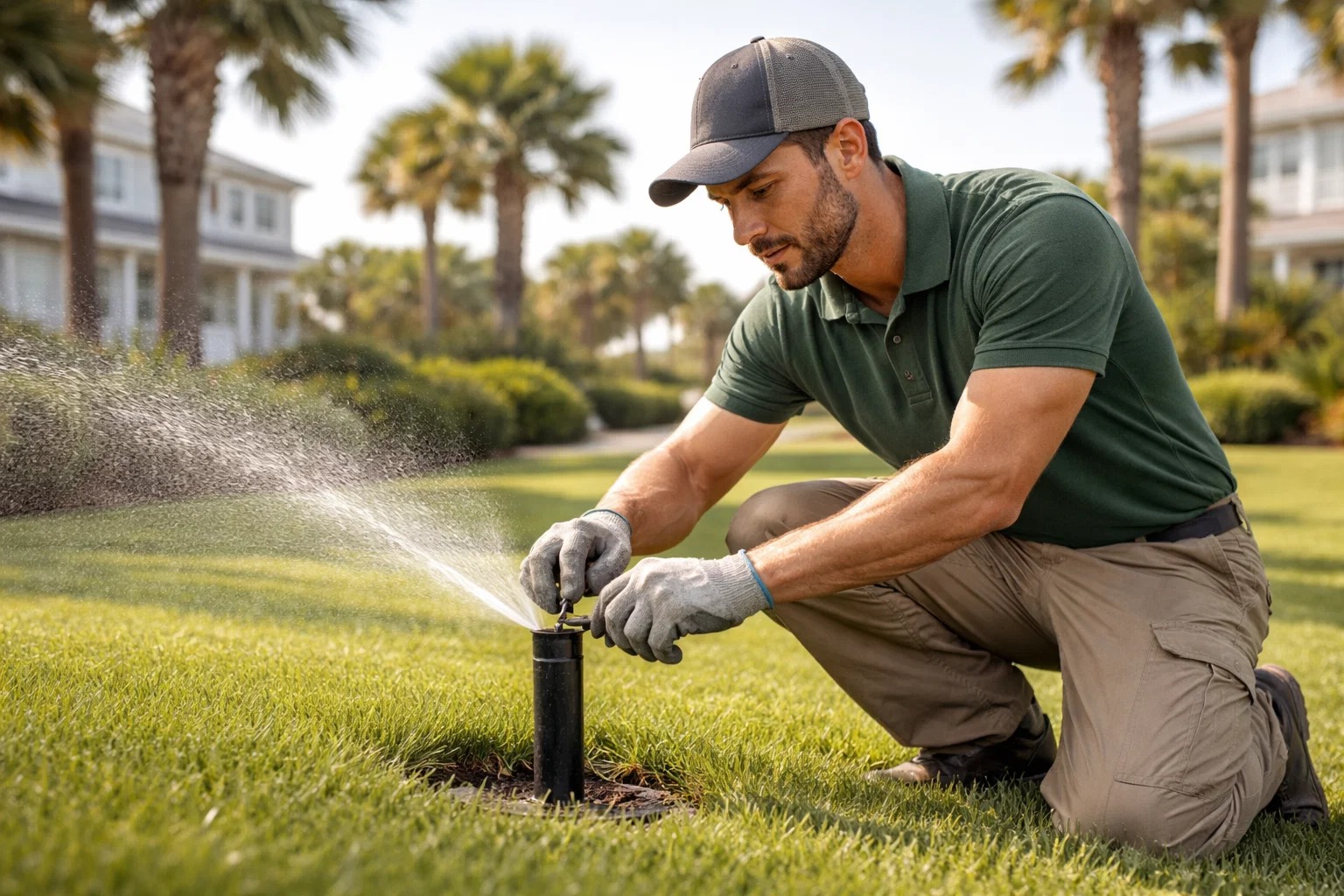
Run each irrigation zone manually and walk through it while it operates. Watch for heads that do not pop up fully, rotors that are not completing their full rotation arc, and spray patterns that have obvious gaps where no water is reaching. Do the tuna-can test in areas that look stressed despite regular watering — place several empty cans across a zone, run it for its normal cycle, and compare how much water each can catches. Significant variation in collection amounts means your coverage is uneven.
Check your controller schedule against July’s water demand. If you set it in May and have not adjusted it since, your run times are probably too short for peak summer conditions. Centipede grass in North Myrtle Beach sandy soil needs approximately 1–1.5 inches of water per week in July, delivered in 2–3 sessions. Calculate whether your current schedule is delivering that amount and adjust accordingly.
Pest Pressure: The July Threats to Watch
July on the Grand Strand brings three primary pest threats that all reach peak activity or critical treatment windows simultaneously. Chinch bugs are actively feeding in hot, sunny areas of the lawn — inspect the transition zone between healthy green grass and stressed yellow areas, specifically where the two meet. Part the grass at that boundary and look for tiny, fast-moving red nymphs or black-and-white adults. Grub egg-laying is at peak in early-to-mid July, making this the most effective preventive treatment window. And brown patch fungal pressure is highest during the current combination of heat and humidity.
In ornamental beds, inspect for scale insects on camellias, hollies, and magnolias, aphid colonies on new growth of any ornamental shrub, and whiteflies on gardenias and other susceptible species. Catching these infestations at the first sign of pressure allows treatment with lighter-impact options — insecticidal soap or horticultural oil in the morning before temperatures climb — rather than needing systemic insecticides when infestations have become established.
Ornamental Beds: What Mid-Summer Needs
Check mulch depth across all beds — it should be 2–3 inches deep. Mulch that has settled, compacted, or washed away to less than an inch is not providing meaningful moisture retention or temperature moderation. A mid-summer mulch refresh to beds that have thinned out is one of the highest-return maintenance activities of the season, immediately improving plant stress resistance without requiring any chemical input.
Deadhead any ornamentals that bloom on new growth — crape myrtles, butterfly weed, blue plumbago, lantana — to encourage continued bloom production through the summer. Remove any branches showing signs of disease or significant pest damage promptly to prevent spread. Avoid any significant pruning of established shrubs in mid-July heat — save structural and renovation pruning for late winter before spring growth begins.
Mowing: Are You Doing It Right for July?
Mid-summer mowing for centipede grass in North Myrtle Beach should maintain a height of 1.5 to 2 inches — not lower. Scalping centipede in summer heat removes the leaf canopy that shades the shallow root zone and soil surface, dramatically increasing moisture loss and heat stress. Mow every 7–10 days and never remove more than one-third of the blade height at any single cutting. If the lawn has gotten ahead of schedule and grown significantly beyond the target height, raise the deck and step it back down over multiple cuttings rather than scalping it in a single aggressive session.
Confirm your mower blade is sharp. A dull blade tears and shreds grass blades rather than cutting cleanly, leaving ragged edges that turn tan or white at the tip, are more susceptible to disease entry, and lose moisture faster than clean-cut blades. A blade sharpening mid-season takes 20 minutes and has a visible impact on how the lawn looks after each cut.
Storm Readiness in Peak Atlantic Hurricane Season
July marks the beginning of the peak of the Atlantic hurricane season, and North Myrtle Beach properties need to maintain landscape readiness for significant storm events through at least October. From a landscape perspective, storm readiness means: having trees assessed for dead, diseased, or structural risk branches before storm season; ensuring large ornamental shrubs are not so overgrown that they catch wind like sails; having storm drain and property drainage access points clear; and knowing your post-storm protocol for landscape recovery.
Proactive tree risk assessment is the most valuable storm-prep step. A dead branch or structurally compromised leader in a large live oak is a manageable professional pruning job under normal conditions — it becomes a potential emergency during a storm event, and a liability if it falls on a structure or vehicle. If you have not had your trees assessed by a qualified professional before this storm season, July is the month to do it.
Frequently Asked Questions
What are the most important things to do for my North Myrtle Beach lawn in mid-July?
The highest-priority mid-July actions are: confirm your irrigation schedule is appropriate for peak summer demand, inspect for chinch bug and brown patch activity in the turf, apply preventive grub treatment if not yet done this season, refresh mulch in ornamental beds, and assess any trees for storm-season risk branches. These five actions cover the most consequential risks for a North Myrtle Beach landscape in mid-summer.
How do I tell the difference between chinch bug damage and brown patch in my lawn?
Chinch bug damage typically appears as irregular yellow patches concentrated in the hottest, sunniest areas of the lawn — along sidewalks, in open full-sun areas, and near heat-reflecting surfaces. Brown patch appears as circular rings with a smoky outer edge, often with a slimy, water-soaked appearance at the base of affected blades in morning. Chinch bugs are a pest requiring insecticide; brown patch is a fungal disease requiring fungicide — the treatments are completely different.
Should I worry about lawn care during hurricane season?
Yes, in two ways: proactive preparation (tree assessment, clearing drainage paths, ensuring landscape plantings are not creating wind-catch hazards) before a storm, and responsive recovery (assessing damage, prioritizing safety, then addressing ornamental and turf damage) after one. KeckCo recommends a proactive pre-season tree assessment for all properties with significant mature trees before the height of hurricane season each year.
Is July too late to apply pre-emergent for summer weeds?
Yes — summer pre-emergent products targeting crabgrass and other summer annuals are most effective when applied in late February or early March in North Myrtle Beach, before soil temperatures reach the 55°F threshold for germination. By July, summer annual weeds have long since germinated and are actively growing. Post-emergent herbicide treatment is now the appropriate approach for summer weeds, with fall pre-emergent application coming in late September for winter annual weeds.
How often should my lawn be mowed in July in North Myrtle Beach?
Centipede grass growing at its summer rate in North Myrtle Beach typically needs mowing every 7–10 days to stay within the one-third rule that protects blade health. In periods of faster growth following significant rain events, a 7-day cycle may be appropriate. During dry, heat-stressed periods when growth slows, 10 days between cuts allows the canopy to provide more surface shading without significant overgrowth.
Does KeckCo offer a mid-summer service that covers all these checkpoints?
Yes. KeckCo Turf and Ornamental Services provides comprehensive seasonal lawn and landscape programs for North Myrtle Beach and Grand Strand properties that include mid-season assessment visits, pest monitoring, irrigation checks, and coordinated treatment scheduling across turf, ornamentals, and trees. Contact us to discuss a program that fits your property and schedule.
Mid-July is not the time to step back from your North Myrtle Beach lawn and landscape — it is the time to step up the attention, because the most consequential problems of the summer develop and spread during the next 6 weeks. The homeowners who do this checklist now, catch the problems it surfaces, and act on them promptly will have a dramatically different experience heading into fall than those who are still reacting to July’s damage in September.
Let KeckCo handle your mid-summer lawn and landscape needs
KeckCo Turf and Ornamental Services provides comprehensive seasonal lawn care, pest management, irrigation service, and ornamental care throughout North Myrtle Beach and the Grand Strand. Call us today to get on the schedule.