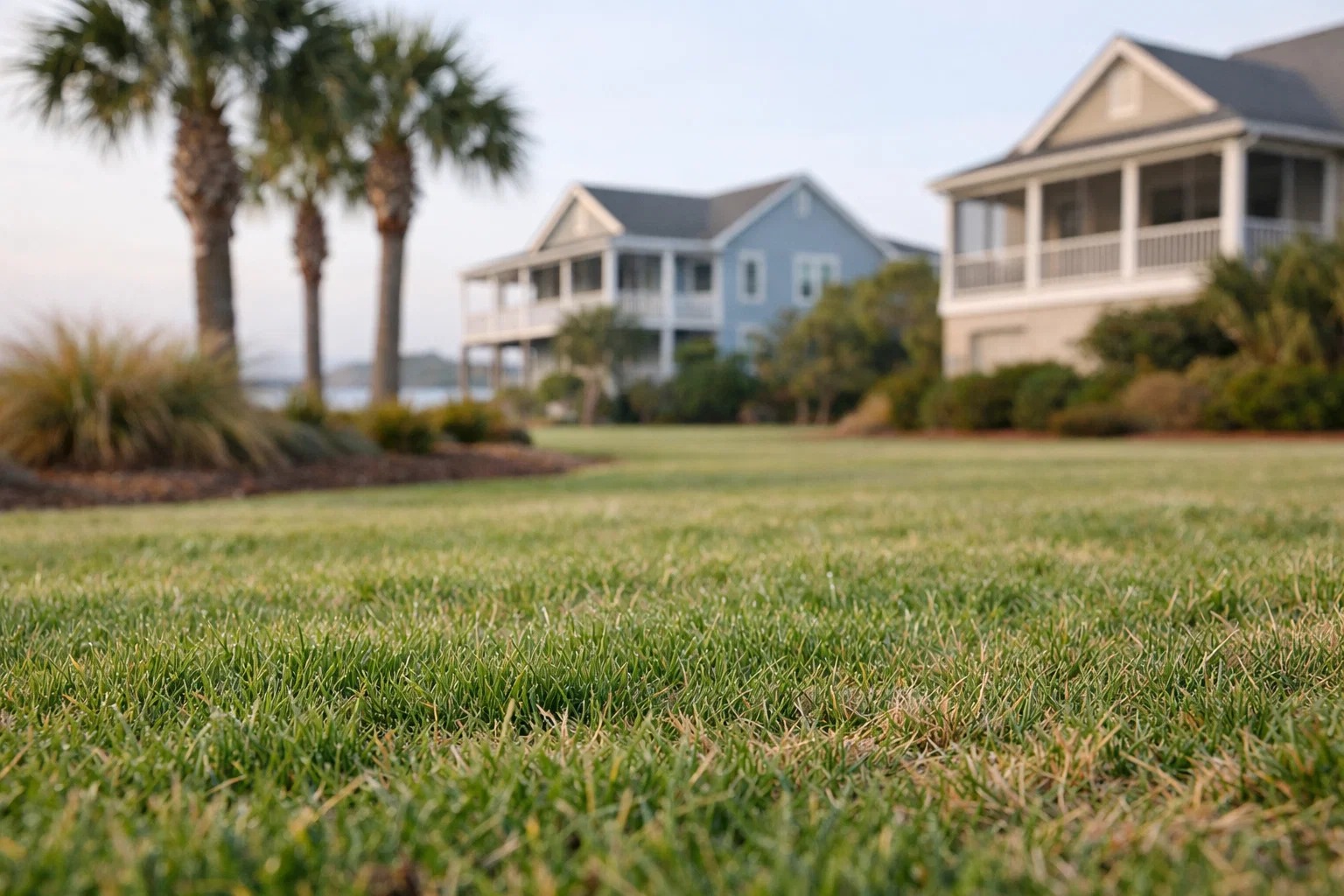

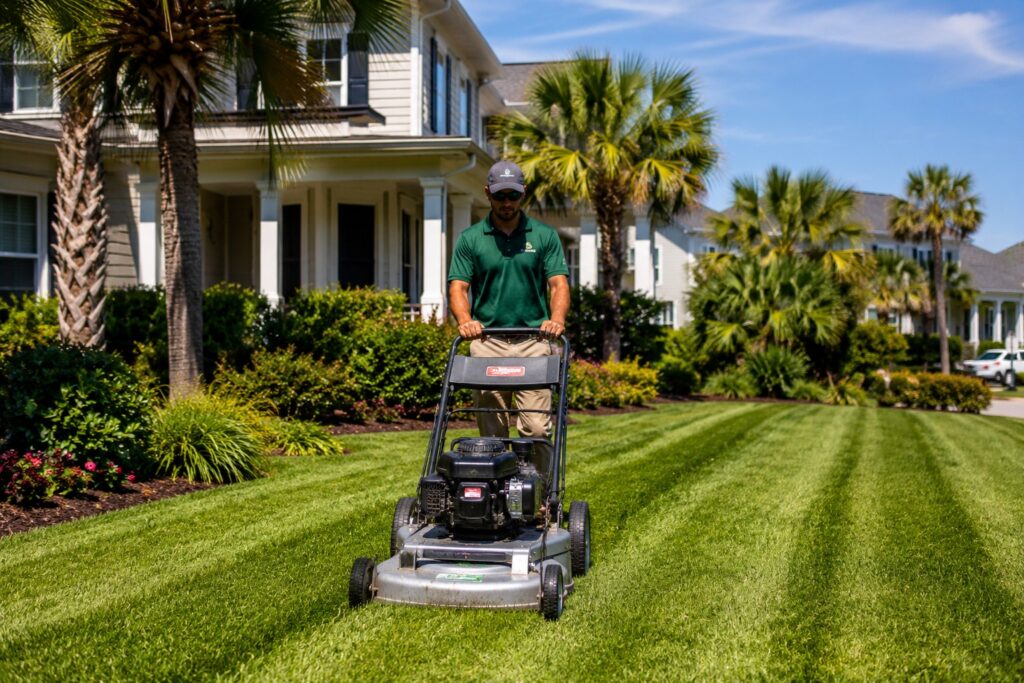
By the time July rolls around in North Myrtle Beach, most homeowners have already settled into a mowing routine — and that’s exactly the problem. The mowing habits that worked fine in April and May start working against your lawn once the coastal summer heat sets in. Centipede grass under stress from high temperatures, sandy soil, and salt-laden air reacts very differently to the mower than it does in cooler months, and a few common mistakes can turn a healthy lawn into a patchy, stressed-out one by August.
At KeckCo Turf and Ornamental Services, we see the same mowing-related damage every summer across North Myrtle Beach, Little River, and Myrtle Beach yards — and it’s almost always avoidable. Here’s what’s going wrong and how to fix it before the worst of the summer heat arrives.
Why summer mowing is different on coastal SC lawns
Centipede grass, the dominant turf type across most North Myrtle Beach yards, is a low-growing, slow-spreading grass that depends on a shallow but consistent root system. When summer temperatures climb into the 90s and humidity sits heavy along the coast, that root system is already working overtime just to keep the grass hydrated in sandy, fast-draining soil.
Mowing adds stress to that equation every single time the blade passes over the lawn. In spring, the grass recovers quickly. In peak summer heat, recovery slows down significantly, which means mowing mistakes that were minor in May can leave visible damage that lingers for weeks in July and August.
Mistake #1: Cutting centipede grass too short
This is the single most common mowing mistake we see in North Myrtle Beach yards. Centipede grass should be kept between 1.5 and 2 inches tall during summer — not the 1-inch “golf course” cut some homeowners assume looks neater. Scalping the lawn removes too much leaf surface, which limits photosynthesis right when the grass needs the most energy to survive heat stress.
A scalped lawn also exposes more bare soil to direct sun, which raises soil temperature and accelerates moisture loss — a serious problem in the sandy soil common throughout Horry County, which already drains faster than the clay-heavy soils found further inland.
Mistake #2: Mowing with dull blades in the heat
A dull mower blade tears grass instead of cutting it cleanly. In cooler months, the lawn shrugs this off. In July and August heat, those torn, ragged edges turn brown within a day or two and become entry points for fungal issues that thrive in coastal humidity.
Most homeowners sharpen their mower blade once a season, if at all. Through the heaviest mowing months, blades should be checked roughly every 20–25 hours of use. If you run a hand across a freshly cut lawn and the tips look gray or frayed rather than crisp, that’s a dull blade at work.
Mistake #3: Mowing at the wrong time of day
Mowing during the hottest part of the afternoon — typically 1 to 4 p.m. along the Grand Strand in summer — puts extra heat stress on grass that’s already working hard to manage moisture loss. Early evening mowing is also a mistake here, since cut grass left damp overnight in coastal humidity creates ideal conditions for fungal growth.
The better window is mid-morning, after the dew has burned off but before peak afternoon heat sets in, generally between 8 and 10:30 a.m. for most North Myrtle Beach properties.
How North Myrtle Beach conditions change the rules
Coastal conditions add a layer most national mowing advice doesn’t account for. Salt air carried in from the Atlantic can settle on grass blades, and mowing too aggressively right after a salty, windy stretch can compound stress on grass that’s already working to recover. Sandy soil throughout neighborhoods like Tilghman Estates and Barefoot Resort drains so quickly that mowed grass dries out faster than it would in heavier inland soils, which means timing mowing around irrigation cycles matters more here than in most regions.
The right summer mowing routine
Stick to the one-third rule: never remove more than one-third of the grass blade height in a single mow. For centipede grass kept at 1.5–2 inches, that means mowing before it reaches roughly 3 inches tall, which in peak summer growth often means weekly mowing rather than every-other-week.
1Mow mid-morning, after dew dries.
2Keep blades sharp and check every few weeks during heavy growth.
3Maintain a 1.5–2 inch cutting height — never shorter.
4Water the morning after mowing rather than right before.
Frequently Asked Questions
How short should I cut my centipede grass in summer?
Keep centipede grass between 1.5 and 2 inches tall during the hottest months in North Myrtle Beach. Cutting it shorter exposes the soil to more direct sun, increases moisture loss in our sandy soil, and slows the grass’s ability to recover from heat stress.
What time of day is best to mow in North Myrtle Beach during summer?
Mid-morning, roughly 8 to 10:30 a.m., is ideal. This avoids both the heaviest afternoon heat and the risk of leaving damp clippings overnight, which can encourage fungal issues in our humid coastal air.
How often should I mow my lawn in July and August?
Most North Myrtle Beach lawns need weekly mowing during peak summer growth to follow the one-third rule safely. Skipping weeks often forces a more aggressive cut later, which adds unnecessary stress to the grass.
Does salt air affect how I should mow my lawn?
Yes. After windy, salt-heavy stretches common along the Grand Strand, grass can already be under added stress. We recommend avoiding an aggressive cut immediately after these events and instead easing back into a normal mowing schedule over a few days.
Why does my lawn look worse a few days after mowing?
This is often a sign of either a dull mower blade tearing the grass or cutting the lawn too short for summer conditions. Both leave grass more vulnerable to browning and disease in coastal heat and humidity.
Should I bag my clippings or leave them on the lawn?
For most centipede lawns in North Myrtle Beach, leaving short clippings in place (grasscycling) returns nutrients and moisture to the soil, which is especially helpful in our fast-draining sandy ground. Bag clippings only when the lawn has grown excessively long between mows.
Does KeckCo offer regular lawn mowing and maintenance in North Myrtle Beach?
Yes, KeckCo provides ongoing lawn maintenance, including properly timed mowing, for residential and HOA properties throughout North Myrtle Beach, Little River, and Myrtle Beach. Call 843-273-0735 to discuss a seasonal maintenance plan.
Summer mowing mistakes are easy to make and easy to avoid once you understand how heat, sandy soil, and salt air change the rules for centipede grass along the Grand Strand. A little extra attention to height, blade sharpness, and timing now will keep your lawn healthier through the toughest months of the year.
Need a Hand With Your Summer Lawn Care?
KeckCo Turf and Ornamental Services has been caring for lawns across North Myrtle Beach, Little River, and the Grand Strand since 2006, led by golf course turf expertise you can trust.
📞 843-273-0735 🌐 keckcoturf.com