
If you walked out to your North Myrtle Beach lawn this week and found large tan or brown circles appearing seemingly overnight, you are likely looking at brown patch fungus — one of the most damaging and fastest-moving lawn diseases in coastal South Carolina. July’s combination of high humidity, overnight temperatures that stay above 70°F, and afternoon thunderstorms creates the exact conditions this fungus needs to spread across a yard within days.
At KeckCo Turf and Ornamental Services, we diagnose and treat brown patch throughout North Myrtle Beach, Little River, and Myrtle Beach every summer. Caught early, it is very treatable. Ignored, it can wipe out large sections of centipede or St. Augustine grass before August even arrives.
What Brown Patch Fungus Actually Is
Brown patch is caused by the soil fungus Rhizoctonia solani, which lives in most lawns year-round without causing any visible damage. The problem begins when conditions align in its favor — specifically warm nights, wet grass, and high humidity. Once active, it attacks the leaf blades and sheaths of warm-season grasses, cutting off moisture and nutrient flow until the affected turf dies.
Centipede grass, St. Augustine, and zoysiagrass are all susceptible. Centipede — the dominant grass type across most North Myrtle Beach residential properties — can be especially vulnerable during July and August. The fungus does not typically kill the root system outright, which is why many lawns recover once temperatures drop. However, severe infections can thin a lawn enough that weeds take hold before the grass fills back in.
How to Spot It Before It Spreads
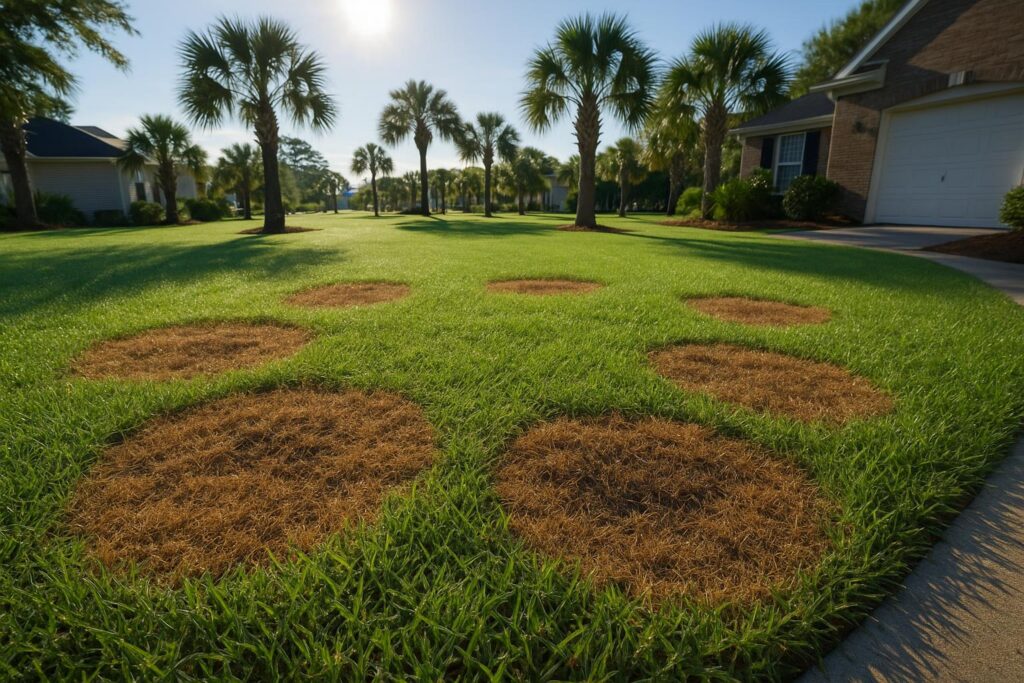
The classic sign of brown patch is a roughly circular area of tan or light brown grass, ranging from a few inches to several feet in diameter. On close inspection, the grass blades in the affected zone look water-soaked or slimy at the base before they brown fully. A dark, smoky ring sometimes appears at the outer edge in early morning when dew is still on the grass — called the “smoke ring,” it is one of the most reliable visual identifiers of active brown patch.
Do not confuse brown patch with drought stress, which causes more uniform, non-circular browning across the lawn. Brown patch creates distinct rings or circular patterns with relatively healthy grass immediately outside the affected zone. You may also notice the affected blades pull away from the soil easily at the base — this does not happen with drought stress.
Why July Is Peak Season in North Myrtle Beach
Brown patch needs three things to thrive: air temperatures between 75°F and 90°F, nighttime temperatures consistently above 70°F, and moisture on grass blades for extended periods. North Myrtle Beach in July delivers all three without fail. Daytime highs routinely reach 92–96°F, afternoon thunderstorms wet the lawn, and overnight lows rarely fall below 74°F — leaving grass blades wet through the night and into morning before the sun has a chance to dry them.
Sandy coastal soil can complicate matters further. While it generally drains quickly, irrigation systems running overnight can keep turf blades saturated long enough for the fungus to spread. Properties in lower-lying areas near the Intracoastal Waterway or retention ponds face additional humidity that elevates risk.
How to Treat Brown Patch the Right Way
1Confirm the diagnosis. Before purchasing any fungicide, confirm you are dealing with brown patch and not another issue. Check for the circular pattern, smoky ring, and rotted blade bases as described above.
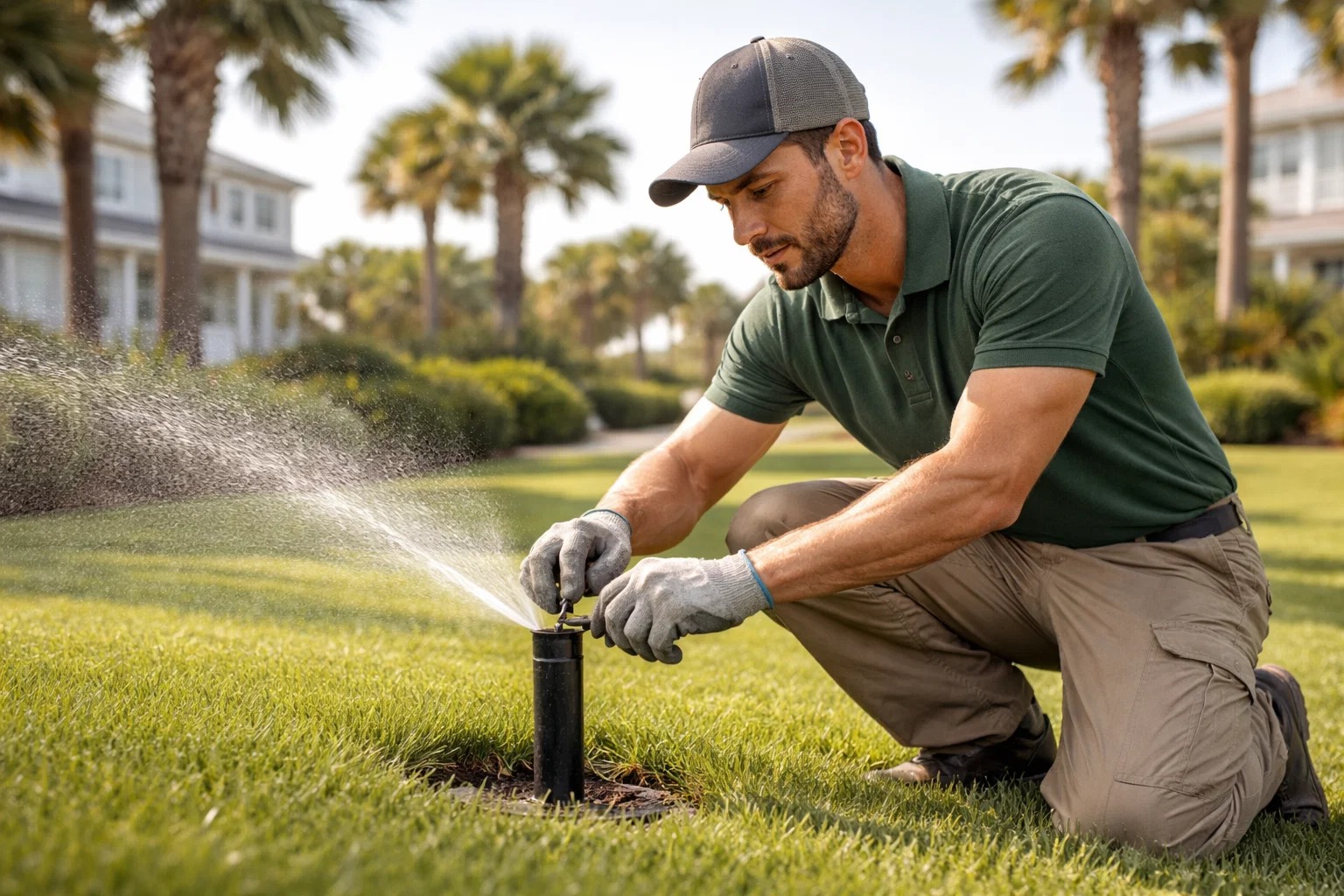
2Apply a systemic fungicide. Products containing azoxystrobin, propiconazole, or myclobutanil are effective against Rhizoctonia. Apply in early morning when temperatures are lower and wind is calm. Avoid applying before heavy rain, which will wash the product away before it absorbs.
3Adjust your watering schedule immediately. Switch irrigation to early morning (5–7 AM) so grass blades dry out during the day. Eliminate any evening or overnight watering while the fungus is active.
4Do not fertilize with nitrogen. Nitrogen flushes new, tender growth that the fungus feeds on aggressively. Hold any nitrogen fertilizer until the infection is fully under control.
5Mow carefully. Keep mower blades clean and avoid mowing through the affected area and then across the rest of the lawn — you will spread fungal spores. Bag clippings rather than mulching them during active infections.
Prevention Strategies That Actually Work
The most effective prevention for brown patch in North Myrtle Beach is irrigation management. Running your sprinklers in early morning — not evening — allows grass blades to dry before nightfall, dramatically reducing the window in which the fungus can establish. If your irrigation system runs on a fixed evening schedule, now is the time to change it.
Soil aeration in spring improves drainage and reduces the compaction that keeps moisture near the surface too long. Balanced fertilization — avoiding excess nitrogen in summer — keeps growth at a steady rate rather than pushing the tender flushes that brown patch exploits. For properties with a history of summer fungus, a preventive fungicide application in late June can stop the cycle before it starts.
Mistakes That Make Brown Patch Worse
The single biggest mistake homeowners make after spotting brown patch is watering more, assuming the brown color means drought stress. More water during an active fungal infection accelerates spread and deepens damage. Similarly, applying nitrogen fertilizer to “green up” the affected area feeds the disease rather than the grass.
Delaying treatment is the other common mistake. Brown patch can double in size within 48 hours under ideal conditions. What looks like a small, manageable circle on Monday can become a 10-foot dead zone by Thursday. If you see the classic signs, act the same day.
Frequently Asked Questions
Will brown patch kill my lawn permanently?
Brown patch typically kills the leaf blades and surface growth without destroying the root system, so most lawns recover with proper treatment and time. However, severe or repeated infections can thin the turf enough that weeds fill the gaps before the grass recovers, requiring patching or sodding in affected areas.
How fast does brown patch spread in North Myrtle Beach?
In July’s humid conditions, brown patch can spread aggressively — a circle that is 2 feet in diameter on Monday can reach 8–10 feet by the end of the week if left untreated and irrigation is not adjusted. Early action is critical.
Can I treat brown patch with a store-bought fungicide?
Mild infections can respond to consumer-grade fungicides containing propiconazole or azoxystrobin. However, severe infections, recurring problems, or large affected areas generally require professional-strength products and a proper program to prevent resistance from building up.
Is brown patch contagious to neighboring yards?
Brown patch fungus spreads through spores that can travel on mower blades, foot traffic, water runoff, and wind. Clean your mower deck after mowing through an infected area and avoid tracking through the affected circle and then across healthy turf.
When is brown patch season in North Myrtle Beach?
Peak brown patch season on the Grand Strand runs from late June through September, with July and August being the highest-risk months due to consistent overnight temperatures above 70°F and daily humidity levels that keep grass blades wet for extended periods.
Does KeckCo treat brown patch fungus?
Yes. KeckCo Turf and Ornamental Services provides brown patch diagnosis and professional fungicide treatment throughout North Myrtle Beach, Little River, and Myrtle Beach. We can also set up a preventive treatment schedule for properties with a history of summer fungal disease.
Should I reseed or resod after brown patch damage?
If the infection is caught early and the root system is mostly intact, the grass will typically fill back in on its own once conditions improve and treatment is applied. For large dead areas where roots were heavily damaged, patching with sod is usually faster and more reliable than seeding in coastal SC’s summer conditions.
Brown patch fungus rewards quick action and punishes hesitation. If you are seeing circular brown areas appearing in your North Myrtle Beach yard this summer, trust what you are seeing — adjusting your irrigation timing and getting the right fungicide applied quickly can mean the difference between a two-week recovery and a half-dead lawn heading into fall.
Dealing with brown spots or lawn disease in North Myrtle Beach?
KeckCo Turf and Ornamental Services diagnoses and treats lawn fungus throughout the Grand Strand. Don’t let brown patch spread — call us today.