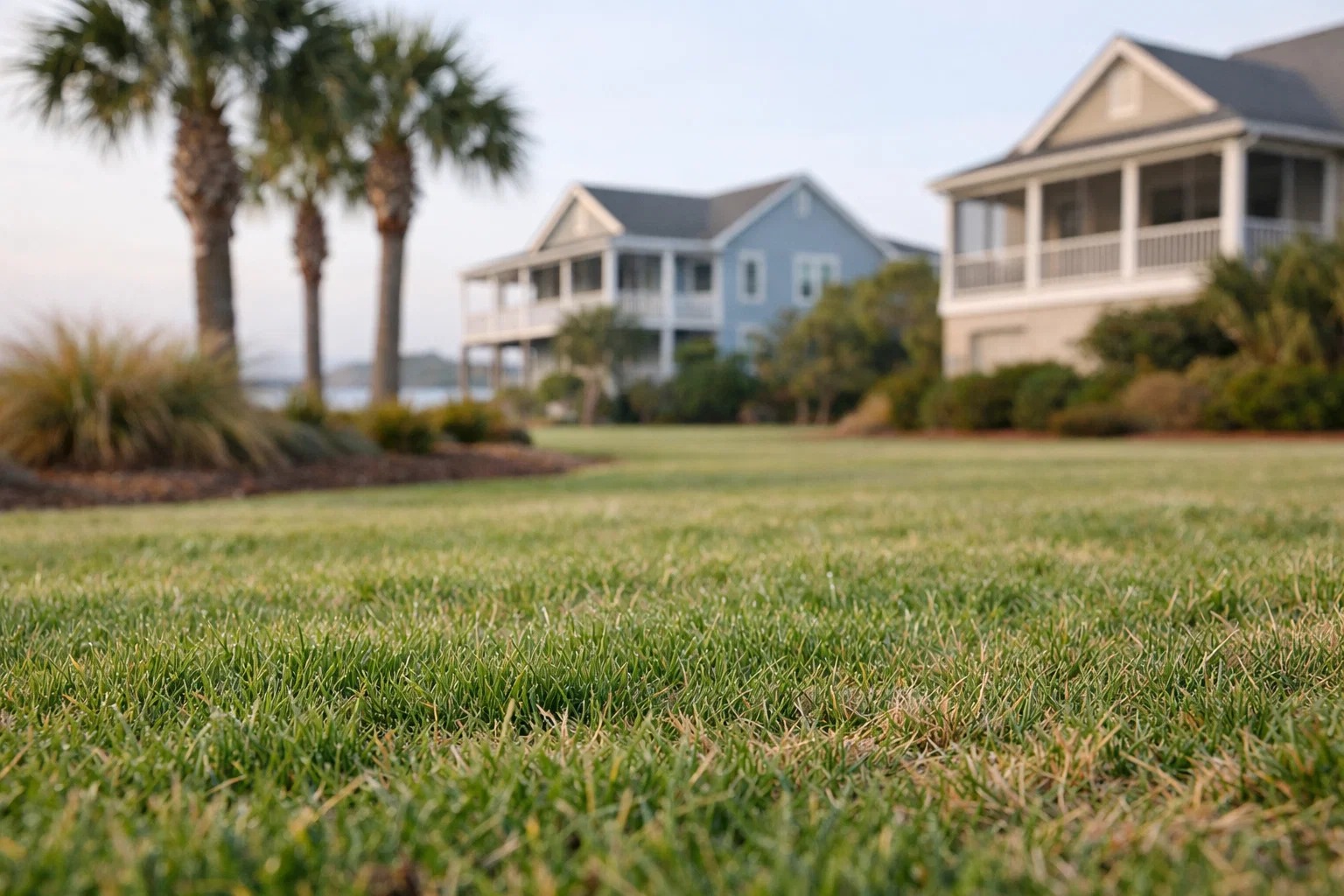

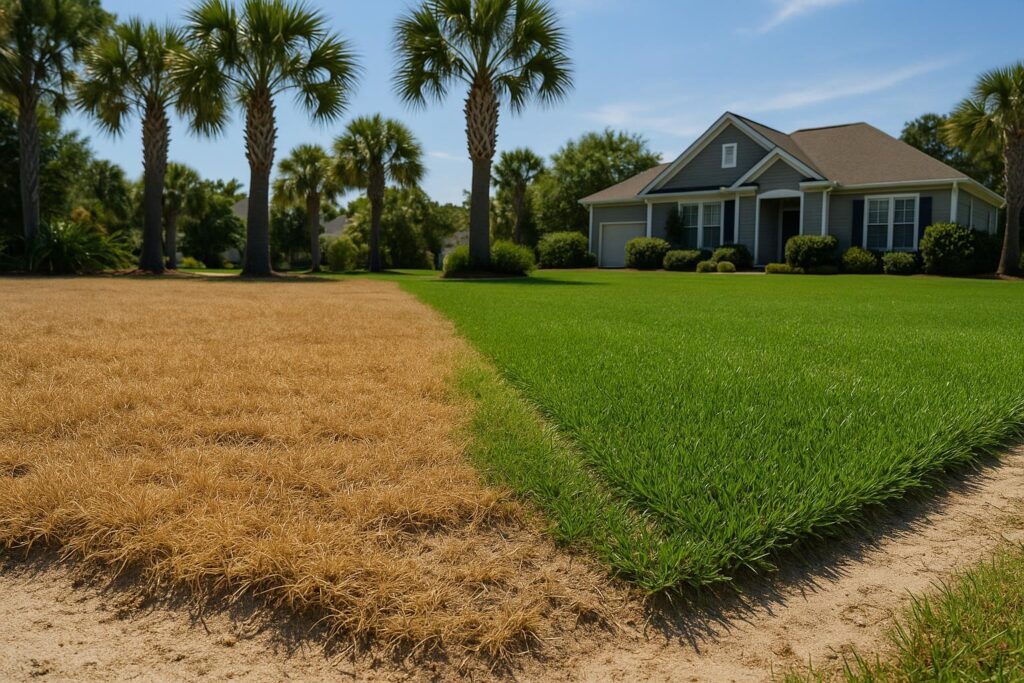
Every August in North Myrtle Beach, homeowners face the same unsettling sight: a lawn that was green in May is now tan, flat, and looks completely dead. The question — is this dormancy or damage? — is one of the most consequential a homeowner can ask, because the answer determines everything that comes next. Treating a dormant lawn as if it is dying leads to expensive, unnecessary interventions. Treating a truly dead lawn as if it is just resting leads to a yard full of weeds before fall arrives.
At KeckCo Turf and Ornamental Services, this is one of the most common diagnostic calls we get in August from North Myrtle Beach homeowners. The good news: there are clear, reliable tests that tell you definitively which situation you are in — and they take about five minutes in your own backyard.
What Lawn Dormancy Actually Is
Warm-season grasses like centipede and St. Augustine are built to survive extreme conditions by shutting down above-ground growth temporarily. When heat and drought stress push past a threshold the plant can manage with normal function, it redirects its remaining moisture and energy resources to protecting the crown — the growing point at the soil surface — and the root system, allowing the visible leaf blades to brown and die back while keeping the plant’s essential structures alive underground.
This is not damage. It is an evolved survival strategy. A dormant lawn looks dead but is not — the crown and root system remain viable, and the lawn will recover full color and density when moisture and cooler temperatures return. In North Myrtle Beach, centipede grass on properties with irrigation typically does not go fully dormant unless a zone fails or a heat event is severe enough to overwhelm the watering schedule. Properties without irrigation, or those where irrigation is inadequate for August’s demand, may see significant dormancy every summer.
The Tests That Tell Dormant from Dead
1The tug test. Grab a handful of the brown grass in the affected area and pull firmly. Dormant grass has an intact root system and crown — it resists pulling and does not separate easily from the soil. Dead grass has no functioning roots and pulls free with very little resistance, often lifting away in sections. This is the single most reliable field test for distinguishing dormancy from death.
2The crown check. Part the brown blades at the base and examine the crown — the dense, compressed growth point at or just below the soil surface. A dormant crown is firm, off-white to cream colored, and feels solid. A dead crown is brown, mushy, or desiccated and brittle. If the crown is intact, the plant can recover. If the crown is gone, that spot of turf will not come back on its own.
3The watering test. If you are uncertain after the first two tests, restore full irrigation to the suspect area for 7 to 10 days. Dormant centipede grass shows visible greening within one to two weeks of consistent moisture, starting at the crown and working outward. No response after 10 to 14 days of consistent irrigation suggests the affected turf is dead rather than dormant.
How Centipede Grass Handles August in Coastal SC
Centipede grass has a narrower stress tolerance window than bermudagrass or zoysiagrass, which is part of why it performs so well in North Myrtle Beach under normal care — it does not demand the intensive management those grasses require — but also why it shows stress symptoms more visibly under extreme conditions. In August’s peak heat, centipede enters a natural growth slowdown even on well-irrigated properties, with visible growth essentially halting and color shifting from bright green to a more muted, grayish-green.
This slowdown is normal and should not be confused with stress or dormancy. True dormancy in centipede in North Myrtle Beach almost always involves a triggering event: a week or more of missed irrigation, a zone failure, an extended heat event above 100°F, or a drought more severe than seasonal norms. If your centipede has simply shifted to a duller green in August without significant browning or loss of density, that is the grass operating normally in peak summer — not a problem that needs intervention.
What to Do If Your Lawn Is Dormant
The goal with a dormant lawn is to protect the crown and root system while it rides out the stress conditions, not to force it back out of dormancy in mid-August heat. Restoring adequate irrigation is the first priority — the crown needs enough moisture to stay viable without being pushed to produce new growth that will immediately stress again in the heat. Run irrigation at levels that keep the soil from completely drying out, without over-watering to the point of waterlogging.
Do not fertilize a dormant lawn with nitrogen. New growth stimulated by nitrogen in peak August heat will be weak, immediately stressed, and attractive to pest and disease pressure. Do not attempt to water a dormant lawn back to its spring appearance before temperatures moderate — the grass will use the energy to produce surface growth that cannot be sustained and will brown again within days. Patience is the correct strategy. Cooler September temperatures will do more for a dormant North Myrtle Beach lawn than any intervention you can apply in August.
What to Do If Sections Are Truly Dead
If the tug test and crown check confirm dead turf in specific areas, those sections will not recover on their own regardless of what you apply to them. The practical response depends on the size and location of the affected areas. Small patches surrounded by healthy centipede with good stolon density may fill in naturally through fall if weed pressure is managed. Larger areas — anything more than a square foot or two — are better candidates for sod installation in the September–October sweet spot when temperatures have moderated but soil is still warm enough for root establishment.
Before sodding dead areas, investigate the underlying cause. Dead patches in the middle of otherwise healthy, well-irrigated turf are almost always caused by something specific — chinch bugs, grub feeding, a disease outbreak, or a highly localized drainage issue. Installing sod over the same conditions without addressing the cause typically results in the same outcome in the following season.
Mistakes That Turn Dormancy into Death
The most destructive mistake is allowing a dormant lawn to stay completely dry for an extended period. While dormancy can tolerate reduced moisture, the crown is not fully desiccation-proof — extended periods without any water during North Myrtle Beach’s peak August heat can cross the line from dormancy into permanent crown death. A lawn that receives no irrigation for three or more weeks during a heat event may not be recoverable even after moisture returns.
The second major mistake is heavy dethatching or aggressive aeration of a dormant lawn in summer. Both practices cause significant physical stress to the turf and should be reserved for late summer or early fall when the grass is coming out of dormancy, not while it is in its most vulnerable state. Similarly, applying any herbicide to dormant centipede grass risks crown injury — hold all weed control applications until the lawn has resumed active growth.
Frequently Asked Questions
Will dormant centipede grass come back in the fall?
Yes. Dormant centipede grass in North Myrtle Beach recovers fully once irrigation is restored and temperatures moderate in fall, provided the crown of the plant was not killed by extreme heat or extended dry periods. Most lawns green back up within 2 to 3 weeks of consistent moisture and temperatures dropping below 90°F.
How do I know if my centipede grass is dead or just dormant?
The tug test is the most reliable indicator. Pull firmly on a handful of brown grass. If it pulls free easily with no root resistance, the plant is likely dead. If it resists and the crown feels firm and cream-colored at the base, the grass is dormant and can recover. The watering test — restoring irrigation and watching for greening within 10 to 14 days — provides additional confirmation.
Should I water my dormant lawn in August?
Yes, but moderately. The goal is to keep the crown from completely desiccating, not to force the lawn out of dormancy in peak heat. Enough irrigation to prevent the soil from completely drying out — roughly equivalent to the minimum you would provide in cooler months — is appropriate. Avoid heavy irrigation that pushes new growth the heat will immediately stress.
Can I fertilize a dormant lawn to wake it up?
No. Nitrogen fertilizer applied to dormant centipede grass stimulates weak, tender new growth that immediately wilts in August heat, depletes the plant’s carbohydrate reserves, and makes the lawn more vulnerable to pest and disease pressure. Hold all nitrogen fertilization until the lawn has resumed active growth in early fall.
How long does lawn dormancy last in North Myrtle Beach?
For irrigated properties, dormancy caused by a heat event or irrigation failure typically resolves within 1 to 3 weeks once consistent moisture is restored. For unirrigated properties during a dry summer, dormancy may persist for 6 to 8 weeks until rainfall returns to normal seasonal patterns. Full color recovery after extended dormancy typically takes 2 to 4 weeks after conditions improve.
Does KeckCo diagnose lawn dormancy and dead turf issues?
Yes. KeckCo Turf and Ornamental Services provides lawn diagnostic assessments for North Myrtle Beach and Grand Strand properties, helping homeowners determine whether browning is dormancy, pest damage, disease, or irrigation failure — and recommending the correct response for each situation. Call 843-273-0735.
The difference between a dormant lawn and a dead one looks the same from the driveway, but demands completely different responses. Running the tug test and crown check takes less than five minutes and tells you everything you need to know before spending money on treatments or sod. Get the diagnosis right first — and if you are still uncertain, reach out and we can walk through it with you.
Not sure if your North Myrtle Beach lawn is dormant or dying?
KeckCo Turf and Ornamental Services can diagnose your lawn and recommend the right course of action — before you spend money treating the wrong problem.