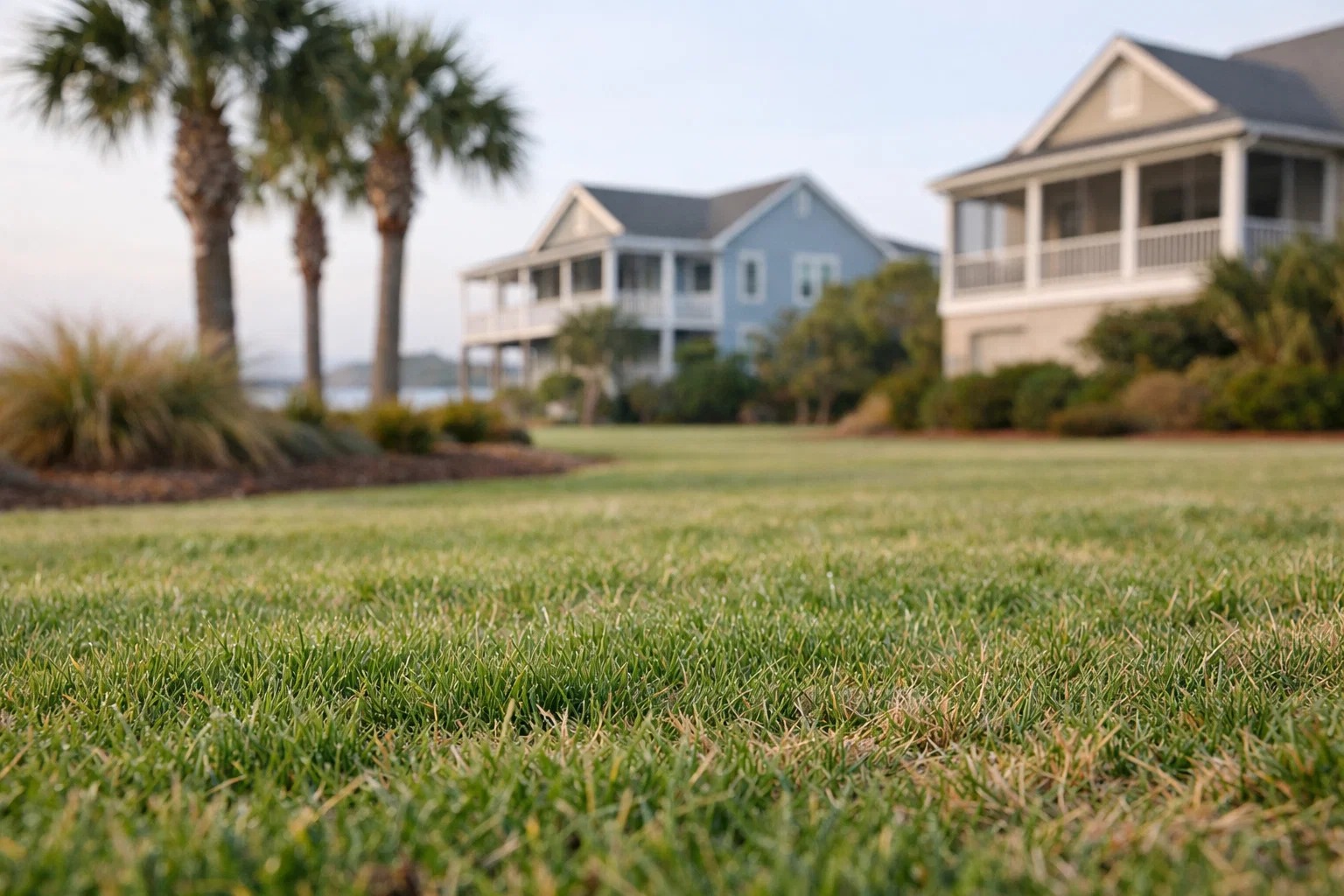

By mid-summer, a lot of North Myrtle Beach lawns start showing the same pattern: dull, grayish-green patches that don’t bounce back, even after a quick rain shower. Homeowners often assume it’s a disease or a pest problem, but more often than not, it’s drought stress — and on the Grand Strand’s fast-draining sandy soil, it can show up faster and spread wider than homeowners expect.
Coastal heat, wind, and sandy soil all work together against your lawn in July and August. At KeckCo Turf and Ornamental Services, this is one of the most common calls we get during peak summer — and the good news is, drought stress is very manageable once you know what to look for and how to respond.
Why sandy soil makes drought stress worse in North Myrtle Beach
Most lawns across North Myrtle Beach, Little River, and the surrounding Grand Strand sit on sandy, fast-draining soil. That’s great for avoiding standing water after a storm, but it also means water moves through the root zone quickly — often before centipede grass roots have a chance to fully absorb it.
Add in coastal wind, which increases evaporation from both soil and grass blades, and high summer humidity that can be misleading (it feels wet outside, but the soil itself can still be bone dry a few inches down), and you get conditions where lawns can dry out noticeably faster than the same grass would in heavier inland clay soil.
Signs your lawn is struggling with drought stress
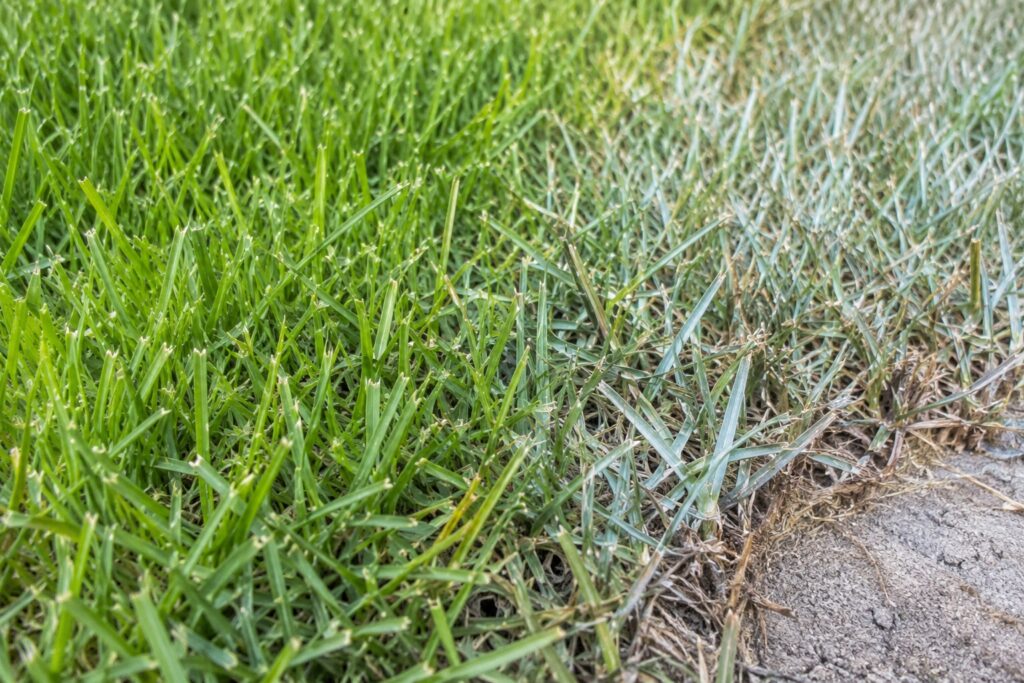
The earliest sign is usually a dull, blue-gray tint to the grass rather than its normal healthy green. This happens before the grass actually turns brown, which makes it the best early warning sign if you catch it.
As stress continues, you’ll often see grass blades start to fold or roll lengthwise, footprints or mower tracks that stay visible long after you walk or mow over the area, and eventually, browning patches that tend to show up first in full-sun areas, near driveways and sidewalks where heat reflects off the concrete, and in spots with thinner soil.
The footprint test: a simple way to check
One of the simplest ways to confirm drought stress is the footprint test. Walk across your lawn in the early morning and look back at your path. On a healthy, well-hydrated lawn, the grass blades spring back upright within a few minutes. On a drought-stressed lawn, footprints stay visibly pressed into the grass for much longer.
1Walk a straight line across a suspect area in early morning.
2Check the path again 10–15 minutes later.
3If footprints are still clearly visible, the lawn needs water.
What to do once you spot drought stress
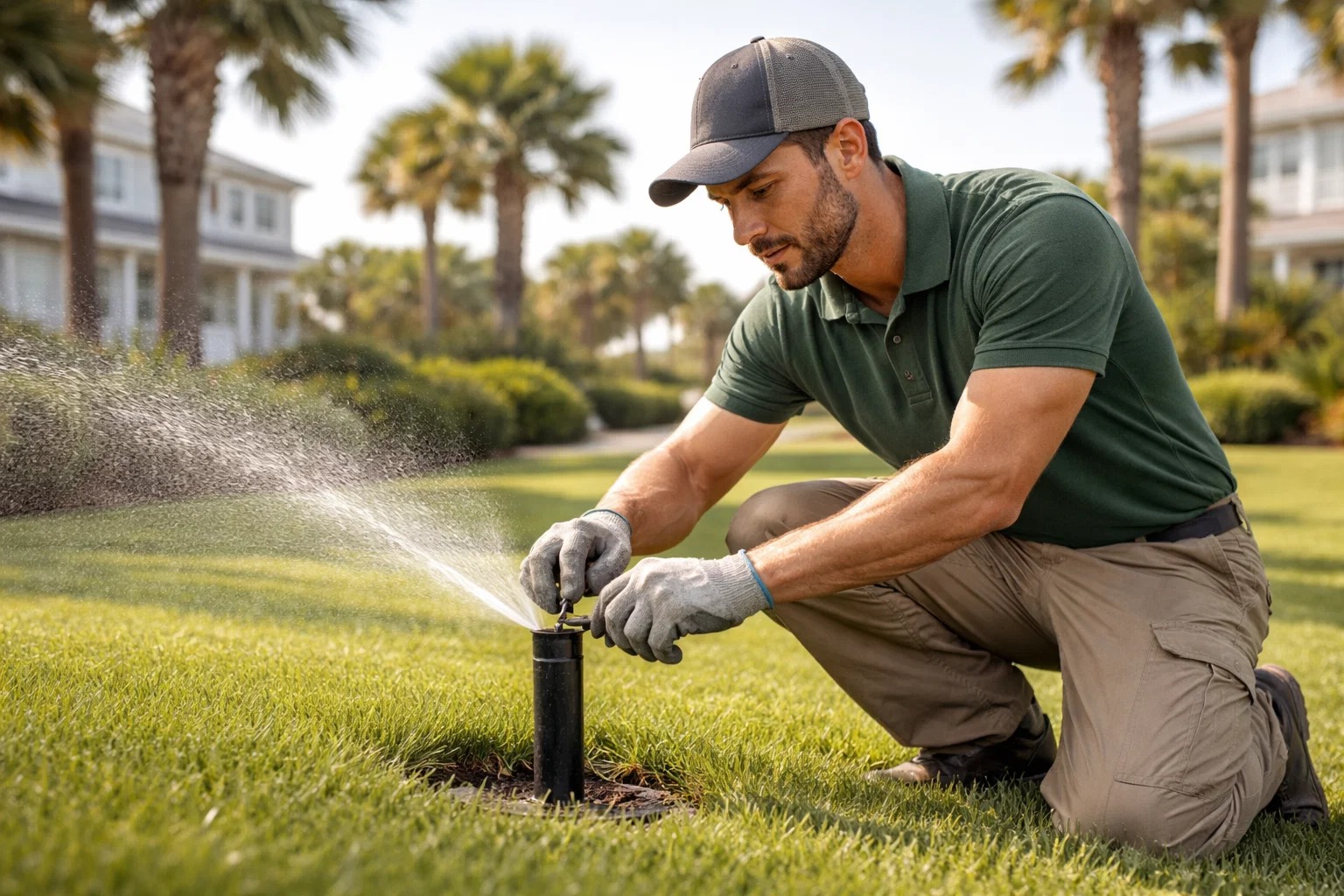
Deep, infrequent watering works far better than light daily watering for coastal sandy soil. Watering deeply — enough to moisten the top 6 to 8 inches of soil — two to three times per week encourages roots to grow deeper in search of water, which builds long-term drought resilience. Light daily watering, by contrast, keeps roots shallow and makes the lawn even more dependent on frequent watering.
Early morning, between roughly 5 and 9 a.m., is the best time to water in North Myrtle Beach. This allows water to soak in before the heat of the day causes evaporation, and gives grass blades time to dry before evening, which reduces fungal risk in our humid air.
Mistakes that make drought stress worse
Mowing a drought-stressed lawn too short removes leaf surface the grass needs to recover, and fertilizing during active drought stress can actually burn already-weakened grass rather than help it. It’s better to address the watering issue first and hold off on fertilizer until the lawn has recovered its normal color.
Frequently Asked Questions
How can I tell if my lawn has drought stress or a disease?
Drought stress usually looks like a uniform dull, blue-gray tint across the lawn that improves with proper deep watering. Disease tends to show up in irregular patches or rings and won’t resolve just by adding water. If your lawn doesn’t improve within a few days of consistent watering, it’s worth having it inspected.
How often should I water my lawn during a North Myrtle Beach summer?
Deep watering two to three times per week is generally better than daily light watering, especially in our sandy coastal soil. This encourages deeper root growth and helps the lawn handle dry stretches more effectively.
What time of day should I water my lawn?
Early morning, ideally between 5 and 9 a.m., is best. This allows water to soak into the soil before the heat of the day and lets grass blades dry before evening, reducing the risk of fungal issues in our humid coastal climate.
Why does sandy soil make drought stress worse along the coast?
Sandy soil, common throughout North Myrtle Beach and the Grand Strand, drains very quickly. Water moves past the root zone faster than in heavier soils, so lawns here can show drought stress sooner than the same grass would inland.
Should I fertilize a lawn that’s showing drought stress?
No, it’s best to hold off on fertilizing until the lawn has recovered through proper watering. Fertilizing stressed, dry grass can burn it further rather than help it recover.
Can I fix drought stress myself, or do I need a professional?
Mild drought stress can often be corrected with proper watering adjustments at home. If the problem persists, spreads, or you’re unsure whether it’s drought stress or something else like chinch bugs, a professional inspection can confirm the cause and prevent further damage.
Does KeckCo help with irrigation adjustments for drought-stressed lawns?
Yes, KeckCo offers irrigation system evaluation, repair, and scheduling optimization for homeowners across North Myrtle Beach, Little River, and Myrtle Beach. Call 843-273-0735 to have your system checked before the worst of summer heat arrives.
Drought stress is one of the most common — and most fixable — summer lawn issues we see along the Grand Strand. Catching it early with the footprint test and adjusting your watering routine can mean the difference between a lawn that bounces back and one that struggles all season.
Worried Your Lawn Is Drought-Stressed?
KeckCo Turf and Ornamental Services has been helping North Myrtle Beach homeowners keep their lawns healthy through coastal summers since 2006.
📞 843-273-0735 🌐 keckcoturf.com