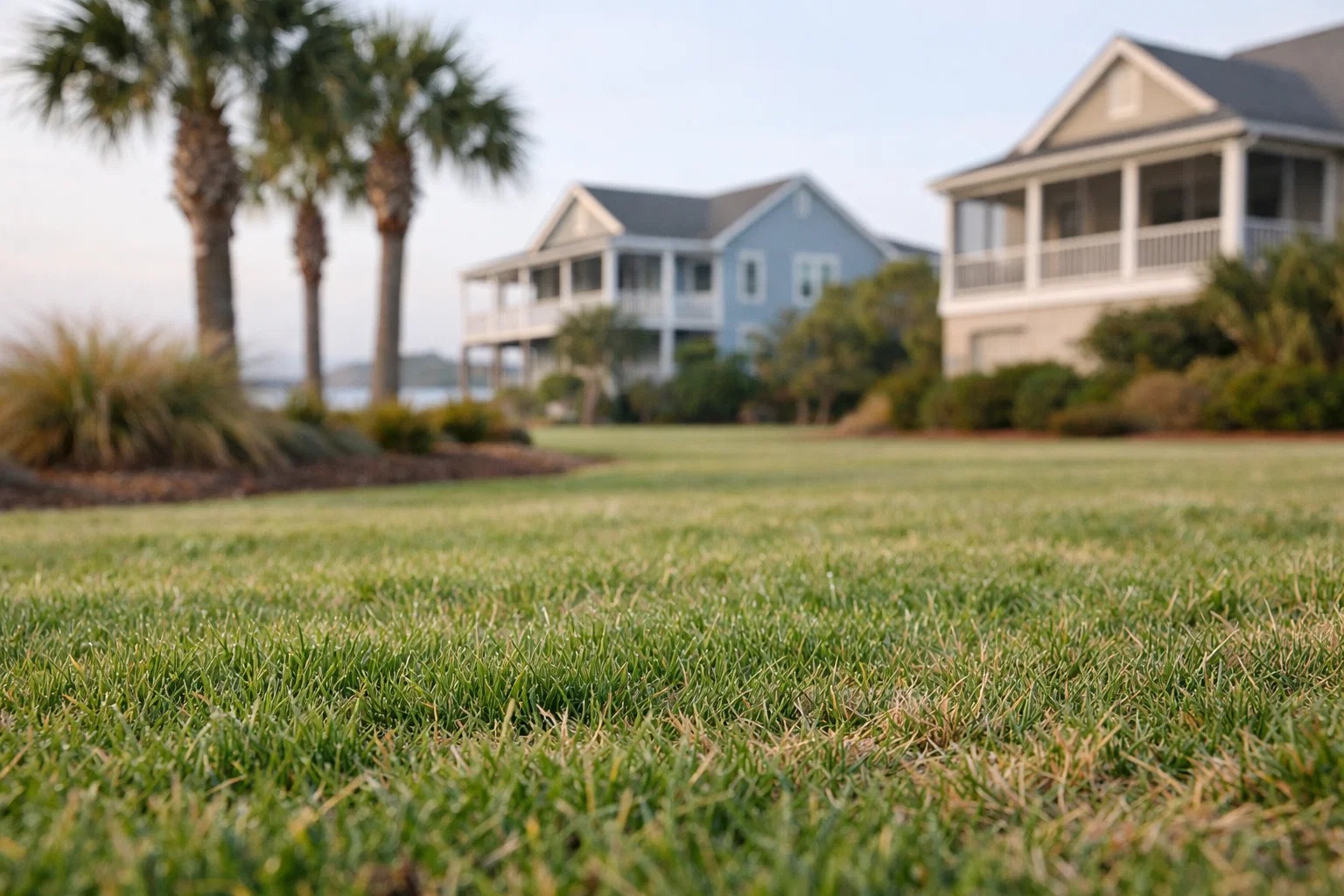

September marks a genuine turning point in the North Myrtle Beach lawn and landscape calendar. The relentless pressure of peak summer — maximum heat, maximum pest activity, maximum irrigation demand — has passed its peak, and the conditions for the most impactful fall lawn work are either already here or arriving within weeks. Fall is not a season to coast through in coastal SC; it is the season where the most consequential decisions of the year get made, and where the difference between a lawn that enters winter in excellent condition and one that struggles into spring is almost always a matter of what was done — or not done — in September and October.
At KeckCo Turf and Ornamental Services, this checklist is the framework we use to transition client properties throughout the Grand Strand into their fall programs. Work through each category systematically and you will have everything that matters covered before the critical windows close.
- Turf: assessment, repair, and the renovation decision
- Weed prevention: the pre-emergent window
- Aeration and dethatching: the fall soil health window
- Irrigation: transitioning to fall and preparing for winter
- Ornamentals: what fall asks of trees, shrubs, and beds
- Fertilization: the last call and what to skip
- Frequently Asked Questions
Turf: Assessment, Repair, and the Renovation Decision
Start fall with an honest walk-through of the entire lawn. Note every damaged, dead, or thin area and estimate its size. The question at the end of this walk is straightforward: does the lawn need targeted patching, or has accumulated damage brought coverage below the threshold where maintenance can restore it without renovation? As covered in our renovation article, 50 to 60 percent healthy coverage in the right places supports maintenance recovery; below that, a fresh sod installation in October is the more reliable path to a strong 2027 growing season.
For areas that need patching — isolated dead zones from chinch bug feeding, grub damage, or brown patch that did not recover on its own through September — target sod installation for the window between September 15 and October 15. This is the most reliable establishment window in coastal SC, and waiting until November risks pushing sod installation past the soil temperature threshold where root development slows. Order sod now; do not wait until the week you want to install it and discover the supplier’s supply of the right grass type is exhausted during peak fall installation demand.
Weed Prevention: The Pre-Emergent Window
The fall pre-emergent application is the single most time-sensitive item on the fall checklist. Once soil temperatures drop below 70°F and winter annual weeds begin germinating — poa annua, chickweed, henbit, and bittercress — the pre-emergent window has closed and these weeds can only be managed post-emergently for the rest of the season. Apply prodiamine or pendimethalin by the third week of September, water it in immediately, and you have prevented months of weed competition in the lawn with a single application.
Remember the conflict: you cannot apply pre-emergent and overseed with ryegrass in the same fall. If winter color is your priority and you are willing to manage winter weeds post-emergently, overseed in mid-October. If weed prevention is the priority, apply pre-emergent now and skip overseeding this year. Do not try to do both — the pre-emergent will prevent ryegrass germination just as effectively as it prevents weed germination.
Aeration and Dethatching: The Fall Soil Health Window
Late August through mid-September is the optimal window for both core aeration and dethatching on centipede and St. Augustine lawns in North Myrtle Beach. Aeration is the higher priority of the two for most lawns — it addresses compaction, improves water and fertilizer penetration, and stimulates the microbial activity in the thatch layer that slows natural thatch breakdown. Dethatching is needed specifically when thatch depth exceeds half an inch, confirmed by measuring a soil plug rather than assumed without testing.
If you have not yet aerated this fall, the window is still open but closing. Mid-September remains an appropriate aeration timing; by late October, as growth slows significantly, the recovery benefit of fall aeration diminishes. Aerate before applying pre-emergent — the physical disruption of core aeration breaks the pre-emergent barrier if done after it is applied. The correct sequence for maximum benefit: dethatch if needed, then aerate, then apply pre-emergent within 48 hours.
Irrigation: Transitioning to Fall and Preparing for Winter
The irrigation schedule built for July and August is wrong for September, and running it unchanged into fall creates the overwatering conditions that trigger late-season brown patch and waste water on a lawn whose demand has dropped significantly. Begin reducing run times by 20 to 25 percent in early September. Move from three cycles per week to two cycles per week as temperatures moderate through the month. By October, most North Myrtle Beach lawns need irrigation only once per week or less, supplemented by whatever natural rainfall September and October provide.
Conduct a final end-of-season system inspection this month — running each zone and walking through it to check head operation, coverage, and pressure. Any repairs identified now should be completed before the system transitions to minimal dormant-season operation and the issue sits through winter, potentially worsening before discovery at spring startup. If you have a smart controller, confirm it is receiving current weather data and that any summer override programs are deactivated so the system responds to fall’s reduced demand automatically.
Ornamentals: What Fall Asks of Trees, Shrubs, and Beds
September and October are the months to get crape myrtle, ornamental shrub, and tree care right without the pressure of summer pest season. Crape myrtles need no fall pruning — the correct window is late January through early March in North Myrtle Beach. Do not be tempted by the tidy-up impulse; leave seed heads in place through winter for wildlife value and visual interest, and schedule the correct pruning for January. If you have a landscape service that has been topping your crape myrtles, this fall is the right time to have a conversation about correcting to appropriate technique in next year’s winter pruning.
Refresh mulch in ornamental beds to 2 to 3 inches depth. Fresh fall mulching insulates plant root zones through winter’s occasional hard freeze events, reduces winter weed pressure from seeds landing on bare soil, and gives the property a clean, well-maintained appearance heading into the holiday season and winter. Mid-October is the ideal timing for fall mulch application in coastal Horry County — after the main fall planting season wraps up and before winter’s first occasional cold nights.
Fertilization: The Last Call and What to Skip
For centipede grass that has not been fertilized since spring and shows visual nutrient stress — pale color, thin growth — a very light application of slow-release fertilizer in very early September is acceptable and supportive. This is the last window. After September 1, hold all nitrogen fertilization on centipede grass for the season. Nitrogen applied after this date delays the hardening-off process that prepares the plant for winter, stimulates the tender new growth that is most vulnerable to the hard freeze events coastal SC experiences in winter, and provides no growth benefit to a plant that is winding down rather than ramping up.
For St. Augustine, the final fertilization window extends a few weeks later — through mid-September — given its slightly higher nutritional needs and longer active growth season. After mid-September, hold nitrogen on St. Augustine as well. A potassium-containing product applied in September supports cold hardiness without the soft growth risks of nitrogen; this is a reasonable optional addition for any property with a history of cold damage concerns from winter freeze events.
Frequently Asked Questions
What is the most important fall lawn task in North Myrtle Beach?
Pre-emergent weed prevention — applied by the third week of September before soil temperatures drop below 70°F and winter annual weeds begin germinating — is arguably the single highest-impact fall lawn task for most North Myrtle Beach properties. A correctly timed pre-emergent application prevents months of weed competition and significantly reduces the workload of the entire fall and winter season.
When should I stop fertilizing my centipede lawn in fall?
Stop applying nitrogen fertilizer to centipede grass by September 1 in North Myrtle Beach. Late-season nitrogen delays hardening-off, stimulates cold-vulnerable new growth, and provides no growing benefit to a plant winding down for dormancy. The last appropriate nitrogen application for centipede is in very early September for lawns that have not been fertilized since spring; otherwise the window is already past.
What fall work should I schedule for a professional lawn service?
The highest-value fall services for a North Myrtle Beach professional lawn service are: core aeration (late August to mid-September), pre-emergent weed control (mid-to-late September), sod installation for damaged areas (September 15 to October 15), and mulch refresh in ornamental beds (mid-October). Call now to get on fall service schedules before peak season demand fills available dates.
Should I aerate and apply pre-emergent in the same fall?
Yes — both are valuable, and they need to be done in the correct sequence. Aerate first, then apply pre-emergent within 24 to 48 hours. Do not apply pre-emergent first and then aerate, because aeration physically disrupts the pre-emergent barrier in the soil. Aerate → pre-emergent is the correct order for every fall.
Is October too late to install sod in North Myrtle Beach?
Mid-October is the last reliable window for sod installation in coastal SC — through approximately October 15, soil temperatures remain warm enough for root development before the growth slowdown that follows as soil temperatures drop toward 60°F in November. Sod installed after mid-October carries meaningfully higher failure risk and should be approached with caution.
Does KeckCo offer fall lawn programs in North Myrtle Beach?
Yes. KeckCo Turf and Ornamental Services provides complete fall lawn and landscape programs for residential properties throughout North Myrtle Beach, Little River, and the Grand Strand — including aeration, pre-emergent, sod repair, mulching, and irrigation transition management. Call 843-273-0735 now to schedule before fall service slots fill.
Fall in North Myrtle Beach is the season that sets everything up. The lawn that enters 2027 in excellent condition — with dense turf, clean weed prevention, a healthy root system from fall aeration, and adequate moisture heading into dormancy — is the lawn that comes out of dormancy first, greens up most evenly, and requires the least reactive management through the following spring. Every item on this checklist is a brick in that foundation. The window is open right now; use it.
Ready for your fall lawn program in North Myrtle Beach?
KeckCo Turf and Ornamental Services provides complete fall lawn and landscape services throughout the Grand Strand — aeration, pre-emergent, sod, mulching, and more. Call us before the schedule fills.