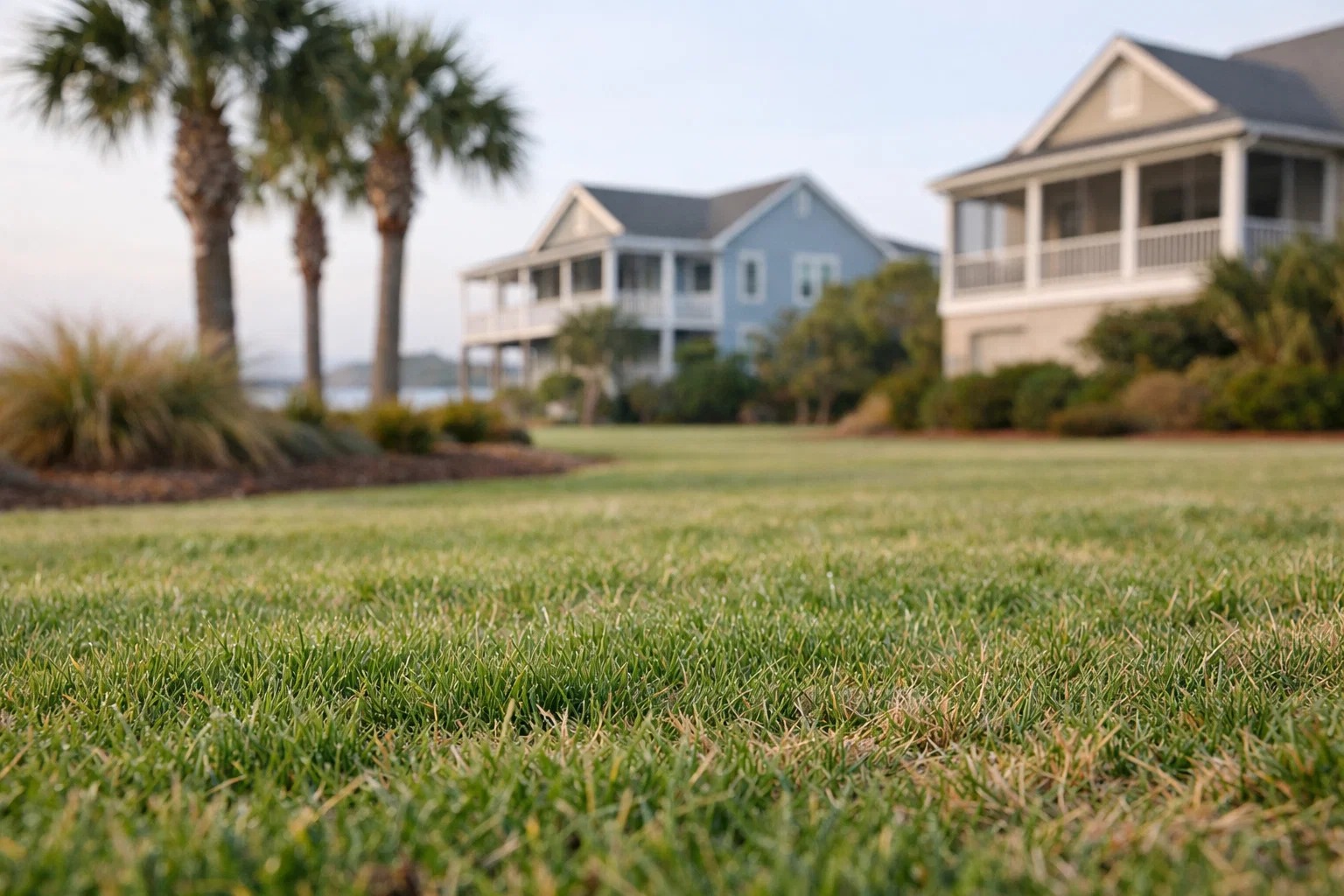

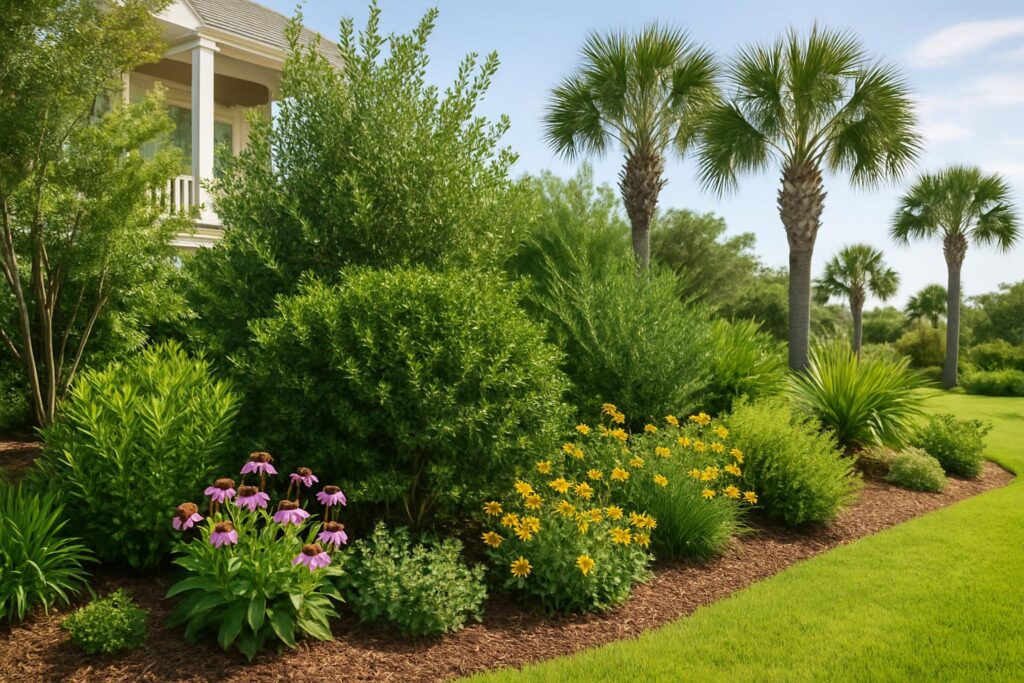
The lawn gets most of the attention in summer, but your ornamental beds are fighting just as hard against July in North Myrtle Beach — and they are usually doing it without nearly as much help. Sandy soil dries fast, salt air stresses foliage, and the combination of intense heat and occasional tropical downpours creates a rollercoaster that pushes even well-established landscape plants to their limits. The ornamental beds that look great in May can look ragged and neglected by mid-July if they do not get the right attention at the right time.
At KeckCo Turf and Ornamental Services, we maintain ornamental beds across properties throughout North Myrtle Beach, Little River, and the Grand Strand. Here is what we see working — and what we see failing — in coastal landscape beds every summer.
Mulch: The Most Important Thing in Your Bed Right Now
If your ornamental beds are going into July with thin or absent mulch coverage, that is the first thing to fix. A 2–3 inch layer of mulch does three things that matter enormously in a coastal summer: it holds soil moisture, moderating how fast the root zone dries out between watering; it insulates soil temperature, keeping roots cooler than they would be in bare, sun-baked sand; and it suppresses the weeds that flood into any open bed space during summer’s peak germination window.
In North Myrtle Beach, pine bark nuggets and double-shredded hardwood mulch are both excellent choices. Pine straw works well too, particularly around acid-loving ornamentals, though it tends to break down faster in the humid coastal climate and may need replenishment mid-season. Avoid rubber mulch in ornamental beds — it holds heat rather than moderating it, which can stress roots during July’s extreme heat events.
Watering Ornamental Plants in Summer Heat
Most established ornamental plants in North Myrtle Beach beds need deep, infrequent watering rather than daily shallow wetting. Water 2–3 times per week, long enough to penetrate 4–6 inches into the soil, and then allow partial drying between sessions. Newly planted ornamentals (installed within the last year) need more frequent attention — daily checks and watering every 1–2 days during a July heat wave are appropriate for plants still establishing their root systems.
Drip irrigation is far more efficient for ornamental beds than overhead sprinklers. It delivers water directly to the root zone, keeps foliage dry (reducing fungal disease risk), and reduces evaporation loss in coastal SC’s summer heat. If your beds rely on the same spray-head irrigation zones as your turf, the plants may be getting the wrong timing and volume for their needs.
What to Prune and What to Leave Alone in July
July is not the time for major structural pruning of most ornamental shrubs in coastal SC. Heavy pruning in summer flushes new tender growth that wilts quickly in heat, demands more water, and is attractive to aphids and scale insects. The general rule is: the more severe the pruning, the more you should avoid it in summer.
What is appropriate in July: deadheading spent flowers to encourage continued blooming on crape myrtles, butterfly weed, and summer perennials; removing dead, diseased, or crossing branches as you spot them; and light shaping of fast-growing shrubs like Indian hawthorn, loropetalum, or pittosporum to keep them from overgrowing beds. Save major rejuvenation pruning for late winter or very early spring before new growth pushes out.
Pest and Disease Pressure in Summer Beds
Aphids, whiteflies, spider mites, and scale insects all peak in summer and can damage ornamental plants quickly when conditions are dry and plants are already heat-stressed. Inspect the undersides of leaves weekly — most soft-bodied pests establish there first. Insecticidal soap or neem oil are effective low-impact controls for light infestations and are safe to apply in the morning before temperatures climb.
Powdery mildew and cercospora leaf spot are common fungal diseases in coastal SC ornamental beds during humid summer months. Good air circulation between plants, avoiding overhead irrigation, and prompt removal of diseased foliage are the most effective management strategies. Fungicide applications are appropriate for severe infections but should use formulations labeled for the specific disease and plant species.
Best Ornamental Plants for North Myrtle Beach Summers
The plants that consistently perform best in North Myrtle Beach’s summer conditions share two traits: salt tolerance and adaptability to well-drained sandy soil. Wax myrtle is arguably the most reliable large shrub on the coast, offering year-round green, fast establishment, and excellent salt and drought tolerance. Yaupon holly is similarly robust and works well as a hedge or specimen plant. For color, crape myrtles deliver extended summer bloom with outstanding coastal heat and salt tolerance.
In perennial beds, muhly grass, blue daze, portulaca, and vinca are proven performers through North Myrtle Beach summers. Lantana and society garlic add color, attract pollinators, and handle coastal conditions with minimal care. Avoid plants with high water requirements or poor salt tolerance — hostas, astilbe, and many cool-season perennials will struggle significantly in July’s heat and salt exposure.
Common Summer Bed Care Mistakes
The biggest mistake in summer bed care is fertilizing with high-nitrogen products during heat stress. Nitrogen pushes flushing vegetative growth that wilts immediately in July heat, stresses root systems further, and makes plants more susceptible to pest and disease damage. If you need to fertilize ornamentals in summer, use a slow-release, lower-nitrogen formulation and do it in the early morning after a thorough watering.
The second common mistake is letting beds go without mulch or with deteriorated mulch that has compressed into a solid, moisture-shedding mat. Compacted old mulch can actually repel water rather than holding it. If your mulch layer has broken down to less than an inch, rake it loose or remove and replace it before adding fresh material on top.
Frequently Asked Questions
How often should I water ornamental beds in North Myrtle Beach in July?
Established ornamental beds generally need watering 2–3 times per week in July, long enough to wet the soil 4–6 inches deep. New plantings from the current season may need daily monitoring and watering every 1–2 days during heat waves until roots are better established.
Can I plant new ornamentals in July in North Myrtle Beach?
It is possible but not ideal. Summer planting means the new plant faces its most stressful conditions immediately, before it has established a root system. If you must plant in July, choose heat-tolerant, salt-tolerant native species, plant in the morning, water thoroughly at planting, and plan for daily irrigation checks for the first 4–6 weeks.
What is the white powder I see on my ornamental shrubs in summer?
White powder on foliage is almost certainly powdery mildew, a fungal disease that thrives when nights are warm and humid. It is common on crape myrtles, roses, and Indian hawthorn in coastal SC. Improve air circulation, reduce overhead irrigation, and apply a sulfur-based or bicarbonate fungicide for control. Some crape myrtle varieties are resistant — look for resistant cultivars when replacing plants.
Are my crape myrtles supposed to drop leaves in summer?
Minor leaf drop during extreme heat is normal as crape myrtles shed older leaves to conserve energy. However, significant defoliation, yellow leaves with green veins, or widespread spotting suggest nutrient deficiency, fungal disease, or pests and should be investigated. Crape myrtles are generally very heat-tough in coastal SC once established.
Does KeckCo provide ornamental bed maintenance service?
Yes. KeckCo Turf and Ornamental Services offers ongoing ornamental bed maintenance throughout North Myrtle Beach, Little River, and the Grand Strand, including mulching, pruning, pest management, and seasonal planting. Contact us to discuss a maintenance plan that fits your property.
How do I know if my ornamental plants have scale insects?
Look for a sticky, shiny substance (honeydew) on leaves and surfaces below branches, or black sooty mold growing on that residue. Small, oval, hard-shelled bumps on stems and branches that do not brush off easily are the scale insects themselves. Treatment with horticultural oil or insecticidal soap is effective on crawlers; mature armored scales may require systemic insecticides.
Keeping ornamental beds looking great through a North Myrtle Beach summer is mostly about staying ahead of problems — maintaining mulch depth, catching pests early, watering at the right times, and knowing which plants belong on the coast and which ones are fighting a losing battle against salt air and sandy soil. The beds that get consistent attention in July look dramatically better come September than those that were left to manage on their own through the hottest stretch of the year.
Need help keeping your ornamental beds healthy through the summer?
KeckCo Turf and Ornamental Services provides professional bed maintenance, mulching, and ornamental plant care throughout North Myrtle Beach and the Grand Strand. Call us today.