
Best Heat-Tolerant Plants for North Myrtle Beach Yards
Every summer, North Myrtle Beach homeowners watch certain plants in their yard wilt, brown, and struggle while others seem completely unbothered by the heat, the salt air, and the fast-draining sandy soil. The difference almost never comes down to how much water or fertilizer those plants received. It comes down to whether the right plant was chosen for the right place to begin with. Coastal Carolina summer is not the time to discover that a plant you fell in love with at the nursery was bred for the mid-Atlantic or the Pacific Northwest.
The good news is that the plants best suited to North Myrtle Beach conditions are genuinely attractive, widely available, and — once established — remarkably low maintenance. This guide covers the most reliable heat-tolerant shrubs, ornamental grasses, perennials, and groundcovers for Grand Strand yards, with notes on what makes each one well suited to our specific combination of summer heat, sandy soil, and coastal salt exposure.
What Heat-Tolerant Plants Need to Survive a Coastal Carolina Summer
Before choosing specific plants, it helps to understand the three simultaneous stressors that eliminate so many otherwise fine landscape plants from consideration in North Myrtle Beach yards. A plant can be excellent in full sun in the Carolinas but still fail along the coast if it can’t handle one of these conditions.
Sandy, fast-draining soil. Horry County soil holds very little water and even less fertility compared to loam or clay-based soils inland. Plants selected for coastal SC need to tolerate periods of dry soil between rainfall and irrigation events, and they need to extract nutrients efficiently from a relatively lean growing medium. Heavy feeders and plants accustomed to rich, moisture-retentive soil will perpetually struggle here regardless of how much fertilizer or water you add.
Salt air. Salt spray and salt-laden air deposit sodium on leaf surfaces and into the soil, gradually increasing soil salinity and damaging leaf tissue in sensitive species. The closer to the ocean or tidal marshes, the more significant this factor becomes. True beachfront and near-ocean plantings need species with demonstrated salt tolerance — not just heat tolerance — to survive long-term.
Intense, extended summer heat. North Myrtle Beach regularly sees weeks of temperatures in the low-to-mid 90s in July and August, often with high overnight lows in the mid-70s that prevent plant recovery between hot days. This persistent heat stress eliminates many cool-season species and even some warm-season plants that can’t handle sustained high temperatures without breakdown.
Best Heat-Tolerant Shrubs for North Myrtle Beach
Shrubs form the structural backbone of most coastal Carolina landscapes, and getting the shrub selection right pays dividends for years. These are the most consistently reliable performers in North Myrtle Beach’s summer conditions.
Wax Myrtle (Morella cerifera). The single most versatile native shrub for coastal SC yards. Wax myrtle handles sandy soil, salt air, wet conditions, dry conditions, full sun, and partial shade — almost nothing bothers it. It grows quickly (three to five feet per year under good conditions), provides excellent screening and wildlife habitat, and stays evergreen year-round. It can be kept at any size with regular pruning or allowed to reach its natural height of ten to fifteen feet as a small tree. For North Myrtle Beach homeowners who want a fast-growing, low-maintenance screen, wax myrtle is the first recommendation every time.
Yaupon Holly (Ilex vomitoria). Another coastal Carolina native that performs exceptionally in the sandy, salt-exposed conditions along the Grand Strand. Yaupon is extremely drought-tolerant once established, handles full sun to part shade, and produces bright red berries in fall and winter that attract birds. Dwarf cultivars like ‘Nana’ stay compact without pruning, making them excellent for low borders and foundation plantings. Standard yaupon can be pruned into hedges, topiaries, or allowed to grow as a multi-stem specimen. It’s one of the most underused plants in coastal SC given how well it performs.
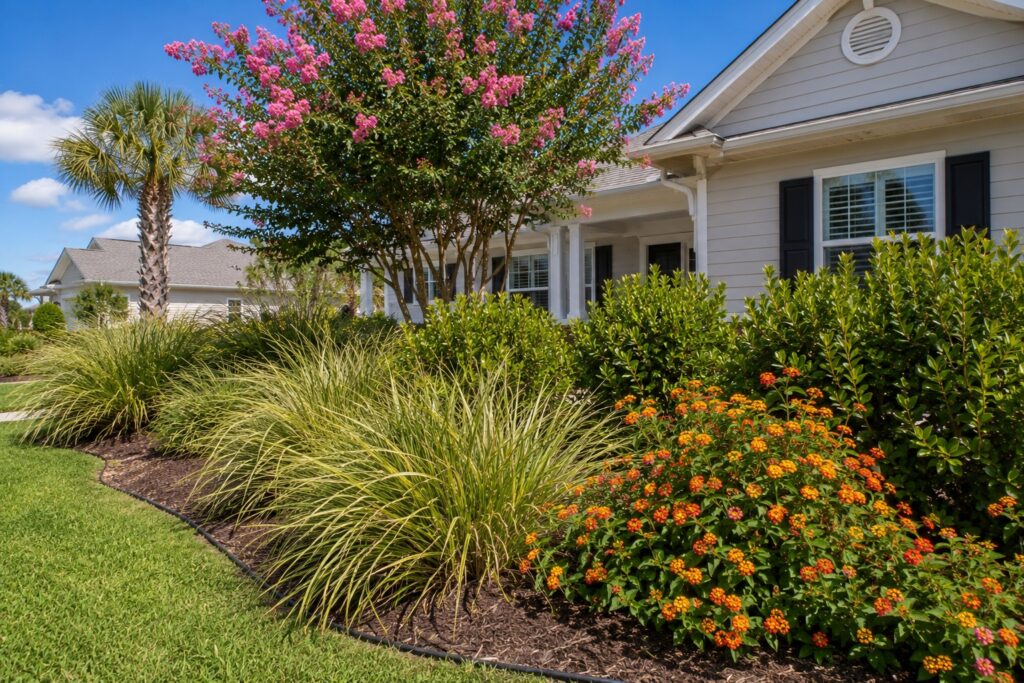
Crape Myrtle (Lagerstroemia spp.). No plant is more iconic on the Grand Strand, and the reason is simple — crape myrtles thrive in the exact conditions of coastal South Carolina summers. Full sun, heat, and humidity are where crape myrtles do their best work, producing spectacular summer bloom in colors from white through pink, red, and purple. Choose sizes carefully: dwarf varieties stay under four feet; semi-dwarf varieties reach six to ten feet; standard varieties can reach twenty-five feet or more. The most common landscaping mistake with crape myrtles is choosing a standard variety for a space that needs a dwarf, then “crape murdering” it each spring to keep it in bounds.
Dwarf Palmetto (Sabal minor). For a distinctly coastal look with essentially zero maintenance requirements, dwarf palmetto is unmatched. This native palm produces a low cluster of large fan-shaped fronds and is virtually indestructible in coastal conditions — it handles salt spray, periodic flooding, drought, and summer heat without complaint. It stays low (typically two to four feet) and spreads slowly, making it excellent for naturalistic beds or as an accent in mixed plantings.
Beautyberry (Callicarpa americana). A native shrub grown for its spectacular clusters of bright purple berries in late summer and fall — exactly when most other plants are looking tired from the summer heat. Beautyberry grows four to six feet tall, handles full sun to part shade, tolerates sandy soil well, and needs very little care once established. It dies back in a hard freeze but returns reliably from the roots each spring in coastal SC’s mild winters.
Ornamental Grasses and Groundcovers That Thrive in Coastal SC Heat
Ornamental grasses and low groundcovers fill important roles in coastal Carolina landscapes — they soften edges, reduce maintenance in difficult areas, and often provide year-round interest where shrubs or perennials would struggle. Several species perform particularly well in North Myrtle Beach conditions.
Gulf Muhly Grass (Muhlenbergia capillaris). One of the most stunning native grasses for coastal SC, Gulf muhly produces billowing clouds of pink-purple flower plumes in September and October — a spectacular late-season display that makes it a garden focal point when most other plants are winding down. It’s drought-tolerant, handles full sun and sandy soil, and requires almost no maintenance beyond cutting back in late winter. Clumps reach two to three feet tall and wide and look best planted in groups of three or more for visual impact.
Liriope (Liriope muscari and L. spicata). Liriope is one of the most reliable groundcovers in the coastal SC landscape toolkit. It handles full sun to deep shade, tolerates drought once established, holds slopes against erosion, and provides year-round evergreen coverage with purple flower spikes in summer. It’s not flashy, but it performs consistently in sandy soil conditions where many groundcovers fail. ‘Big Blue’ is the standard clumping variety; ‘Silver Dragon’ and ‘Variegata’ offer variegated foliage for added interest.
Mondo Grass (Ophiopogon japonicus). Similar to liriope in use and appearance but with narrower, darker foliage and a more refined look. Mondo grass performs well in shaded areas under tree canopies where lawn grass won’t grow — a common challenge in coastal SC properties with established live oaks or large palms. Dwarf mondo grass creates a dense, low carpet that requires almost no maintenance once established.
Confederate Jasmine (Trachelospermum jasminoides). Technically a vine, but widely used as a groundcover or trained on fences and trellises throughout coastal SC. Confederate jasmine is intensely fragrant in spring, stays evergreen year-round, and handles coastal heat and sandy soil with ease. As a groundcover it spreads to fill beds and suppresses weeds effectively. It’s also a popular choice for covering fences and mailbox structures throughout North Myrtle Beach neighborhoods.
Perennials That Deliver Summer Color Without Constant Attention
Perennials that perform well through a coastal SC summer share a common profile: they’re built for heat and humidity, they don’t need constant deadheading or fertilizing to keep blooming, and they recover from the occasional drought or salt event without permanent damage. These are the workhorses of the summer ornamental garden in North Myrtle Beach.
Lantana (Lantana camara). If you want summer color that absolutely refuses to quit in coastal SC heat, lantana is your plant. It blooms continuously from late spring through first frost, handles full sun and dry conditions, tolerates salt air, and attracts butterflies and hummingbirds throughout the season. It performs better with less water and fertilizer than most homeowners give it — rich, moist conditions actually reduce blooming and make plants leggy. In North Myrtle Beach’s sandy soil with moderate irrigation, lantana typically thrives with almost no supplemental care.
Salvia (Salvia spp.). Several salvia species perform exceptionally in coastal SC summer conditions. ‘Mystic Spires’ salvia produces deep blue spikes from spring through fall and handles heat, humidity, and sandy soil well. ‘Black and Blue’ salvia attracts hummingbirds and blooms through summer into fall. Native lyre-leaf sage (Salvia lyrata) handles dry, poor soil conditions better than almost any other flowering perennial and naturalizes reliably in coastal landscapes.
Gaillardia / Blanket Flower (Gaillardia spp.). A tough, drought-tolerant perennial that produces cheerful red-and-yellow daisy-like flowers through most of the summer. Gaillardia is native to the eastern US, handles sandy soil and full sun exceptionally well, and actually performs better in lean soil than in rich, amended beds. It self-seeds modestly and will naturalize in a landscape over time, filling gaps in beds without becoming invasive.
Blue Plumbago (Plumbago auriculata). A semi-woody perennial that functions as a shrub in coastal SC’s mild climate. Plumbago produces clear blue flowers continuously through summer and into fall, handles full sun and heat well, and is moderately salt-tolerant. It dies back in a hard freeze but returns from the roots in spring in the North Myrtle Beach area. It’s particularly effective massed along borders or used as a low foundation planting where its sprawling habit has room to spread.
Planting and Establishment Tips for Coastal Carolina Conditions
Even the most heat-tolerant, salt-adapted plant in this guide needs support getting established in North Myrtle Beach’s sandy soil. The establishment period — roughly the first two growing seasons — is when most landscape plants are lost in coastal SC, not from bad species selection but from inadequate care during the window when roots are still developing and can’t yet support the plant through heat and drought on their own.
-
1Plant in fall when possible. September through November is the ideal planting window in coastal Carolina. Moderate temperatures and more consistent fall rainfall give root systems time to establish before summer heat arrives. Plants installed in fall enter their first summer with a meaningful head start over plants installed in spring or summer.
-
2Mulch deeply at installation. Apply three inches of organic mulch — pine straw or shredded hardwood — around every new planting immediately after installation. Mulch in sandy coastal soil reduces surface temperature dramatically, slows moisture loss, and moderates the extreme wet-dry cycles that stress young roots. Keep mulch a few inches away from stems to prevent rot.
-
3Water consistently through the first two summers. Even drought-tolerant plants need consistent moisture during establishment. Water new plantings deeply two to three times per week through the first summer, tapering off in the second year as roots extend. The target is moist soil at root depth — not wet soil at the surface.
-
4Hold off on fertilizing new plantings through summer heat. Fertilizer pushes new growth — exactly what you don’t want during peak summer stress. New growth is tender, transpires rapidly, and diverts energy from root development. Wait until early fall to make any fertilizer applications on newly installed plants, then use a slow-release formulation appropriate for the species.
-
5Rinse after salt events. After significant onshore wind events, tropical storms, or any weather that deposits noticeable salt on foliage, run a light irrigation cycle or rinse beds with fresh water to remove salt deposits from leaf surfaces. This is especially important for newly installed plants that haven’t yet developed the thick cuticles of established material.
Related Reading from the KeckCo Blog
Frequently Asked Questions
What plants grow best in North Myrtle Beach’s heat and sandy soil?
Plants that thrive in North Myrtle Beach need to tolerate three things simultaneously: intense summer heat, sandy fast-draining soil with low fertility, and salt air from the Atlantic. Top performers include wax myrtle, yaupon holly, muhly grass, dwarf palmetto, lantana, confederate jasmine, and crape myrtle. These plants are established in coastal SC landscapes precisely because they’ve proven themselves in conditions that stress less-adapted species.
How do I keep plants alive in a North Myrtle Beach yard during July and August?
The two most important factors for getting plants through coastal SC summer are proper mulching and appropriate watering during the establishment period. A three-inch layer of mulch over ornamental beds dramatically reduces soil temperature and moisture loss in sandy soil. Newly planted material needs consistent moisture for the first two summers — once established, most heat-tolerant native and adapted plants require little supplemental irrigation. Avoid fertilizing during peak heat, which pushes tender new growth that stresses the plant further.
Is wax myrtle a good choice for a North Myrtle Beach yard?
Wax myrtle is one of the best all-around plants for coastal Carolina landscapes. It’s native to the region, handles sandy soil and salt air exceptionally well, grows quickly to provide screening or structure, and requires almost no maintenance once established. It can be kept as a multi-stem shrub or trained as a small tree. The only consideration is its growth rate — wax myrtle grows several feet per year in favorable conditions, so placement matters.
What are the best low-maintenance plants for a second home in North Myrtle Beach?
For low-maintenance second homes or vacation properties, the best choices are established native plants and drought-tolerant adapted species that don’t need regular attention. Yaupon holly, wax myrtle, dwarf palmetto, muhly grass, and ornamental grasses like Gulf muhly all perform well with minimal care once established. Pairing these with a properly timed irrigation system and a good mulch layer in beds means the landscape can go weeks without attention and still look presentable.
Can I plant new shrubs and perennials in July in North Myrtle Beach?
Technically yes, but summer planting in coastal SC comes with significant establishment risk. The combination of heat stress, high evapotranspiration, and sandy soil that drains quickly makes it harder for new plants to establish root systems before they’re overwhelmed by summer conditions. Fall — September through November — is the ideal planting season in coastal Carolina because moderate temperatures and more consistent rainfall give new plants the best start. If you must plant in summer, choose the most heat-tolerant container-grown material available, water daily for the first two to three weeks, and mulch heavily.
Which plants handle salt air the best in coastal SC?
Native plants adapted to coastal Carolina environments are the most reliable for salt tolerance — wax myrtle, yaupon holly, sea oats, dwarf palmetto, and muhly grass are all naturally salt-tolerant. Among ornamentals, lantana, confederate jasmine, and crape myrtle perform well even with regular salt air exposure. The closer a planting is to the ocean or tidally influenced areas, the more critical native species selection becomes — many otherwise hardy plants will struggle within a few hundred feet of the beachfront.
Does KeckCo help with ornamental plant selection and installation in North Myrtle Beach?
Yes. KeckCo Turf and Ornamental Services provides ornamental plant consultation, bed design, installation, and ongoing maintenance across North Myrtle Beach, Little River, Myrtle Beach, and the Grand Strand. Whether you’re starting from scratch or replacing plants that didn’t survive last summer, we select species specifically suited to your property’s sun exposure, soil conditions, and salt air proximity. Call 843-273-0735 or visit keckcoturf.com to get started.
The right plants in a North Myrtle Beach yard don’t just survive the summer — they thrive in it. Wax myrtle, yaupon holly, crape myrtle, Gulf muhly grass, lantana, and their coastal-adapted companions are built for exactly the conditions that challenge less appropriate choices. Start with species that fit the soil, the salt air, and the heat, give them proper establishment support through their first two seasons, and you’ll spend far less time replacing dead plants and far more time enjoying a landscape that earns its keep through every July and August the Grand Strand delivers.
Need Help Choosing the Right Plants for Your North Myrtle Beach Yard?
KeckCo Turf and Ornamental Services selects, installs, and maintains ornamental plantings built for the specific conditions of coastal Carolina — sandy soil, salt air, and summer heat included. Whether you’re redesigning a bed, replacing plants that didn’t make it through last summer, or starting a new landscape from scratch, we bring the same coastal turf expertise to your ornamental plantings that Brian Keck has applied to Grand Strand turf management for over 20 years.