
Hurricane Season Lawn & Landscape Prep Checklist for the Grand Strand
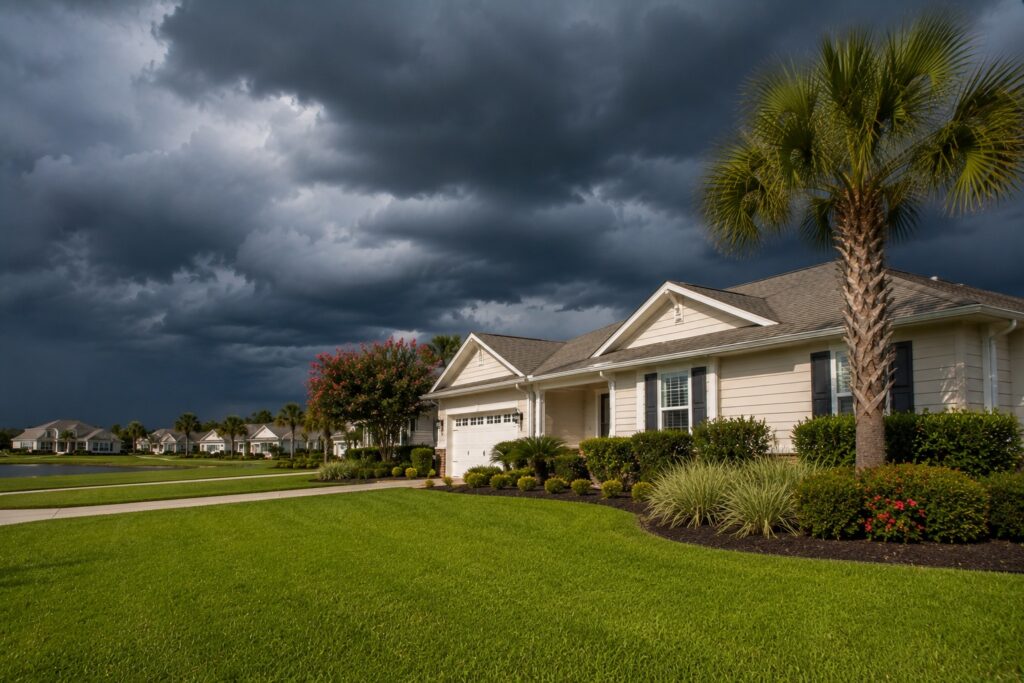
Living on the Grand Strand means accepting that hurricane season is a real part of the calendar — not a theoretical risk but an annual reality that shapes how coastal Carolina homeowners plan, plant, and maintain their properties. The Atlantic hurricane season runs June 1 through November 30, and the peak threat window for North Myrtle Beach falls squarely in the middle of summer lawn care season. That overlap demands a different approach than the one most national lawn care guides assume.
Landscape hurricane preparedness has two distinct phases. The first is seasonal — the decisions and maintenance practices that make your lawn and landscape more resilient throughout the entire storm season, regardless of which specific systems develop. The second is storm-specific — the targeted actions taken in the 48 to 72 hours before a named storm is projected to affect the Grand Strand. This guide covers both, organized into clear checklists you can act on today and return to when a watch or warning is issued.
Seasonal Preparation: What to Do Before Hurricane Season Peaks
The most effective hurricane landscape preparation happens well before any storm is on the radar. The decisions you make in May and June — about tree maintenance, irrigation, plant selection, and turf health — determine how much damage your property sustains and how quickly it recovers when a storm does arrive. A well-maintained landscape with healthy roots, proper mulch, and structurally sound trees and shrubs consistently outperforms neglected landscapes in storm conditions.
Schedule a tree and large shrub assessment in late spring. Dead wood, weak branch unions, and trees with structural defects are the primary sources of storm-related landscape damage across the Grand Strand. A pre-season assessment by a certified arborist or experienced landscape professional identifies which trees and large shrubs pose the greatest risk before the storm season arrives — when removal or structural pruning can be scheduled on your timeline rather than in a post-storm emergency. The cost of proactive tree work is almost always less than emergency removal and damage repair after a storm.
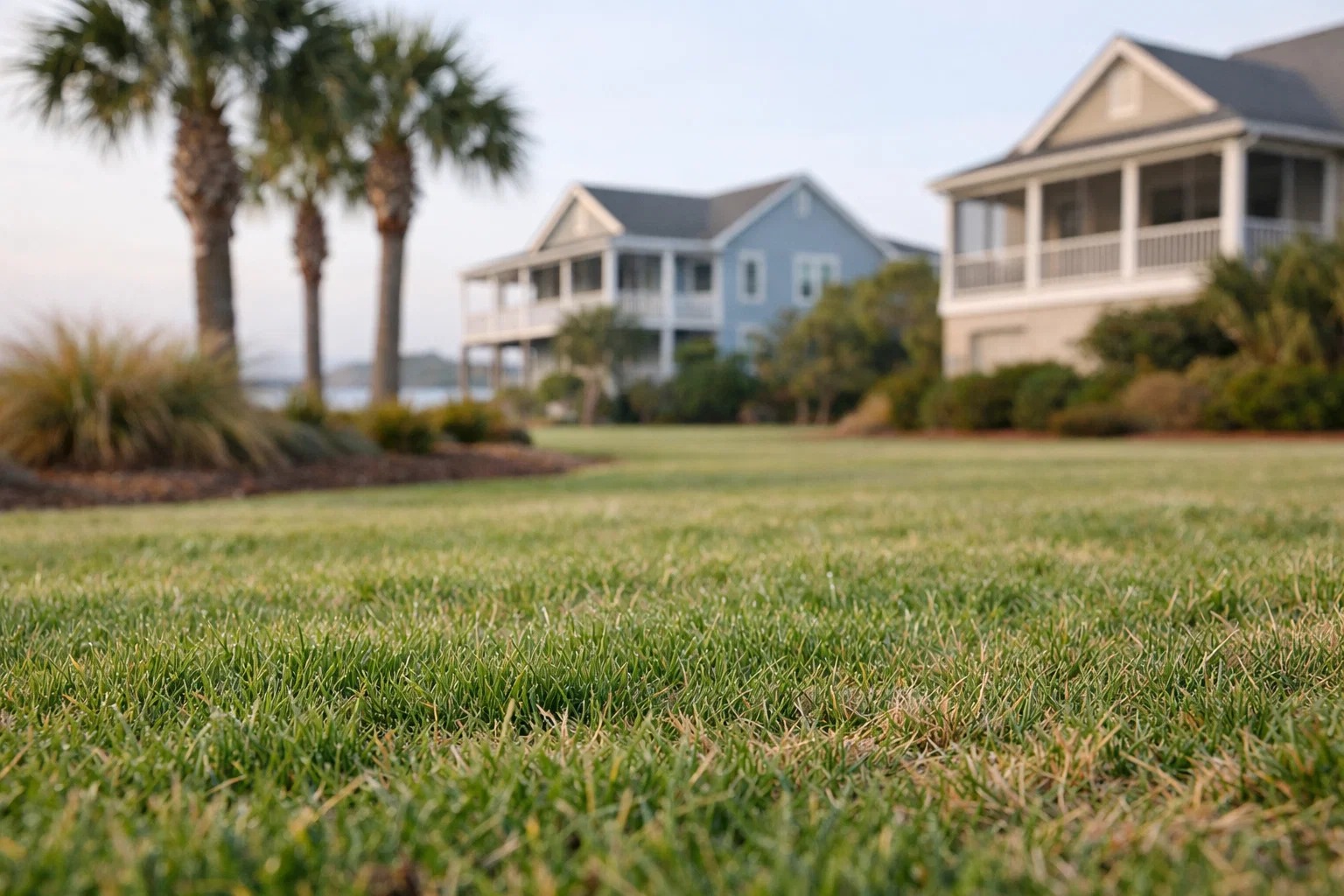
Establish healthy, dense turf before peak season. A thick, well-rooted centipede or St. Augustine lawn recovers significantly faster from storm damage than thin, stressed turf. If your lawn entered summer thin or struggling, the window to improve turf density before peak storm season (August through October) is narrow — but proper watering, correct mowing height, and pest/disease management through June and July give even a struggling lawn a better foundation going into the peak months.
Ensure mulch is properly applied in all beds. A three-inch layer of mulch in ornamental beds protects root zones from the extended soil saturation that follows major rain events. Beds that lost mulch over winter or had it displaced by spring rains should be refreshed before peak hurricane season — both for storm resilience and for the heat protection mulch provides through the summer months.
Lawn-Specific Pre-Storm Checklist
When a tropical storm or hurricane watch is issued for the Grand Strand, the following lawn-specific tasks should be completed within the 48 to 72 hours before projected tropical storm-force wind arrival. Work outdoors becomes dangerous once sustained winds exceed 35 to 40 mph — complete these steps well ahead of that threshold.
-
1Mow at your normal height two to three days before landfall. Mowing brings turf to a manageable height that’s less likely to mat under debris and storm rainfall. Do not scalp — centipede mowed below one inch is significantly more vulnerable to salt spray damage and slower to recover post-storm. Mow at your normal summer height of 1.5 to 2 inches.
-
2Shut off your irrigation controller. A hurricane or major tropical storm will deliver far more water than any lawn needs. Turn off your controller when a watch is issued and leave it off until soil has drained and you’ve had a chance to inspect the system for damage post-storm.
-
3Clear the lawn surface of loose items. Lawn furniture, decorative items, garden tools, hose reels, and any other objects on or near the lawn should be moved inside or secured. In hurricane-force winds, virtually any unsecured outdoor object becomes a dangerous projectile. This applies to the lawn area as much as patios and decks.
-
4Photograph your lawn and landscape before the storm. Pre-storm documentation is essential for insurance claims. Walk the property and photograph the lawn, all beds, trees, and any landscape structures. Note the condition of each area. Store images in cloud storage so they’re accessible if you’ve evacuated.
-
5Check and clear drainage pathways. Walk the property and ensure that low-lying areas, downspout outlets, and natural drainage channels are clear of debris that could cause ponding during heavy rainfall. In Horry County’s sandy soil, drainage is generally good — but blocked outlets can create unexpectedly severe localized flooding even in well-draining areas.
Landscape and Tree Pre-Storm Checklist
Trees and large shrubs represent both the greatest structural risk and the greatest recovery challenge in a hurricane landscape. The actions taken in the pre-storm window can’t fix structural defects that should have been addressed months earlier — but they can reduce the risk from material that can be addressed quickly.
-
1Remove dead and clearly weak branches from trees and large shrubs. Dead branches fail in storms regardless of wind speed. Walk the canopy of every significant tree on your property and identify branches that are dead, hanging, or visibly compromised at the union. Remove them cleanly before the storm — they’re going to come down one way or another.
-
2Move all container plants indoors. Every pot, planter, hanging basket, and window box should come inside before winds arrive. Large containers that can’t be moved should be laid on their sides against a sheltered wall. Remove all pot saucers — they become frisbees in hurricane conditions.
-
3Stake or support newly installed plantings. Any tree, palm, or large shrub installed within the past 12 to 18 months should be assessed for wind throw risk. Drive stakes on the windward side using flexible ties — not wire — to provide temporary support through the storm. Remove all staking within 48 hours of the storm passing.
-
4Tie back ornamental grasses. Large clumps of muhly grass, miscanthus, or pampas grass can be loosely bundled with twine to reduce wind shredding and post-storm flopping. Takes minutes per clump, saves significant cleanup time after the storm, and protects neighboring plants from being beaten by whipping grass blades in sustained wind.
-
5Do not heavily prune healthy trees or shrubs. Removing large amounts of healthy canopy before a storm exposes fresh wounds to salt spray and wind damage, and actually increases wind resistance in some tree forms by disrupting natural airflow patterns through the canopy. Leave structurally sound trees and shrubs with their natural canopy intact.
Irrigation System Storm Preparation
Your irrigation system is one of the most storm-vulnerable components of your landscape — and one that most homeowners don’t think about until they get their first post-storm water bill. Taking a few minutes to properly prepare the system before a storm can prevent significant damage and save meaningful money in repair costs.
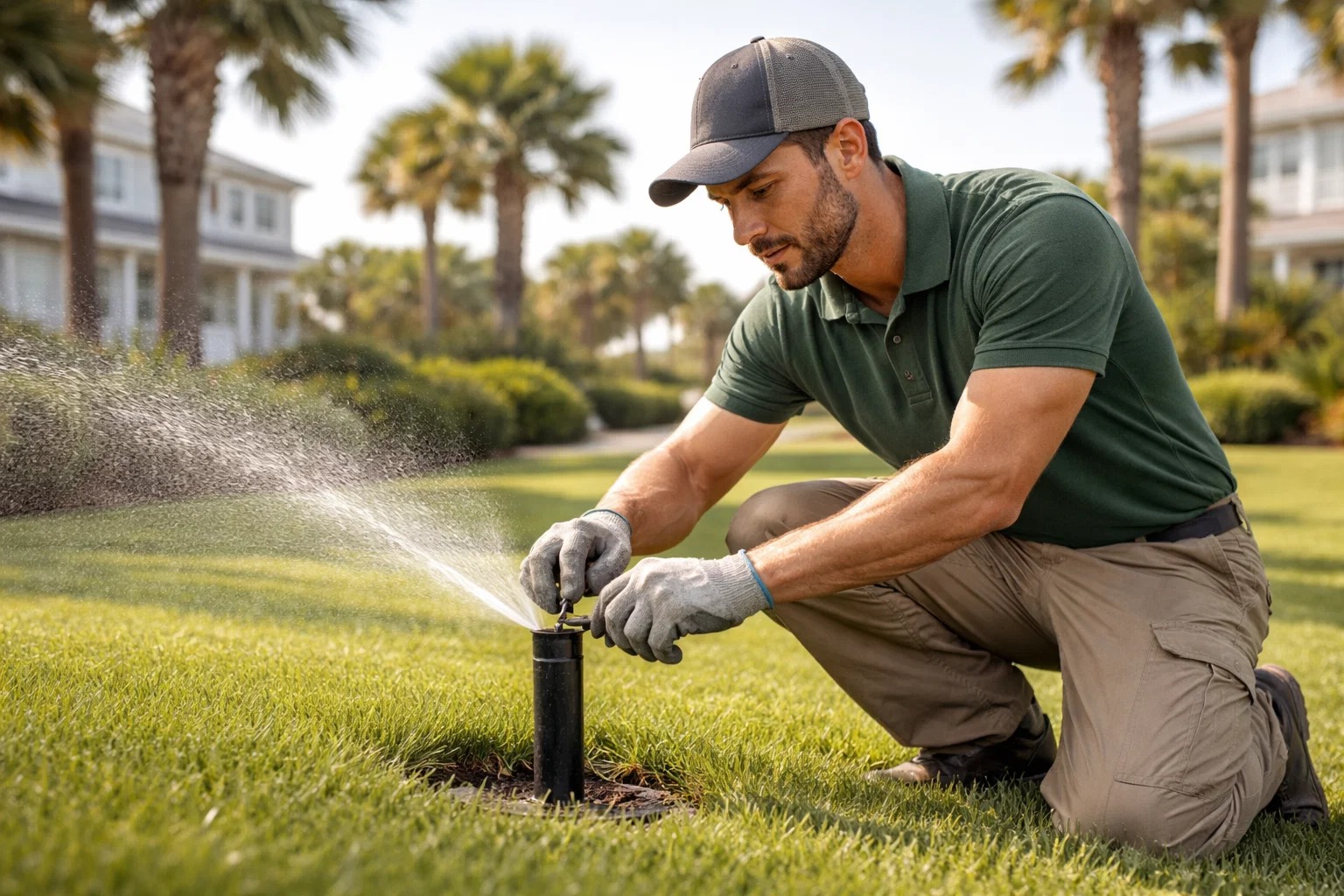
Shut off the controller and switch to manual/off mode. This is the single most important irrigation step. Set your controller to the off position — not just to a rain delay — so there’s no possibility of the system cycling automatically while the property is in storm conditions or immediately after. A single irrigation cycle on waterlogged post-hurricane soil causes no benefit and extends root saturation unnecessarily.
Note the current state of all visible heads and valves. Before the storm hits, make a quick mental or written note of any heads or valve boxes you know are in good condition. This makes post-storm damage assessment faster — you’ll know what was working before the storm and what’s failed or been displaced afterward.
After the storm: inspect before restarting. Walk every zone while it runs before returning to your regular irrigation schedule. Look for heads that were displaced, pipes that cracked under debris impact, and valve boxes that may have taken on debris or water. Hurricane-force winds can drive debris into spray head openings, damage rotor mechanisms, and shift lateral lines — none of which is visible without running each zone individually after the storm.
Post-Storm Lawn and Landscape Recovery Priorities
The 72 hours after a hurricane or major tropical storm passes are the most critical window for landscape recovery. What you prioritize in this period — and what you hold off on — significantly affects how quickly your lawn and landscape return to their pre-storm condition.
Priority 1 — Safety assessment first. Before doing any landscape work, walk the property and identify hazards: hanging branches, partially uprooted trees with tension in the root plate, downed power lines near landscaping, and standing water in low areas. None of these are situations for DIY resolution. Secure the area and call professionals for any hazardous tree work before beginning cleanup.
Priority 2 — Rinse salt spray from lawns and beds. As soon as it’s safe to work outdoors after the storm, use your irrigation system or a garden hose to rinse salt spray deposits from turf and ornamental foliage. This is time-sensitive — the longer salt remains on plant surfaces and in the soil, the more cumulative damage it causes. A short flush cycle across all irrigation zones is the most efficient delivery method for large properties.
Priority 3 — Remove debris from turf promptly. Branches, leaves, and storm debris sitting on lawn surfaces block sunlight and air circulation, creating ideal fungal disease conditions in the warm, humid post-storm environment. Remove debris as soon as it’s safe, but avoid driving heavy equipment across saturated turf — compaction in wet sandy soil can cause damage that outlasts the storm itself.
Priority 4 — Assess and clean up ornamental beds. Remove broken plant material with clean pruning cuts, rinse bed soil surfaces to dilute salt accumulation, and check that drainage channels are clear. Wait two to three weeks before making decisions about plant removal — many species that look severely damaged immediately post-storm push new growth within weeks once salt is rinsed and normal conditions resume.
Priority 5 — Postpone fertilizer and herbicide applications. Storm-stressed turf and plants should not receive fertilizer for three to four weeks post-storm. Pushing new growth on stressed root systems increases disease vulnerability in the humid post-storm environment. Hold all herbicide applications as well — disrupted turf and saturated soil are not appropriate application conditions.
Related Reading from the KeckCo Blog
Frequently Asked Questions
When does hurricane season start and end in North Myrtle Beach?
The Atlantic hurricane season officially runs June 1 through November 30. For North Myrtle Beach and the Grand Strand, the peak threat period is typically August through October, with September historically being the most active month for significant landfalling storms along the South Carolina coast. That said, named storms have affected the area outside the peak window, so landscape preparedness from early June through the end of November is the prudent approach.
How far in advance should I prepare my lawn and landscape before a hurricane?
Seasonal preparation — the tasks that make your landscape more resilient throughout the entire hurricane season — should be completed by early June before the season peaks. When a specific storm is tracking toward the Grand Strand, the window for storm-specific prep is typically 48 to 72 hours before projected tropical storm-force wind arrival. Outdoor work becomes unsafe as sustained winds approach 35 to 40 mph, so don’t wait until the last 24 hours to begin landscape securing tasks.
Will my centipede grass lawn recover after a hurricane?
Centipede grass is moderately resilient to hurricane damage — the primary threats are extended flooding, salt spray deposition, and physical damage from debris. Brief flooding of 24 to 48 hours is usually survivable; extended saturation beyond 72 hours in warm summer conditions begins to cause root damage. Salt spray is the most common post-hurricane lawn issue in North Myrtle Beach — rinsing the lawn with fresh water as soon as conditions allow after a storm significantly reduces long-term salt damage. Most centipede lawns that weren’t physically destroyed by debris or extended flooding recover within four to six weeks of a storm.
Should I mow my lawn before a hurricane?
Mowing at the correct height two to three days before a projected storm arrival is reasonable lawn care — you don’t want overgrown turf matting down under storm rainfall and debris. However, avoid mowing lower than your normal height as a pre-storm measure. Scalped turf is more vulnerable to salt spray damage and slower to recover post-storm. Mow at your normal summer height for centipede (1.5 to 2 inches) and don’t rush to mow the day before a storm when other preparation tasks are more important.
What happens to irrigation systems during a hurricane?
Shut off your irrigation controller before a hurricane and leave it off for at least one to two weeks after the storm passes, depending on rainfall totals and soil drainage. Hurricane-force winds can damage sprinkler heads, shift or break lateral lines, and dislodge backflow preventers. Before restarting the system after a storm, walk each zone while it runs to identify any heads that were displaced or damaged during the event. A post-storm irrigation inspection by a professional is worthwhile after any significant storm to catch damage before it runs up your water bill unnoticed.
How do I handle lawn debris after a hurricane in North Myrtle Beach?
Remove debris from lawn surfaces as soon as it’s safe to do so after the storm — branches, leaves, and other material left on turf blocks sunlight and air circulation, creating ideal conditions for fungal disease in the warm, humid post-storm environment. Avoid driving heavy equipment across a saturated lawn for debris removal, as wheel ruts in waterlogged sandy soil can cause significant compaction damage. Hand-carry or use lightweight carts until the soil has had time to drain and firm up.
Does KeckCo offer hurricane prep and post-storm cleanup services on the Grand Strand?
Yes. KeckCo Turf and Ornamental Services provides seasonal hurricane prep, pre-storm landscape securing, post-storm debris cleanup, irrigation inspection, and full landscape recovery services across North Myrtle Beach, Little River, Myrtle Beach, and the Grand Strand. Call 843-273-0735 or visit keckcoturf.com to schedule service or get on our pre-season prep list before the peak of hurricane season.
Hurricane season on the Grand Strand is six months long, and the window between a storm developing and making landfall can be measured in days. The homeowners whose landscapes fare best through an active storm season are the ones who did the seasonal prep work in May and June — healthy turf, properly mulched beds, structurally assessed trees — and who knew exactly what steps to take when a watch was issued. This checklist gives you both. Save it, share it, and come back to it when you need it.
Get Your Grand Strand Landscape Ready for Hurricane Season
KeckCo Turf and Ornamental Services helps North Myrtle Beach, Little River, and Grand Strand homeowners prepare their lawns and landscapes for hurricane season — and recover efficiently when storms pass. From pre-season tree assessments and turf health programs to post-storm cleanup and irrigation inspection, we keep your landscape protected all season long.