
There is a lawn pest in North Myrtle Beach that can turn a thick, healthy St. Augustine or zoysia lawn into a patchy brown disaster in a matter of weeks — and most homeowners mistake the damage for drought stress until it’s far too late to stop it easily. Chinch bugs are small, fast-moving, and devastatingly effective at destroying coastal Carolina turf during the hottest months of the year. By the time the damage becomes unmistakable, a significant infestation is already well established.
Understanding chinch bugs — what they are, where they hide, what their damage actually looks like, and how to confirm you have them before treating — is the difference between catching an outbreak early and spending the summer watching your lawn die one brown patch at a time. This guide covers everything North Myrtle Beach homeowners need to know about chinch bugs, from first identification through treatment and prevention.
What chinch bugs are and why the coast is prime habitat
Southern chinch bugs are tiny insects — adults measure about one-fifth of an inch long — with black bodies and white wings folded flat across their backs. Nymphs are even smaller, starting out red-orange with a white band across their abdomen and gradually darkening as they mature through five developmental stages. They live in the thatch layer and at the base of grass blades, which makes them nearly invisible to a casual inspection of the lawn surface.
Chinch bugs feed by piercing grass blades and stems and injecting a toxin that disrupts the plant’s ability to move water and nutrients. The feeding itself kills the individual blade, but the toxin is what creates the spreading, irregular brown patches that characterize a chinch bug infestation — the damaged area grows outward as insects move to fresh turf at the edges of the existing damage. They are not underground pests; they live and feed above the soil in the thatch and base of the turf canopy.
North Myrtle Beach is ideal chinch bug habitat for several compounding reasons. The warm, humid coastal climate allows two or more generations per year, dramatically amplifying population growth through summer. The predominantly sandy, well-drained soil warms quickly and stays warm — chinch bugs are most active when soil temperatures are above 70°F. And the St. Augustine and zoysia lawns that dominate the Grand Strand are both highly preferred host grasses. A coastal Carolina summer is essentially a perfect chinch bug breeding environment.
How to recognize chinch bug damage in your lawn
Chinch bug damage in North Myrtle Beach lawns almost always begins in the hottest, sunniest parts of the property — areas along driveways, sidewalks, south-facing slopes, and open areas with no shade. The damage appears as irregular, expanding yellow-to-brown patches that look, at first glance, almost identical to drought stress. This is the source of the most costly chinch bug mistake: homeowners see brown patches in July, assume the lawn is dry, and water more heavily — which does nothing to stop chinch bugs and often makes the infestation worse by creating conditions that favor pest survival.
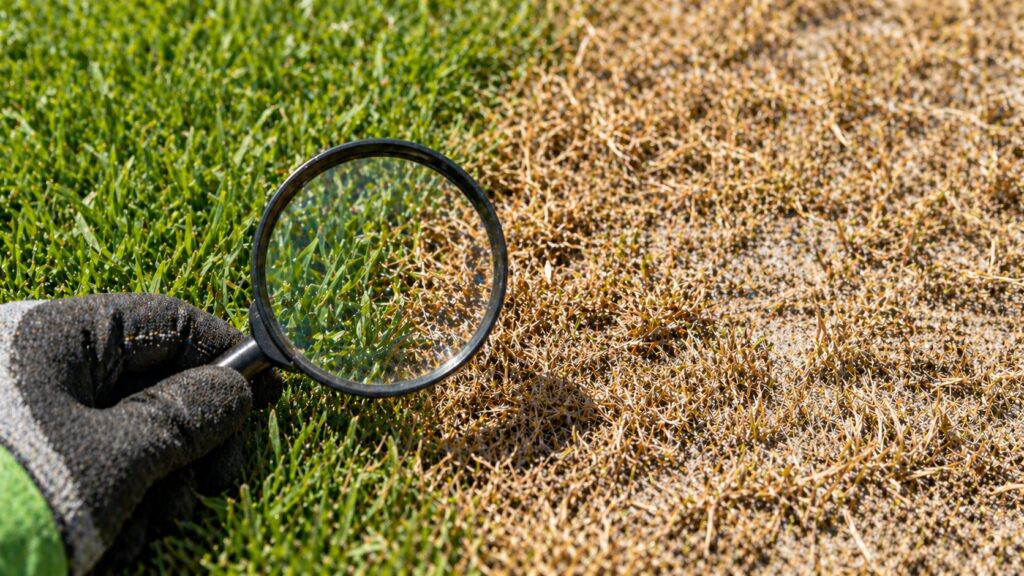
The distinguishing characteristic of chinch bug damage versus drought stress is the pattern and the progression. Drought stress tends to be more uniform across open areas and reverses with irrigation within a day or two. Chinch bug damage is irregular, expands outward from a central point, and does not recover with watering — because the grass isn’t dry, it’s been killed by the insect’s toxin. The outer edges of a chinch bug patch often show a yellow transition zone of dying but not yet dead turf, with brown dead grass at the center and healthy green grass beyond the yellow perimeter.
Another distinguishing sign is location. If the damage is concentrated in the hottest, most exposed areas of the lawn and sparing shaded sections even when those sections receive the same irrigation, chinch bugs are a much more likely culprit than drought. They avoid shade and concentrate populations in full-sun zones where the turf thatch is warmest. A patch of dead grass right where the driveway meets the lawn edge, expanding toward the center of the yard through July, is a classic chinch bug presentation in North Myrtle Beach.
How to confirm chinch bugs before you treat
Never apply an insecticide to your lawn based on visual damage alone. The brown patch patterns that chinch bugs create are similar enough to drought stress, fungal disease, and other issues that treating for the wrong problem is a real risk — expensive, ineffective, and potentially harmful to the turf you’re trying to save. Confirming chinch bug presence takes five minutes and requires no special equipment.
The most reliable confirmation method is the flotation test. Cut both ends off a large metal coffee can or use a dedicated metal cylinder, push it several inches into the soil at the edge of the damaged area where green turf meets yellowing or brown turf — this is where active chinch bugs are feeding and moving. Fill the cylinder with water and keep it full for two to three minutes. Chinch bugs float. If you have an active infestation, you will see small insects — adults black and white, nymphs red-orange — floating to the surface within a minute or two. Ten or more chinch bugs per square foot in the test area indicates a treatment threshold has been reached.
The second confirmation method is a direct visual inspection. Part the grass blades at the edge of the damaged zone and examine the thatch layer and soil surface closely — a magnifying glass helps. In a significant infestation you may be able to see chinch bugs moving through the thatch without the flotation test. They move quickly when disturbed, so work fast. Look at multiple spots along the damage perimeter, not just one location, to get an accurate picture of where the population is concentrated.
The chinch bug season in coastal SC
In North Myrtle Beach, chinch bugs overwinter as adults in the thatch and debris at the base of warm-season turf, becoming active as soil temperatures climb in late spring. The first generation of eggs is typically laid in May, with nymphs appearing through June. It is this first summer generation — reaching peak numbers in late June and July — that causes the most severe lawn damage. A second generation follows through August and into September, extending the damage window well into fall if left untreated.
The period of highest risk for Grand Strand lawns is mid-June through mid-August. This coincides with the hottest, driest stretches of the coastal SC summer, when turf that is already heat-stressed has the least capacity to recover from insect feeding. A lawn in excellent health heading into June — properly fertilized, adequately irrigated, and with a thatch layer under half an inch — has significantly more resistance to chinch bug damage than one that is stressed, over-thatched, or undernourished.
Early detection is the single most important factor in chinch bug management. An infestation caught in late May or early June, before populations peak, can be treated with a single targeted insecticide application with minimal turf loss. The same infestation left until late July, when populations are at their highest and damage has been spreading for six to eight weeks, requires more aggressive treatment and often leaves significant dead areas that need repair heading into fall.
Treatment options that work in North Myrtle Beach
Once a chinch bug infestation is confirmed at or above the treatment threshold, insecticide application is the most effective intervention. For North Myrtle Beach homeowners treating with consumer products, bifenthrin and permethrin-based granular and liquid formulations are widely available and effective against chinch bugs in St. Augustine and zoysia turf. Apply to the entire affected area plus a buffer zone of healthy-looking turf around the perimeter — chinch bugs are actively moving at the edges and treating only the visible damage leaves a reservoir of insects that will reinvade within weeks.
Granular insecticides should be applied with a broadcast spreader and watered in immediately — chinch bugs live in the thatch layer, and the product needs to reach that zone to make contact with the insects. Liquid formulations applied with a hose-end sprayer penetrate the thatch more rapidly but require careful attention to label rates and re-entry intervals, particularly in households with children and pets. Always read and follow the label — it is a legal document as much as a usage guide, and off-label application rates are both ineffective and potentially harmful.
For significant or recurring infestations, a professional application is the most reliable option. Licensed pest management professionals have access to professional-grade insecticide formulations, proper application equipment for even coverage across large areas, and the experience to identify resistance patterns — chinch bug populations in parts of the Southeast have developed resistance to some pyrethroid insecticides, and a professional can select alternative chemistry when standard products aren’t achieving control.
Prevention: keeping chinch bugs from coming back
Thatch management is the single most effective cultural practice for reducing chinch bug pressure in North Myrtle Beach lawns. Chinch bugs thrive in thick thatch layers — the dense mat of dead and living organic material that accumulates between the green grass blades and the soil surface. A thatch layer over half an inch creates ideal chinch bug habitat: warm, protected, and close to their food source. Dethatching or vertical mowing St. Augustine and zoysia lawns when thatch exceeds half an inch removes the environment chinch bugs depend on and makes the turf measurably more resistant to infestation.
Avoiding over-fertilization, particularly excess nitrogen, is equally important. Heavy nitrogen applications push rapid top growth that contributes to thatch accumulation and creates the lush, dense turf canopy that chinch bugs prefer. A conservative fertilization program — particularly important for St. Augustine, which is prone to thatch buildup — maintains turf health without creating the over-stimulated conditions that favor chinch bug populations. This is another reason why following grass-specific fertilization rates rather than applying generic “southern lawn” programs matters in coastal Carolina.
Adequate but not excessive irrigation plays a role as well. Stressed, drought-weakened turf is more vulnerable to chinch bug damage — the grass lacks the vigor to compensate for feeding injury. But chronically overwatered turf develops the thick thatch and shallow root system that increases susceptibility over multiple seasons. Deep, infrequent watering that encourages deep root development produces turf that is both more drought-resilient and less hospitable to chinch bug establishment.
Mistakes that make chinch bug outbreaks worse
Watering more when brown patches appear in summer is the most consequential mistake North Myrtle Beach homeowners make with chinch bugs, and it’s completely understandable — brown patches in July look exactly like drought stress, and the instinct is to water. But additional irrigation doesn’t help grass that has been killed by chinch bug toxin, and it can keep the thatch layer at a moisture level that is actually comfortable for chinch bugs while slowing the drying that sometimes concentrates them and makes them easier to treat. Confirm the cause before you water.
Treating only the visible dead area and not the surrounding buffer is a treatment mistake that leads to reinfestations within two to four weeks. The insects causing the expanding damage are at the outer edge of the patch, not in the center where the grass is already dead. An insecticide application that covers only the dead zone leaves the actively feeding population untouched and the damage continues to spread almost immediately after treatment.
Delaying treatment after confirmation is the third major mistake. Chinch bug populations grow exponentially through summer — a manageable early-June infestation becomes an overwhelming late-July problem with no natural brake on population growth until temperatures drop in fall. Every week of delay between confirmation and treatment means more dead turf, a larger treatment area, and a longer and more expensive recovery. When the flotation test confirms chinch bugs above threshold, treat within the week.
Frequently Asked Questions
Common chinch bug questions from North Myrtle Beach and coastal SC homeowners.
Chinch bug damage appears as irregular, expanding yellow-to-brown patches starting in the hottest, sunniest areas of the lawn — along driveways, sidewalks, and open south-facing turf. The patches have a characteristic pattern: brown dead grass at the center, a yellow transition zone of dying turf at the edges, and healthy green grass beyond. Unlike drought stress, chinch bug damage does not recover with irrigation and continues expanding even when the lawn is being watered regularly.
The fastest way to tell the difference is the flotation test: push a metal cylinder into the soil at the edge of the damaged area, fill it with water, and watch for insects floating up within three minutes. Chinch bugs float and are visible as small black-and-white adults or red-orange nymphs. Drought stress produces no insects in the float test. Behaviorally, drought stress recovers within a day or two of irrigation while chinch bug damage continues spreading regardless of how much you water.
St. Augustine grass is the most susceptible turf type to chinch bug damage in the Grand Strand — it is the preferred host grass for the southern chinch bug species that dominates coastal Carolina. Zoysia is also commonly attacked. Bermuda and centipede are less preferred and tend to show lower levels of infestation, though neither is immune. Full-sun St. Augustine lawns in North Myrtle Beach are at the highest risk during June, July, and August.
Chinch bugs become active in late spring as soil temperatures rise and are most damaging from mid-June through mid-August in coastal SC. The first summer generation peaks in late June and July, with a second generation extending damage potential through September. The highest-risk window for North Myrtle Beach lawns is July and August — begin monitoring exposed, sunny areas of St. Augustine and zoysia turf in late May to catch infestations early before populations peak.
Small, early-caught infestations can be treated effectively with consumer bifenthrin or permethrin-based products available at garden centers, applied carefully according to label directions. Larger infestations, recurring problems, or cases where standard products don’t appear to be achieving control are situations where a licensed professional is the better choice. Professionals have access to more effective formulations, proper application equipment for large areas, and can identify pyrethroid resistance — a real issue in some coastal SC chinch bug populations — and select alternative chemistry accordingly.
Turf that was damaged but not completely killed can recover on its own once chinch bugs are controlled, especially if the infestation was caught early and treated before midsummer. Grass at the edges of damage zones that was yellowing but not dead often greens back up within two to four weeks of successful treatment. Areas where turf was completely killed — the brown center of large patches — will not self-recover and typically need overseeding, plugging, or sod repair in fall once temperatures moderate. The extent of recovery depends heavily on how quickly the infestation was identified and treated.
The three most effective prevention practices are thatch management, conservative fertilization, and proper irrigation. Keep thatch under half an inch through annual dethatching or vertical mowing of susceptible turf types. Avoid excess nitrogen, which stimulates the rapid growth that builds thatch and creates conditions chinch bugs prefer. Water deeply and infrequently to encourage deep roots and avoid the chronically moist thatch environment that supports high chinch bug populations. Early-season monitoring starting in late May gives you the best chance of catching the next infestation before it causes significant damage.
Yes — KeckCo Turf and Ornamental Services provides chinch bug identification, treatment, and prevention programs for homeowners across North Myrtle Beach, Little River, Myrtle Beach, and the Grand Strand. If you’re seeing brown patches expanding in your St. Augustine or zoysia lawn this summer, don’t wait — call us at 843-273-0735 or visit keckcoturf.com to schedule an inspection before the damage spreads further.
Chinch bugs are one of the most destructive lawn pests in North Myrtle Beach — and one of the most manageable when caught early. The homeowners who lose the least turf every summer are the ones who know what to look for, confirm before they treat, and act within days of a confirmed infestation rather than weeks. A five-minute flotation test in late June can save you an entire lawn repair bill in September.
Monitor your sunny, exposed turf areas through May and June. Know the difference between drought stress and insect damage. And when brown patches appear and don’t respond to water — get it tested before you waste a season watering a pest problem.
Seeing unexplained damage in your lawn? Call KeckCo first.
KeckCo Turf and Ornamental Services identifies and treats chinch bugs, armyworms, and other lawn pests across North Myrtle Beach, Little River, Myrtle Beach, and the Grand Strand. Brian Keck’s turf management background means we diagnose accurately before we treat — so you’re not spending money on the wrong solution. If your lawn has brown patches that aren’t responding to water, call us this week.