
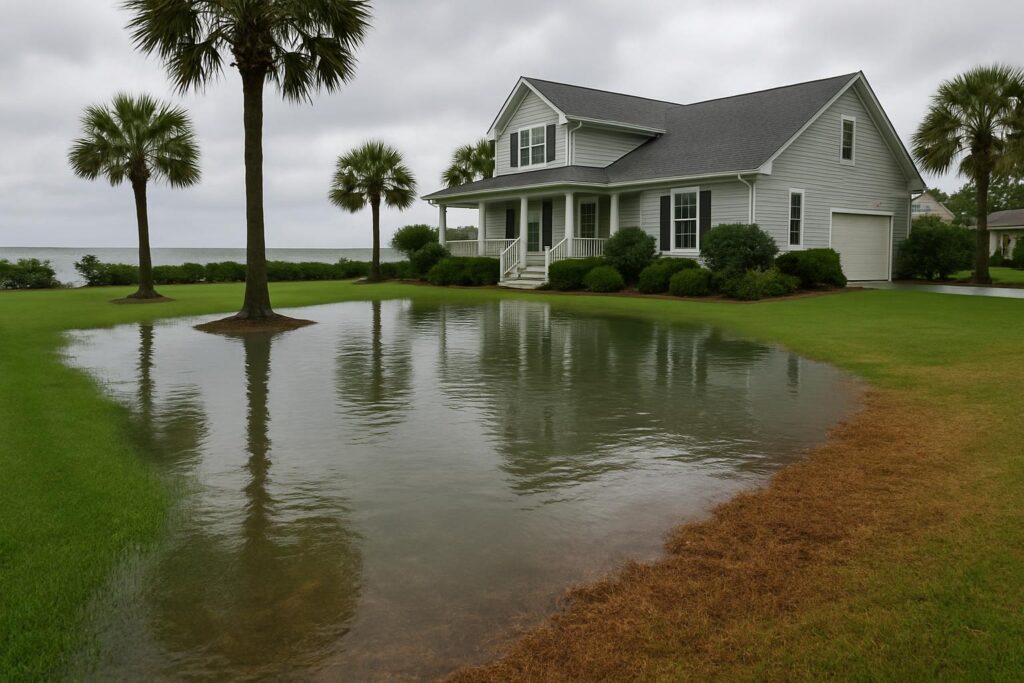
Saltwater damage to lawns in North Myrtle Beach and along the Grand Strand is a reality that most coastal homeowners will face at some point. A tropical storm, a high king tide, an Intracoastal Waterway overflow event, or even a sustained period of onshore winds pushing tidal water into low-lying yards can introduce enough salt to cause serious turf damage — sometimes within hours of the flooding event. Understanding what happens to grass during saltwater exposure and responding correctly in the hours and days after the water recedes makes an enormous difference in how much of the lawn survives.
At KeckCo Turf and Ornamental Services, we help properties throughout the Grand Strand assess and recover from storm-related damage every season. Here is what homeowners need to know about saltwater flooding and lawn recovery.
- How saltwater damages grass at the cellular level
- How flooding duration determines outcome
- Immediate response: what to do as soon as flooding recedes
- Assessing the damage: what is recoverable vs. lost
- The recovery timeline for salt-damaged turf
- Planning for the future: salt-tolerant turf and plants
- Frequently Asked Questions
How Saltwater Damages Grass at the Cellular Level
Salt damages plants through a process called osmotic stress. Plant cells maintain a delicate internal balance of water and nutrients, and they absorb water from the soil through osmosis — moving water from areas of lower salt concentration (the soil) into areas of higher concentration (the plant cell interior). When saltwater floods the soil, this gradient reverses: the soil now has higher salt concentration than the plant cells, and water is pulled out of the plant rather than into it. The grass effectively dehydrates while submerged in water.
Simultaneously, direct sodium and chloride ion toxicity disrupts enzyme function within plant cells, interfering with photosynthesis and metabolic processes that keep the plant alive. The combination of osmotic dehydration and direct ion toxicity means that saltwater flooding is far more damaging than freshwater flooding of equivalent duration — and the damage can be irreversible far faster than most homeowners expect.
How Flooding Duration Determines Outcome
The duration of saltwater contact with turf is the primary factor determining how much damage occurs and how much of the lawn is recoverable. Centipede and St. Augustine grass — the dominant turf types across most North Myrtle Beach residential properties — can tolerate brief saltwater exposure of 24 to 48 hours with moderate damage that may be recoverable through appropriate post-flood treatment. Flooding lasting more than 48 to 72 hours at summer temperatures typically causes irreversible crown damage, and lawns flooded for more than a week face near-total loss of the affected area.
Soil temperature at the time of flooding also matters. Hot summer soil temperatures accelerate the osmotic damage and ion toxicity processes significantly compared to cooler fall or winter flooding. An August saltwater flood lasting 36 hours on soil at 85°F causes measurably more damage than an equivalent flood event in October when soil temperatures are 65°F — which is relevant context for Grand Strand properties facing the peak of Atlantic hurricane season.
Immediate Response: What to Do as Soon as Flooding Recedes
1Flush with fresh water immediately. As soon as flooding recedes and access is possible, run irrigation heavily across the affected area. The goal is to dilute and flush salt out of the root zone before it concentrates as the soil dries. Multiple irrigation sessions over the first 48 to 72 hours after flooding produce significantly better turf survival than a single application or waiting for rain.
2Do not mow or apply any products until the lawn has had at least 72 hours to begin showing its recovery response or continuing decline. Walking and working on saturated, salt-stressed turf causes additional compaction and physical damage to already-compromised plant crowns.
3Rinse ornamental plantings. Foliar salt spray and soil salt intrusion both affect ornamental beds. Rinse foliage thoroughly with fresh water and deeply irrigate ornamental beds to flush salt out of the root zone, particularly for salt-sensitive plants like gardenias, azaleas, and ornamental grasses.
4Document the damage extent. Take photographs of the flooded areas and note the water line height on structures — this documentation is valuable for insurance claims and for tracking which areas sustain damage repeatedly across multiple events.
Assessing the Damage: What Is Recoverable vs. Lost
The assessment window for saltwater flood damage is typically 2 to 3 weeks after the event. Initial browning and wilting are expected and do not by themselves indicate permanent loss — the question is whether crown tissue survived. Check crowns in the affected area using the same method as dormancy assessment: part the blades and examine the base of each plant. Firm, off-white crowns suggest the plant is alive and may recover. Brown, mushy, or completely desiccated crowns indicate permanent loss in that location.
Areas that flooded briefly and received prompt freshwater flushing often show meaningful recovery within 2 to 4 weeks, beginning with new growth emerging from surviving crowns. Areas with extended flooding exposure, particularly those furthest from drainage outlets where salt concentrations were highest, may show no crown survival and will need sodding for recovery.
The Recovery Timeline for Salt-Damaged Turf
Properties that respond promptly with freshwater flushing after brief saltwater flooding events can expect a recovery arc that spans 6 to 12 weeks. In the first two weeks, continued browning is normal as the affected blades die back. Crown survival determines what happens next — surviving crowns begin producing new growth that gradually fills back in over weeks 3 through 8. By 10 to 12 weeks after the event, adequately flushed and managed lawns with surviving crowns should show meaningful recovery in affected areas.
Properties that experienced extended flooding, did not flush promptly, or lost significant crown tissue will need a different recovery path: removing dead turf, resting the soil to allow salt to further leach with irrigation and rainfall, and installing fresh sod in the October renovation window when establishment conditions are optimal. Rushing sod installation into still-elevated soil salinity is counterproductive — the new sod faces the same conditions that killed the previous turf.
Planning for the Future: Salt-Tolerant Turf and Plants
Properties that experience saltwater flooding repeatedly — either from tidal intrusion, storm surge, or proximity to brackish waterways — should evaluate whether standard centipede or St. Augustine is the right long-term turf choice for the affected areas. Seashore paspalum is a warm-season grass with outstanding salt tolerance — it can tolerate salinity levels that would kill centipede and St. Augustine — and is worth considering for repeatedly flooded areas as a more resilient alternative.
For ornamental beds in flood-prone areas, the native coastal plant palette covered in our earlier article on native plants for coastal Carolina offers the most salt-tolerant options: wax myrtle, yaupon holly, sea oats, dwarf palmetto, and native ornamental grasses all handle salt exposure far better than typical landscape ornamentals. Designing the landscape around salt tolerance in low-lying coastal areas is a long-term investment in resilience that reduces recovery costs after every subsequent flooding event.
Frequently Asked Questions
How long can centipede grass survive saltwater flooding?
Centipede grass can tolerate brief saltwater exposure of 24 to 48 hours with moderate damage that may be recoverable through prompt freshwater flushing. Flooding lasting more than 48 to 72 hours at summer temperatures typically causes irreversible crown damage that requires sodding for area recovery.
What should I do first after saltwater floods my lawn?
Once flooding recedes, flush the lawn thoroughly with fresh water as soon as access allows. The goal is to dilute and move salt out of the root zone before it concentrates as the soil dries. Multiple flushing sessions over 48 to 72 hours after the flood event produce significantly better turf survival than waiting.
How do I know if my lawn will recover after salt flooding?
The 2 to 3 week mark after a saltwater event is the primary assessment window. Check for new growth emerging from crowns in the affected area — this indicates crown survival and recovery potential. No new growth after 3 weeks, combined with brown or mushy crown tissue, indicates permanent loss requiring sod replacement.
Should I resod immediately after saltwater damage?
No. Wait until soil salinity has had time to reduce through irrigation flushing and natural rainfall — typically 4 to 6 weeks minimum after significant flooding. Installing sod into still-elevated soil salinity will damage the new turf just as it damaged the previous grass. Test soil electrical conductivity if possible before installing new sod in heavily flooded areas.
Which grass handles saltwater flooding best in coastal SC?
Seashore paspalum has the highest salt tolerance among warm-season turfgrasses and is worth considering for properties that experience repeated saltwater flooding. Among the common residential turf types, St. Augustine has somewhat better salt tolerance than centipede, and zoysia falls in between. No standard residential turf type tolerates extended saltwater immersion well.
Does KeckCo help with storm and flood damage recovery?
Yes. KeckCo Turf and Ornamental Services provides post-storm assessment and lawn recovery services throughout North Myrtle Beach, Little River, and the Grand Strand. We can evaluate flood damage extent, recommend the appropriate recovery approach, and schedule sod installation for the optimal fall window when needed. Call 843-273-0735.
Saltwater flooding is one of the most severe events a coastal SC lawn can experience — but it is not automatically catastrophic if the response is fast and correct. Flushing promptly, assessing honestly, and giving surviving turf time to demonstrate its recovery capacity before making expensive decisions are the principles that produce the best outcomes for North Myrtle Beach properties after the water recedes.
Dealing with saltwater damage or storm flooding on your coastal SC property?
KeckCo Turf and Ornamental Services provides storm recovery assessments and lawn rehabilitation throughout North Myrtle Beach and the Grand Strand. Call us after the storm clears.