
Most irrigation systems in North Myrtle Beach go unexamined from spring startup through the end of summer — and that is a problem. A system that was working well in April may have a broken head, a misaligned rotor, a pressure drop in one zone, or a controller schedule that was appropriate in May but is now underperforming against July’s peak evapotranspiration demands. Any of these issues can stress or kill turf without making it obvious that the irrigation system is the cause.
A mid-season irrigation audit — even a basic one you can perform yourself — catches the problems that a set-and-forget approach misses. At KeckCo Turf and Ornamental Services, mid-season system checks are part of what we do when we see turf stress patterns that do not match the expected irrigation schedule. Here is what to look for and how to work through a complete audit.
- Why irrigation systems drift out of calibration by July
- Checking coverage: are all areas actually being watered?
- Inspecting heads, rotors, and nozzles
- Auditing and adjusting your controller schedule
- Water pressure problems and what they look like
- Upgrading to smarter irrigation for coastal SC conditions
- Frequently Asked Questions
Why Irrigation Systems Drift Out of Calibration by July
Irrigation systems are mechanical systems operating in a physically demanding outdoor environment — they wear, shift, and degrade over time. Spray heads get clipped by mowers, rotors get stuck in partial-rotation from debris, drip emitters clog, and pressure regulators age out of their optimal range. None of these failures are dramatic events — they are gradual drifts that collectively result in a system delivering very different coverage than what was designed and installed.
Seasonal plant growth also changes the dynamics significantly. Ornamental shrubs that were 2 feet tall when the irrigation system was installed may now be 5 feet tall and blocking spray coverage that previously reached the turf behind them. Tree root growth can compress lateral supply lines, reducing pressure in affected zones. By July, a system that was properly calibrated at installation may be delivering 30–50% less effective coverage in some areas than it was designed to provide.
Checking Coverage: Are All Areas Actually Being Watered?
The fastest way to audit coverage is to run each zone manually and walk through it while it operates. Look for areas that no head is reaching — gaps between spray patterns, areas blocked by plant growth, and corners that are supposed to receive overlap coverage from multiple heads. Place empty straight-sided tuna or cat food cans in various parts of each zone and run the zone for its normal run time — the cans should collect roughly equal amounts of water across the zone if coverage is uniform.
Inconsistent coverage across a zone — areas receiving twice as much water as others — is one of the most common causes of patchy turf stress in North Myrtle Beach. The over-watered spots develop fungal disease while the under-watered spots die from drought stress, and the overall result looks like a random pattern of lawn problems that resists diagnosis unless the irrigation system is the first place you look.
Inspecting Heads, Rotors, and Nozzles
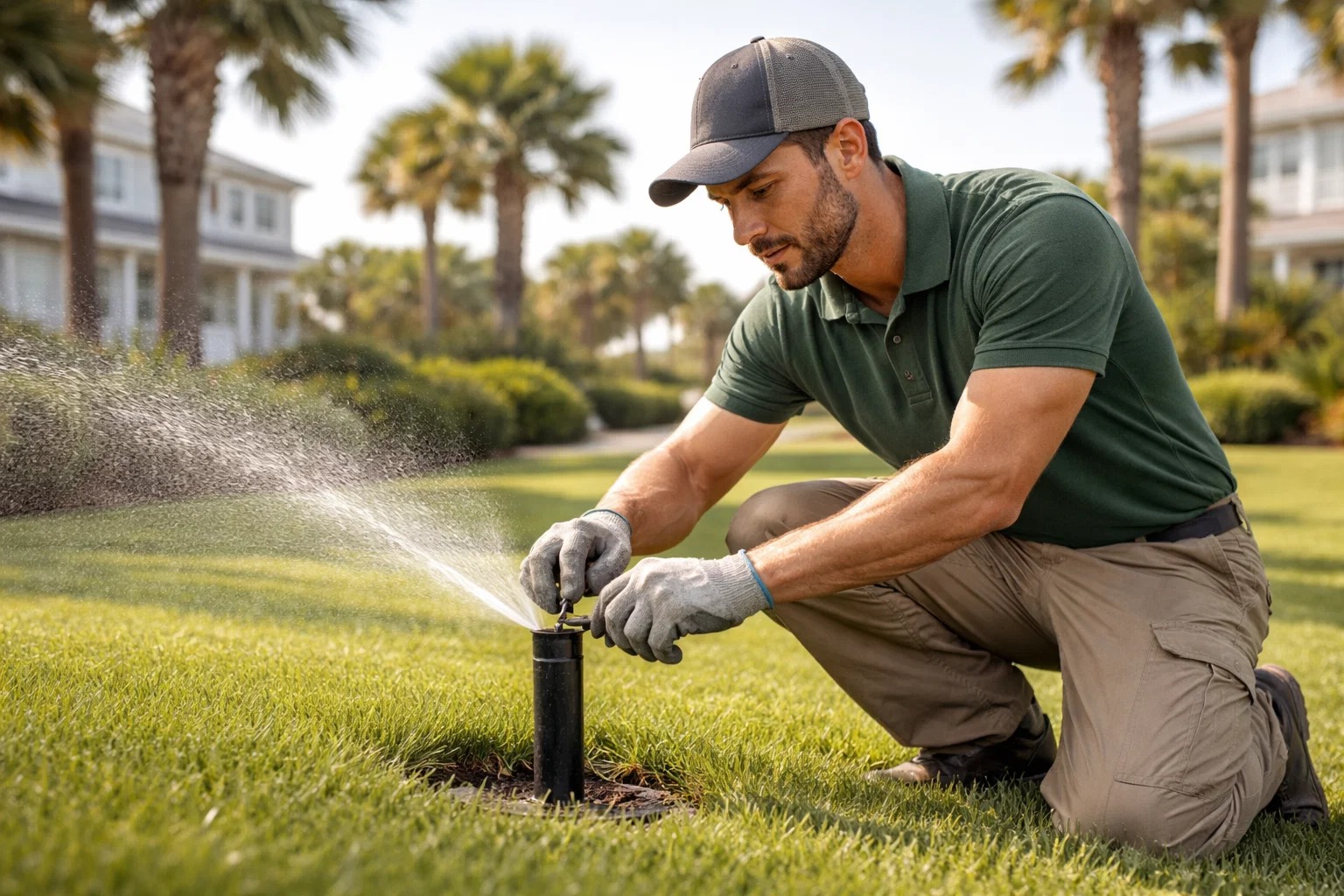
1Run each zone and watch every head pop up. Any head that does not fully extend is clogged, damaged, or experiencing low pressure. Heads that pop up but do not rotate on rotor zones are stuck and providing only a fixed narrow spray in one direction.
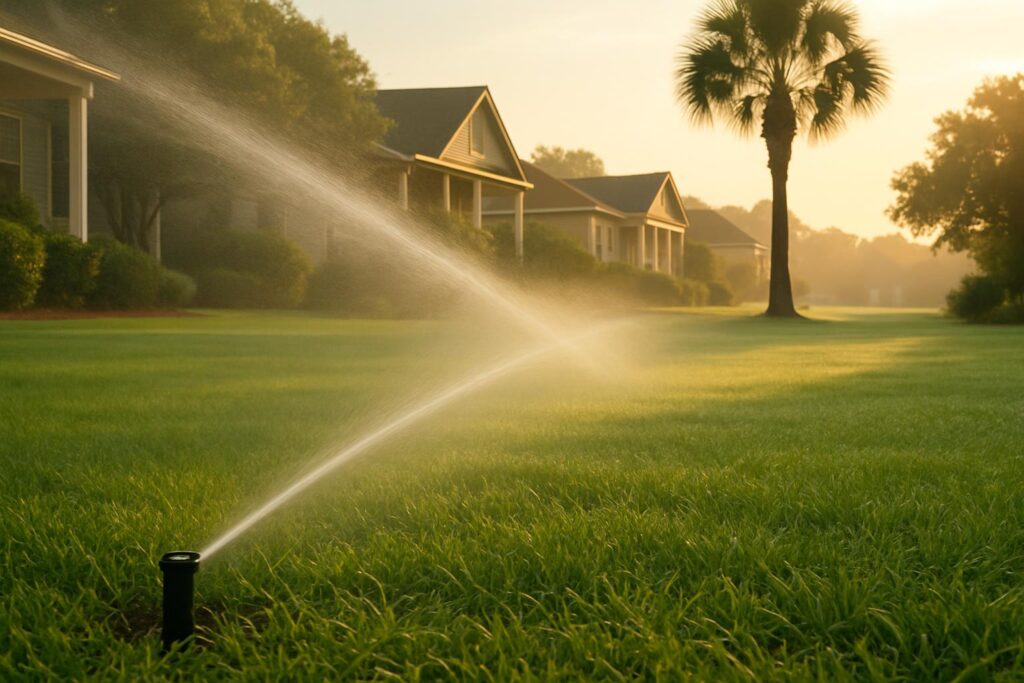
2Check spray patterns. Heads should spray in smooth, even arcs without gaps, dribbling, or erratic spray patterns. A sputtering or fragmented spray pattern indicates a clogged nozzle or screen that needs cleaning or replacement.
3Check head elevation. Heads should be at or just slightly above grade — heads that have settled below grade get clipped by mowers and provide reduced coverage. Heads that protrude too high become mower damage targets.
4Look for wet spots and dry spots between zones. A perpetually wet area near a zone valve or lateral line often indicates a slow leak. A consistently dry area between zones suggests a missing or failed head, or zone boundary miscoverage.
Auditing and Adjusting Your Controller Schedule
The irrigation schedule that was appropriate in May — when temperatures were in the 80s and evapotranspiration demand was moderate — will typically be insufficient by mid-July, when daytime highs approach 96°F and turf water demand peaks. As a rough guideline, centipede grass in North Myrtle Beach sandy soil needs approximately 1 to 1.5 inches of water per week during peak summer conditions, delivered in 2–3 sessions rather than daily.
Pull up your controller program and compare the current schedule to this target. If you are running zones for the same duration as in April, you may be providing 30–40% less effective coverage than July demands — because higher summer evaporation rates offset the same physical water delivery. Increase zone run times by 15–25% from spring settings as a starting point for July, and monitor turf response over the following week.
Water Pressure Problems and What They Look Like
Low pressure manifests as reduced throw distance on rotors, weak pop-up extension on spray heads, and misting rather than clean arc patterns from spray nozzles. If multiple zones in the same area show these symptoms simultaneously, the issue is likely a mainline pressure problem, a partially closed valve, or an aging pressure regulator. If only one zone shows symptoms, the issue is more likely in that zone’s lateral lines or valve.
High pressure causes fog-like overspray from spray heads, excessive mist that blows off-target in coastal SC’s prevailing winds, and premature nozzle wear. If you notice your irrigation looking more like a fog machine than a sprinkler when it runs, adding pressure regulators to affected zones or zones heads with built-in pressure compensation is the fix.
Upgrading to Smarter Irrigation for Coastal SC Conditions
If your irrigation system is running on a fixed schedule with no weather intelligence, it is likely overwatering after rain events and underwatering during heat waves — the two conditions that damage coastal SC lawns most reliably. A weather-based smart controller that adjusts run times based on local evapotranspiration data is the most impactful single upgrade for a North Myrtle Beach irrigation system, both for lawn health and water conservation.
Smart controllers from Rachio, Hunter Hydrawise, and Rain Bird’s smart line integrate with local weather stations and automatically adjust irrigation schedules based on actual conditions. They also provide remote monitoring via phone apps — allowing you to see run status, receive fault alerts, and adjust schedules while away from home. For second-home and vacation property owners on the Grand Strand, this technology is particularly valuable.
Frequently Asked Questions
How do I know if my irrigation system has a zone that’s not working?
Run each zone manually from your controller and physically walk through the yard while it operates. Watch for areas within the zone that receive no spray coverage, heads that do not pop up fully, or rotors that are stuck and not rotating. Follow up with the can test to verify uniform distribution across the zone.
How often should a North Myrtle Beach irrigation system be professionally inspected?
A complete professional inspection at the start of each irrigation season (spring) and a mid-season check-in during July is the best practice for North Myrtle Beach properties. The mid-season audit catches problems that developed during spring growth and ensures the system is calibrated for peak summer demand.
My water bill jumped this summer but my lawn is still dry — what is happening?
A significant increase in water usage combined with dry turf usually indicates a leak in the irrigation system — either a broken lateral line underground, a stuck-open zone valve, or a head that is spraying directly into a drain or onto hardscape. Run each zone and inspect carefully for water accumulating where it should not be.
Can I do a mid-season irrigation audit myself or do I need a professional?
A basic audit — running each zone, watching heads operate, and doing the can test — is something most homeowners can do themselves in 1–2 hours. Diagnosing pressure problems, underground leaks, or zone valve issues typically requires professional experience and diagnostic equipment to identify accurately.
Does KeckCo repair and audit irrigation systems in North Myrtle Beach?
Yes. KeckCo Turf and Ornamental Services provides irrigation system inspections, mid-season audits, head replacement, zone repairs, and smart controller upgrades throughout North Myrtle Beach, Little River, and Myrtle Beach. Contact us to schedule a mid-summer system check.
What is the most common irrigation repair in North Myrtle Beach during summer?
Broken or tilted spray heads from mower contact is the single most common irrigation repair in the area. The second most common is clogged nozzle screens from the sand and sediment that is ubiquitous in coastal SC’s sandy soil environment. Both are quick, inexpensive repairs that have an outsized positive impact on coverage quality when addressed promptly.
An irrigation system that is not working the way it should is one of the most expensive invisible problems a North Myrtle Beach lawn can have — expensive in water, expensive in lawn damage, and expensive in the recovery work that follows an extended period of inadequate or imbalanced coverage. A mid-season audit in July, even a basic one, consistently prevents the kind of problems that require sod replacement and major intervention in September.
Think your irrigation system might not be working right?
KeckCo Turf and Ornamental Services provides irrigation system audits, repairs, and smart controller upgrades throughout North Myrtle Beach and the Grand Strand. Let us make sure your system is ready for the rest of summer.