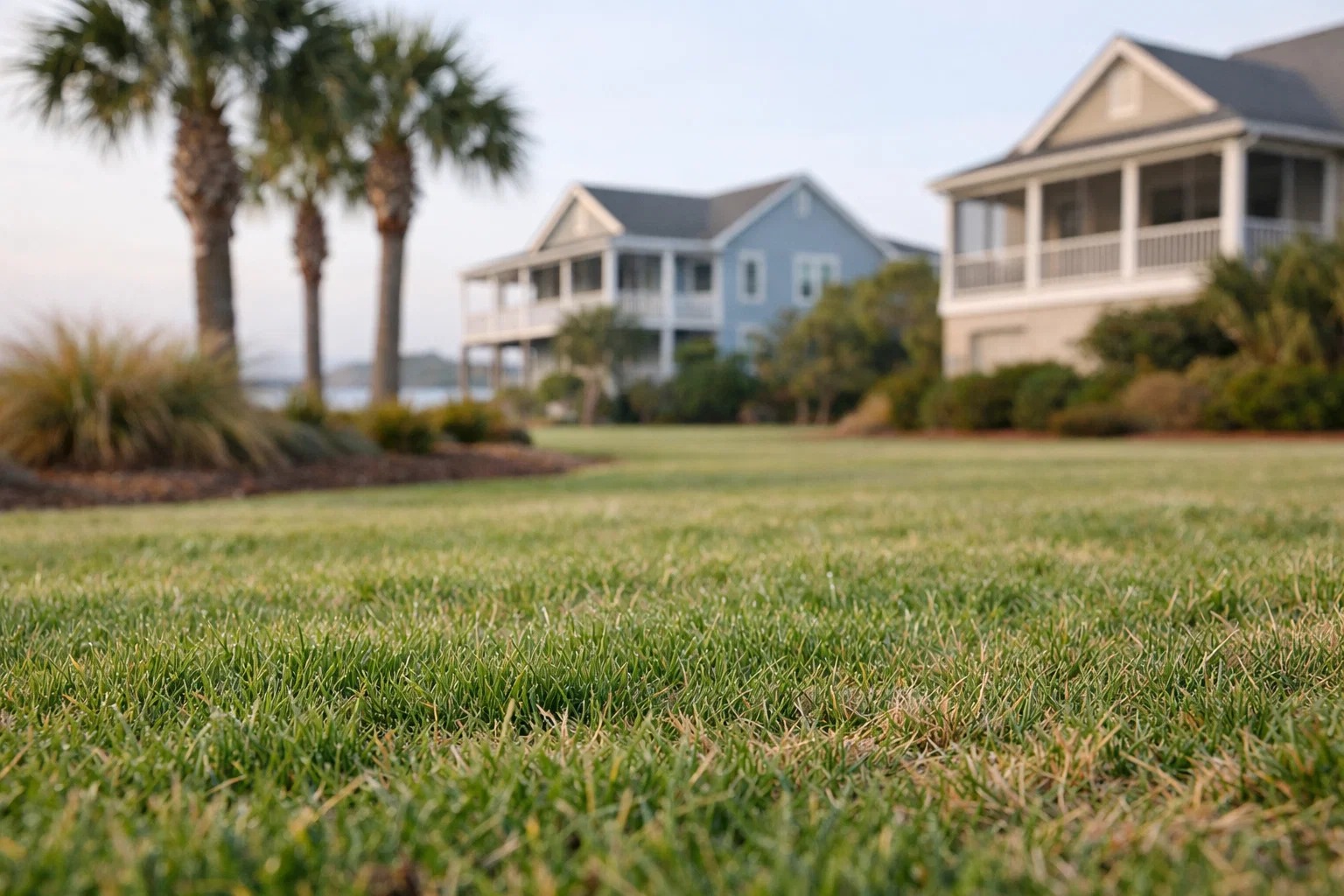

Your irrigation system has been working hard all summer to keep up with North Myrtle Beach’s peak evapotranspiration demands — and the schedule and run times dialed in for July and August are going to be wrong for September and October. As temperatures moderate and days shorten, the lawn’s water demand drops significantly, and an irrigation program that continues running at summer intensity into fall creates real problems: over-irrigation that triggers fungal disease, keeps soil too wet for fall aeration and pre-emergent applications, and runs up a water bill for moisture the lawn does not need.
At KeckCo Turf and Ornamental Services, transitioning irrigation systems from summer to fall mode is a standard seasonal service throughout our Grand Strand client base. Here is what needs to happen to your system in late August and September, and what to inspect before the cooler months arrive.
When and How to Reduce Your Irrigation Schedule
The trigger for reducing irrigation is not the calendar date — it is soil temperature and observable lawn behavior. When daytime highs consistently drop below 85°F and the lawn stops showing midday wilt even without irrigation, water demand has decreased meaningfully from summer peaks. In North Myrtle Beach, this typically begins in mid to late September, though specific timing varies year to year with weather patterns.
The reduction should be gradual rather than abrupt. In early September, reduce run times by 20 to 25 percent from your peak summer setting. By mid-September, step down again — most North Myrtle Beach lawns can move from a 3-times-per-week schedule to twice per week during this transition period. By October, once growth has slowed significantly and rainfall is more reliable than the dry summer pattern, once-per-week irrigation is usually sufficient for actively growing centipede and St. Augustine. As the grass enters dormancy in November and December, irrigation can be reduced to on-demand only — running the system during extended dry stretches to prevent severe drought stress, but not on any fixed schedule.
Controller Adjustments for Fall Transition
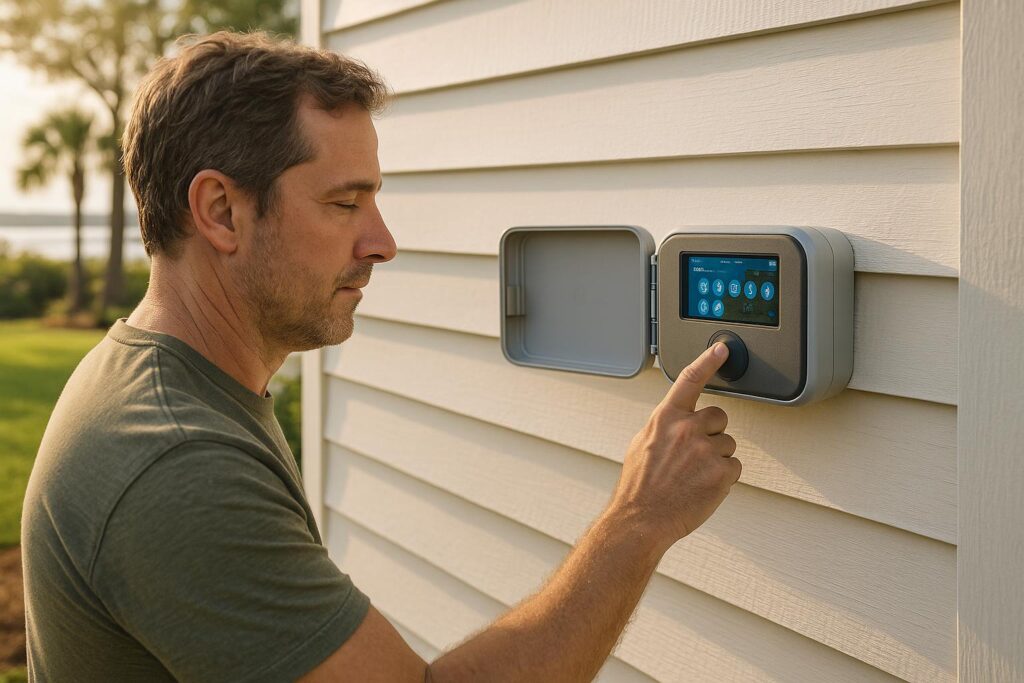
Most irrigation controllers allow schedule adjustment in one of two ways: directly reducing run times per zone, or using a seasonal adjustment percentage that scales all zones up or down simultaneously. The percentage approach is faster for properties with many zones — setting the seasonal adjustment to 75 percent of summer run times in early September and 50 percent by late September accomplishes the gradual reduction automatically without editing each zone individually.
For smart controllers with evapotranspiration (ET) data integration — Rachio, Hunter Hydrawise, and similar systems — the controller adjusts automatically based on local weather data, which is the most accurate approach. Verify that your smart controller’s weather station data is current and that it is actually receiving and applying ET adjustments rather than running on a fixed override schedule that disables the weather intelligence feature.
End-of-Season System Inspection Checklist
1Run each zone and walk through it. After a full summer of operation, broken heads, clogged nozzles, and stuck rotors accumulate. The end-of-summer inspection is your last chance to repair these before reduced fall use means problems go unnoticed through winter and are discovered at spring startup when you need the system working.
2Check for slow leaks. Note your water meter reading before and after running the system. Unexplained water use between irrigation cycles, or meter movement when all zones are off, indicates a leak in a zone valve, lateral line, or mainline that needs repair before it compounds over the cooler months.
3Inspect the backflow preventer. The backflow preventer is the component most vulnerable to freeze damage in North Myrtle Beach’s occasional hard freeze events. Check for existing cracks or damage from any freezes in the previous winter, and note its location for protection planning if another cold event occurs.
4Clear debris from around heads. Late-summer plant growth often crowds heads that had clear coverage in spring. Trim ornamental plantings that are now blocking spray patterns and check that all heads still pop up and operate without obstruction from overgrown turf edges.
5Document any zone issues. Note which zones have problems, which areas are showing uneven coverage from the summer, and what repairs are needed — either for immediate fixing or for spring service scheduling.
Rain Sensor and Smart Controller Checks
A rain sensor that is not functioning correctly runs your irrigation system through every fall rain event, producing the kind of chronic overwatering that triggers fungal disease on centipede grass and wastes water on a lawn that does not need it. Test your rain sensor by manually triggering it with water — the controller should suspend the scheduled program within seconds of the sensor registering moisture. If the system runs through a triggered sensor, the sensor or its wiring needs service.
Check sensor placement as well — sensors that have been shaded by plant growth no longer register sun and may dry out more slowly than the lawn itself, keeping the system suspended longer than intended. Clear any overhanging branches or shrubs that have grown over the sensor since spring installation.
Drip Irrigation Adjustments for Ornamental Beds
Ornamental beds with drip irrigation need their own fall schedule adjustment — separate from lawn zones and often on a more aggressive reduction timeline. Most established landscape plantings in coastal SC need significantly less water in September and October than in July, and newly planted fall specimens need more frequent monitoring rather than a fixed reduced schedule since their water needs depend on individual establishment progress.
Inspect drip emitters, inline drip tubing, and micro-spray heads in all bed zones. Summer heat degrades drip tubing and emitter components faster than cooler months do, and the end of summer is an appropriate time to replace any cracked tubing sections, flush debris from emitters, and confirm all heads are delivering water at their rated output before the system transitions to reduced fall operation.
Light Winter Prep for Coastal SC
Unlike properties in the Piedmont or mountain regions of South Carolina, North Myrtle Beach irrigation systems do not require full winterization with compressed air blowout — the coastal climate rarely produces the sustained hard freezes that would cause line rupture in properly installed systems with adequate soil coverage over lateral lines. However, the components most vulnerable to freeze damage are above-ground: the backflow preventer, any above-grade valve boxes with exposed components, and the controller housing if it is not rated for outdoor temperature extremes.
When a hard freeze is forecast — which occurs on average several times per winter in coastal Horry County — wrap exposed backflow preventers with foam insulation pipe wrap or an insulating cover, and confirm the controller has power and is not set to run during freezing temperatures. Running an irrigation system when temperatures are below 32°F can damage both the system components and the frozen turf surface through ice formation and physical damage from water pressure in partially frozen lines.
Frequently Asked Questions
When should I reduce irrigation in North Myrtle Beach in fall?
Begin reducing irrigation frequency and run times as soil temperatures drop below 75°F, typically in mid to late September in coastal Horry County. By October, most North Myrtle Beach lawns need irrigation only once or twice per week rather than the 3-times-per-week schedule appropriate for July and August.
Should I winterize my irrigation system in North Myrtle Beach?
Full winterization with compressed air blowout is not typically required in North Myrtle Beach, which rarely experiences sustained hard freezes that would burst properly installed lines. However, protecting exposed above-ground components like backflow preventers from the occasional hard freeze event, and reducing the system to minimal dormant-season operation, is recommended.
How do I know if my irrigation is still running too much in fall?
Signs of excessive fall irrigation include dollar weed or sedge proliferating in lawn areas, spongy or waterlogged soil that does not dry out between cycles, increased fungal disease activity such as brown patch appearing in September, and a water bill that does not decrease meaningfully from summer levels despite cooler temperatures.
Can I just turn my irrigation system off in October?
For established lawns, suspending irrigation in October is reasonable if North Myrtle Beach receives normal fall rainfall patterns. Newly installed sod from a fall renovation, recently planted ornamentals, and any lawn areas coming out of significant summer stress may need continued irrigation through October even as established areas can get by on rainfall. Monitor individual areas rather than applying a blanket off decision.
What should I do to my irrigation controller before winter?
Reduce run times to reflect fall demand, confirm rain sensor and smart weather features are functioning correctly and not being overridden, deactivate any summer override programs, and note any zones or components needing repair for spring service. If the controller is in an exposed outdoor location in a box not rated for freeze temperatures, confirm it has adequate protection for North Myrtle Beach’s occasional cold snaps.
Does KeckCo provide irrigation service and seasonal adjustments in North Myrtle Beach?
Yes. KeckCo Turf and Ornamental Services provides irrigation system service including end-of-season inspections, schedule adjustments, head repairs, and controller programming throughout North Myrtle Beach, Little River, and the Grand Strand. Call 843-273-0735 to schedule a fall irrigation service visit.
The irrigation transition from summer to fall is one of those low-effort, high-impact adjustments that significantly affects both lawn health and water costs in the months ahead. Fifteen minutes at your controller in late August — reducing run times, checking your sensor, and clearing any summer override programs — sets up a much smoother and more cost-effective fall season than discovering in October that the system has been running at July intensity all through September.
Need help dialing in your irrigation system for fall?
KeckCo Turf and Ornamental Services provides irrigation audits, seasonal schedule adjustments, and system repairs throughout North Myrtle Beach and the Grand Strand.