
Smart Irrigation Scheduling for Sandy Soil in Coastal Carolina
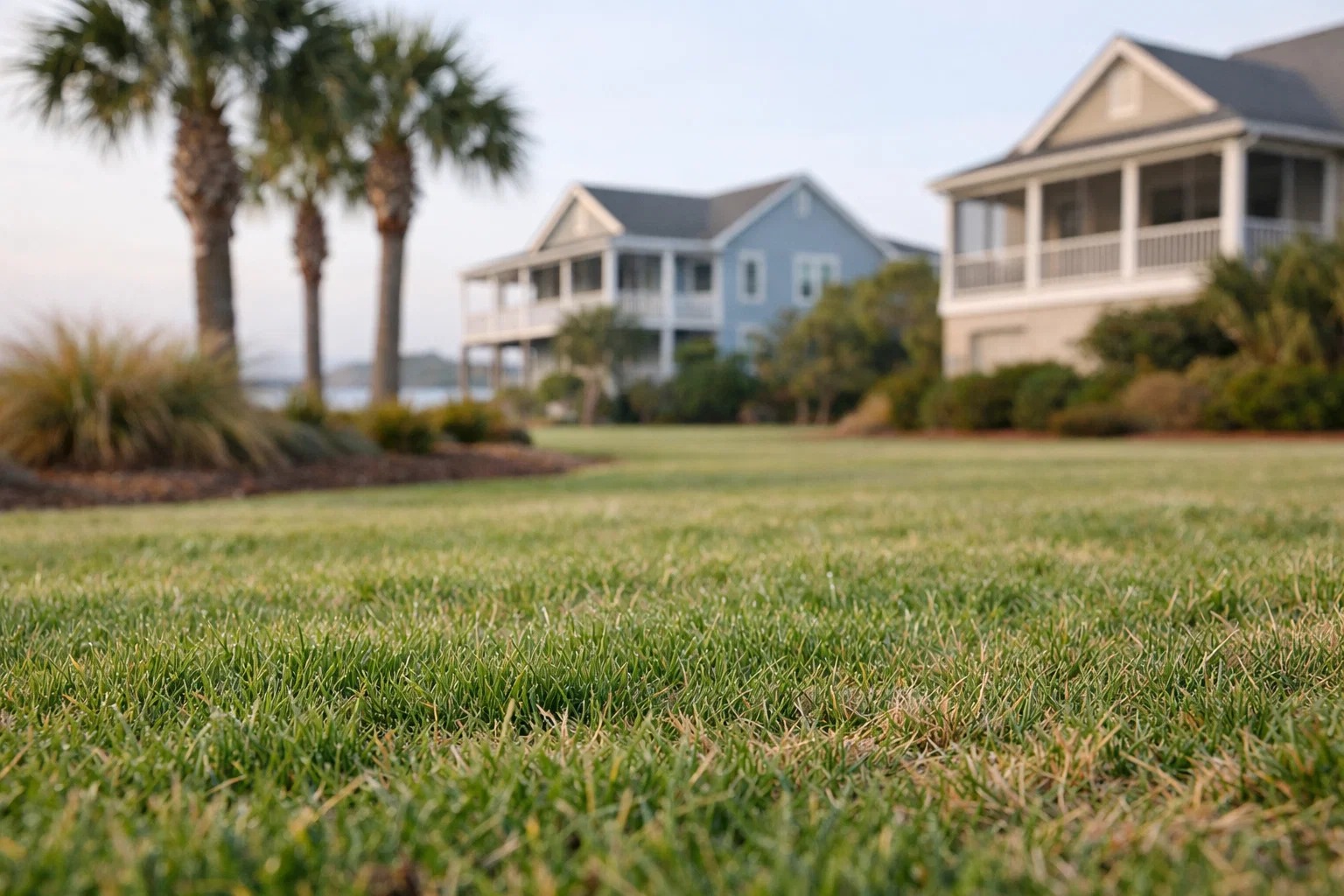
Most irrigation guides are written for average soil — a mix of sand, silt, and clay that holds water reasonably well and releases it slowly to grass roots over time. That’s not what you’re working with in coastal Carolina. From North Myrtle Beach south through Myrtle Beach and across most of Horry County, the soil is dominated by sand. Water moves through it quickly, draining past the root zone faster than many irrigation systems are designed to account for. Get the scheduling wrong and you end up in one of two places: chronically underwatering a lawn that looks stressed and brown by mid-July, or overwatering one that develops fungal disease and shallow, drought-vulnerable roots.
The good news is that irrigation scheduling for sandy soil in coastal Carolina follows a clear logic once you understand how the soil behaves. It’s not more complicated than scheduling for other soil types — it’s just different. This guide walks through the key principles, the right timing, and the specific adjustments that make an irrigation program actually work along the Grand Strand.
How Sandy Soil Behaves Differently — and Why It Matters for Scheduling
Soil texture determines how quickly water infiltrates, how deep it penetrates, and how long it stays available to roots. Sandy soil sits at one extreme of that spectrum. Its large, loosely packed particles create generous pore spaces that allow water to move downward rapidly — which is why North Myrtle Beach lawns drain so quickly after heavy rain and why standing water is relatively rare in most neighborhoods, even after summer storms drop two inches in an afternoon.
That drainage speed is genuinely useful in some ways. It means waterlogging and root suffocation from rain events are less common here than in clay-heavy soils further inland. But it also means that the window between “soil is moist at root depth” and “soil is dry at root depth” is much narrower than in other soil types. Sandy Horry County soil can go from adequately moist to dry-at-root-level within twenty-four to thirty-six hours during a hot July stretch, even without wind.
The practical implication for irrigation scheduling: you can’t bank water in sandy soil the way you can in loam or clay. You can’t deliver an inch of water on Monday and expect it to still be feeding roots on Thursday. Timing matters more, and the delivery method — deep versus shallow, morning versus evening — has a bigger effect on outcomes than it does in other soil types.
Why Deep, Infrequent Watering Outperforms Daily Light Cycles
The most important scheduling principle for sandy soil is one that runs counter to instinct: water less often, but water deeply when you do. Daily light watering — five or ten minutes per zone every morning — keeps the top inch or two of soil perpetually moist while the root zone below stays relatively dry. Centipede grass roots in North Myrtle Beach will chase available moisture upward toward the surface, creating a shallow root system that’s highly vulnerable to heat stress, drought, and foot traffic damage.
Deep, infrequent watering does the opposite. Running zones long enough to push moisture down to six inches — the target depth for healthy centipede root development — encourages roots to grow downward in search of that moisture reservoir. A lawn with deep roots in even sandy coastal soil handles heat and brief dry spells dramatically better than one with a dense mat of shallow surface roots.
The frequency target for sandy coastal soil in summer is two to three sessions per week, not seven. That means allowing a day of partial drying between sessions, which is counterintuitive in 95-degree July heat but is exactly what promotes the root behavior you want. The lawn may show very mild stress signs — the slightest blue-green tint to the color, footprints that linger a few seconds longer than usual — in the twenty-four hours before its next watering. That’s not damage. That’s the root system doing exactly what you want it to do.
Building Your Irrigation Schedule Zone by Zone
No two zones on a residential irrigation system are identical. Head type, spacing, sun exposure, slope, and proximity to pavement all affect how much water each zone needs and how long it should run to deliver it. Building a schedule that treats every zone the same is one of the most common sources of both overwatering and underwatering on the same property simultaneously.
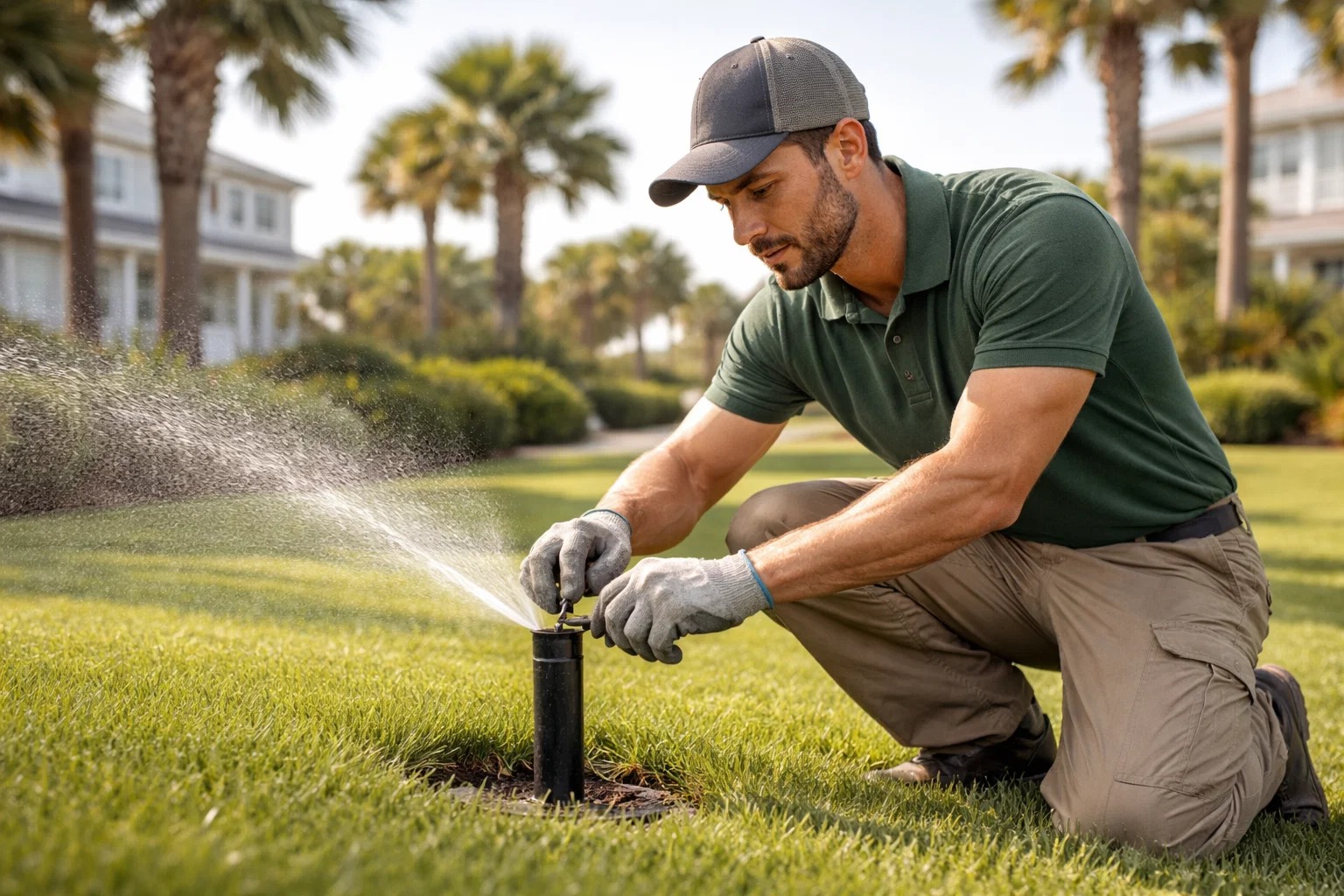
Start by identifying the key variables for each zone. Rotor heads that produce large rotating arcs apply water more slowly than fixed spray heads — they need longer run times to deliver the same volume. Zones in full sun along the south or west face of a property dry out faster than shaded north-facing zones. Zones near driveways or sidewalks often lose coverage to overspray and may need head adjustments before scheduling changes will help.
Here’s a practical zone-by-zone scheduling process for coastal Carolina sandy soil:
-
1Run each zone for fifteen minutes with tuna cans in the spray pattern. Measure the average water depth collected. This tells you your precipitation rate — how much water that zone delivers per unit of time. A typical residential spray head delivers about one to one-and-a-half inches per hour; rotors deliver about half that.
-
2Calculate run time needed to deliver one-third to one-half inch per session. If you’re watering three times a week and targeting one inch total, each session should deliver roughly one-third of an inch. Divide that target by your measured precipitation rate to get your run time per zone.
-
3Set all zones to run consecutively in a single early morning start. Avoid multiple start times per day. One complete cycle starting between 4 a.m. and 6 a.m. minimizes evaporation, ensures blades dry before evening, and reduces fungal disease risk in our humid coastal climate.
-
4Test with the screwdriver after the first full cycle. Check each zone’s soil at six inches immediately after the system completes. Adjust run times up or down based on what you find — this ground-truth check is more reliable than any formula for sandy Horry County soil.
-
5Set run days to non-consecutive days. Monday / Wednesday / Friday, or Tuesday / Thursday / Saturday — any three-day schedule that avoids back-to-back watering. This drying interval is essential in sandy soil to prevent surface saturation and fungal conditions.
-
6Install or confirm a working rain sensor. In a coastal SC summer with frequent afternoon storms, a functional rain sensor is the most important single component in your irrigation system. It should cancel the next scheduled cycle automatically after sufficient rainfall — confirm it’s working before summer peaks.
Seasonal Adjustments Every Coastal Carolina Homeowner Should Make
A single irrigation schedule cannot serve a coastal Carolina lawn well across all twelve months. Evapotranspiration — the combined water demand from soil evaporation and plant transpiration — roughly doubles between January and July in the North Myrtle Beach area. Running the same program in August that you ran in February doesn’t just waste water; it creates the chronic overwatering conditions that promote fungal disease and deplete shallow root systems.
The simplest approach is to use your controller’s seasonal adjustment feature, which scales all zone run times up or down by a percentage without requiring you to reprogram each zone individually. A reasonable adjustment calendar for the Grand Strand looks roughly like this: run times at sixty to seventy percent of your summer baseline in the cool months of November through February, scaling up to one hundred percent by late May, then holding there through September before stepping back down in October.
Watering frequency should also change seasonally. In winter, centipede grass is dormant and needs virtually no supplemental irrigation in coastal SC — rainfall is almost always sufficient. Resist the instinct to keep the system running year-round on an active schedule. Dormant centipede that’s overwatered in winter enters spring with weakened roots and excess thatch buildup.
Smart Controller Upgrades Worth Considering in Coastal SC
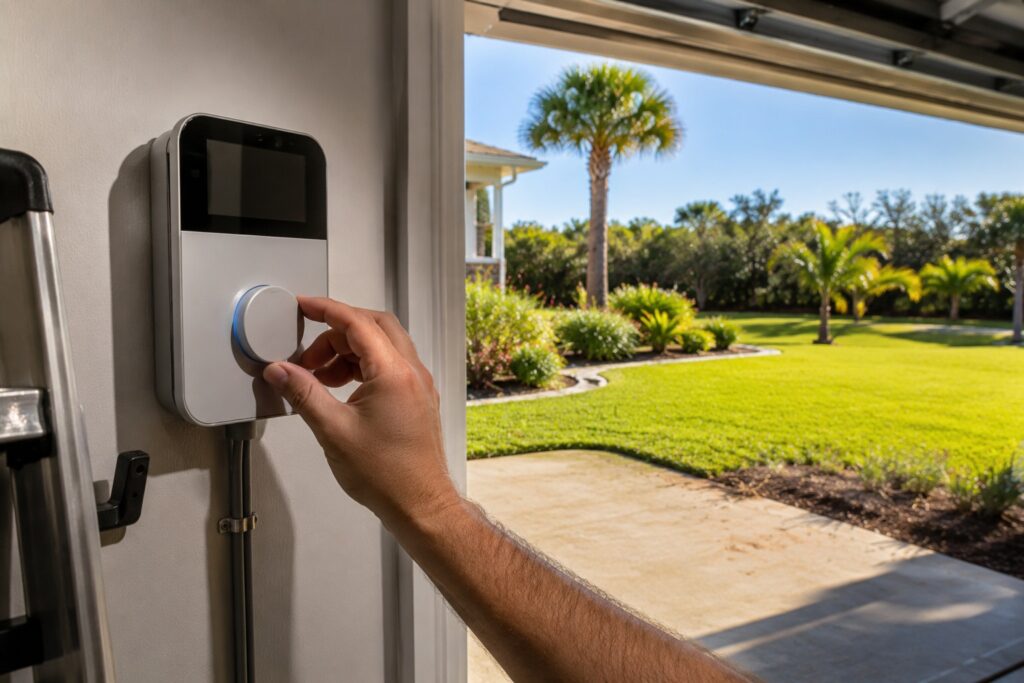
Standard irrigation controllers — the box on the garage wall with a dial and a weekly schedule — were designed for average soil in average climates. They run when programmed, regardless of what the weather is doing outside. For a coastal Carolina property with sandy soil and a summer rainfall pattern that can deliver two inches in an afternoon, that’s a significant limitation. Smart controllers close that gap in ways that pay for themselves quickly in reduced water bills.
A Wi-Fi enabled smart controller connects to local weather station data and adjusts run times automatically based on current evapotranspiration rates. On a week where the Grand Strand gets three inches of rain, the controller skips irrigation cycles automatically. During a dry stretch in late July, it may extend run times slightly to compensate. The homeowner sets the baseline schedule once and the system manages the rest — which is exactly the kind of low-maintenance solution that resonates with North Myrtle Beach’s large population of second-home owners and retirees who want a healthy lawn without monitoring it daily.
Two additional hardware upgrades work well alongside a smart controller for sandy coastal soil. Pressure-regulating spray heads maintain consistent output pressure regardless of fluctuations in supply pressure — critical in coastal neighborhoods where pressure can vary and high-pressure misting wastes significant water to wind drift. Soil moisture sensors placed in representative zones provide real ground-truth data that weather-based controllers can use to calibrate their estimates, improving accuracy in the sandy soil conditions that generic weather algorithms don’t account for well.
Related Reading from the KeckCo Blog
- How Much Water Does a North Myrtle Beach Lawn Really Need in July?
- Signs Your Sprinkler System Is Wasting Water (and Money) This Summer
- Irrigation System Startup Guide for Little River, SC
- How to Spot and Stop Drought Stress on Coastal SC Lawns
- Fertilizing Centipede Grass in North Myrtle Beach: A Seasonal Guide
Frequently Asked Questions
How is irrigation scheduling different for sandy soil in coastal Carolina?
Sandy soil has a much lower water-holding capacity than clay or loam, which means it drains faster and dries out more quickly between cycles. Standard irrigation schedules designed for average soil types will often either underwater or overwater sandy coastal lawns. The key adjustment is to water less frequently but for longer run times per session — this pushes moisture deep into the root zone before it drains past it, rather than keeping the surface wet with frequent short cycles.
What is cycle-and-soak irrigation and does it work in sandy soil?
Cycle-and-soak is a technique where a zone runs for a short period, pauses to let water absorb, then runs again — repeating until the target amount is delivered. It’s primarily designed to prevent runoff on slopes or in clay soils with low infiltration rates. In North Myrtle Beach’s sandy soil, which absorbs water quickly, standard single-cycle deep watering sessions are generally more effective than cycle-and-soak, since runoff is rarely a problem and the soil can accept water as fast as most heads deliver it.
How do I know how long to run each irrigation zone in coastal Carolina?
The tuna can test gives you a reliable baseline. Place several empty cans in the spray pattern of a zone and run it for fifteen minutes. Measure the average water depth in the cans. If you collected a quarter inch in fifteen minutes, you need to run that zone for thirty minutes to deliver a half inch per session. Adjust from there based on how quickly your sandy soil absorbs it — push a screwdriver in after each session to confirm moisture reached six inches deep.
Should I water more often in July and August because of the heat?
Not necessarily more often — but you may need to deliver the same weekly target more efficiently. Centipede grass in North Myrtle Beach needs about one inch of water per week in summer regardless of temperature. What changes with higher heat is that evaporation accelerates, so the timing of watering matters more. Early morning delivery reduces evaporative loss significantly. Watering frequency should stay at two to three times per week; if the lawn shows stress signs, extend run times rather than adding extra cycles.
Can I use the same irrigation schedule year-round in coastal Carolina?
No — and this is one of the most common mistakes we see on Grand Strand properties. Evapotranspiration rates vary dramatically between winter and summer in coastal SC. Running your summer schedule in cooler months will chronically overwater, promoting fungal disease and shallow roots. Most modern irrigation controllers have a seasonal adjustment feature that lets you dial the whole system up or down by a percentage without reprogramming each zone — use it, or upgrade to a smart controller that adjusts automatically based on local weather data.
How does salt air affect my irrigation schedule in North Myrtle Beach?
Salt air deposits sodium on grass blades and into the soil surface over time, which can interfere with water uptake at the root level. After significant onshore wind events or coastal storms, a light fresh-water flush — running your system for five to ten minutes outside your normal schedule — helps rinse salt deposits and reduce stress on already heat-challenged turf. This is a periodic supplement, not a change to your base schedule, and it’s especially important for lawns in oceanfront neighborhoods like those near Barefoot Resort or along the beachfront corridors.
What irrigation upgrades make the biggest difference for coastal Carolina sandy soil?
Three upgrades deliver the most return for North Myrtle Beach homeowners. First, a smart Wi-Fi controller with local weather integration automatically adjusts run times and skips cycles after rainfall — essential in a climate where July and August bring five-plus inches of rain. Second, pressure-regulating spray heads prevent the high-pressure misting that wastes water to wind drift in coastal conditions. Third, soil moisture sensors installed in representative zones give the controller real ground-truth data rather than relying on weather estimates alone.
Sandy soil isn’t a disadvantage — it’s just a different set of rules. Once you understand how quickly water moves through it and how to time your irrigation to deliver moisture where grass roots actually live, building an effective schedule for a coastal Carolina lawn becomes straightforward. Deep sessions, non-consecutive run days, early morning timing, a working rain sensor, and a seasonal adjustment that matches your program to the time of year: those five elements will outperform any complicated schedule that ignores the soil you’re actually working with.
Want a Smarter Irrigation System for Your Coastal SC Lawn?
KeckCo Turf and Ornamental Services designs, programs, and repairs irrigation systems built for the sandy soil and coastal conditions of North Myrtle Beach, Little River, and the Grand Strand. Whether you need a schedule tune-up, a smart controller upgrade, or a full system assessment, Brian Keck’s background managing coastal turf at the golf course level means your lawn gets precision irrigation — not guesswork.