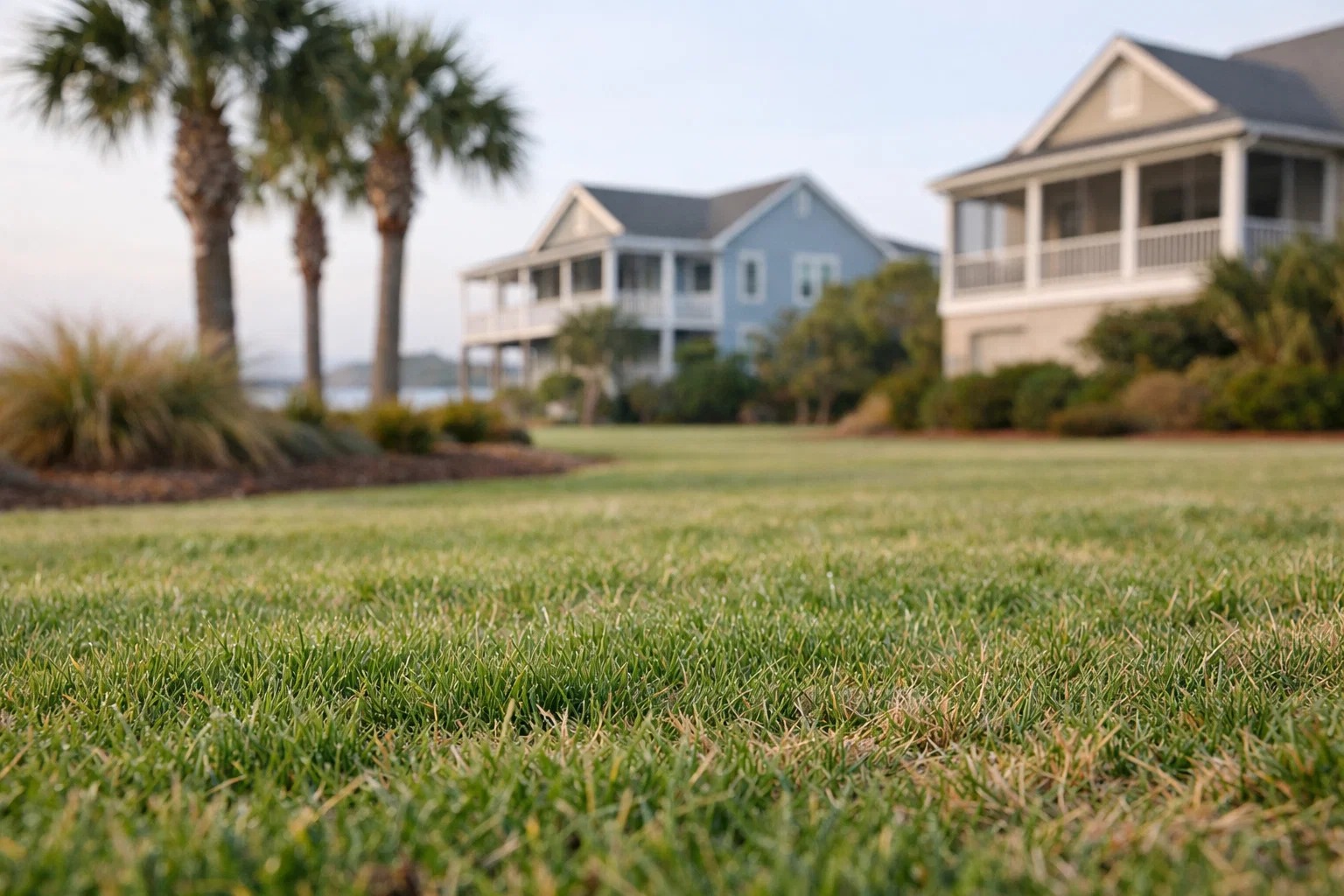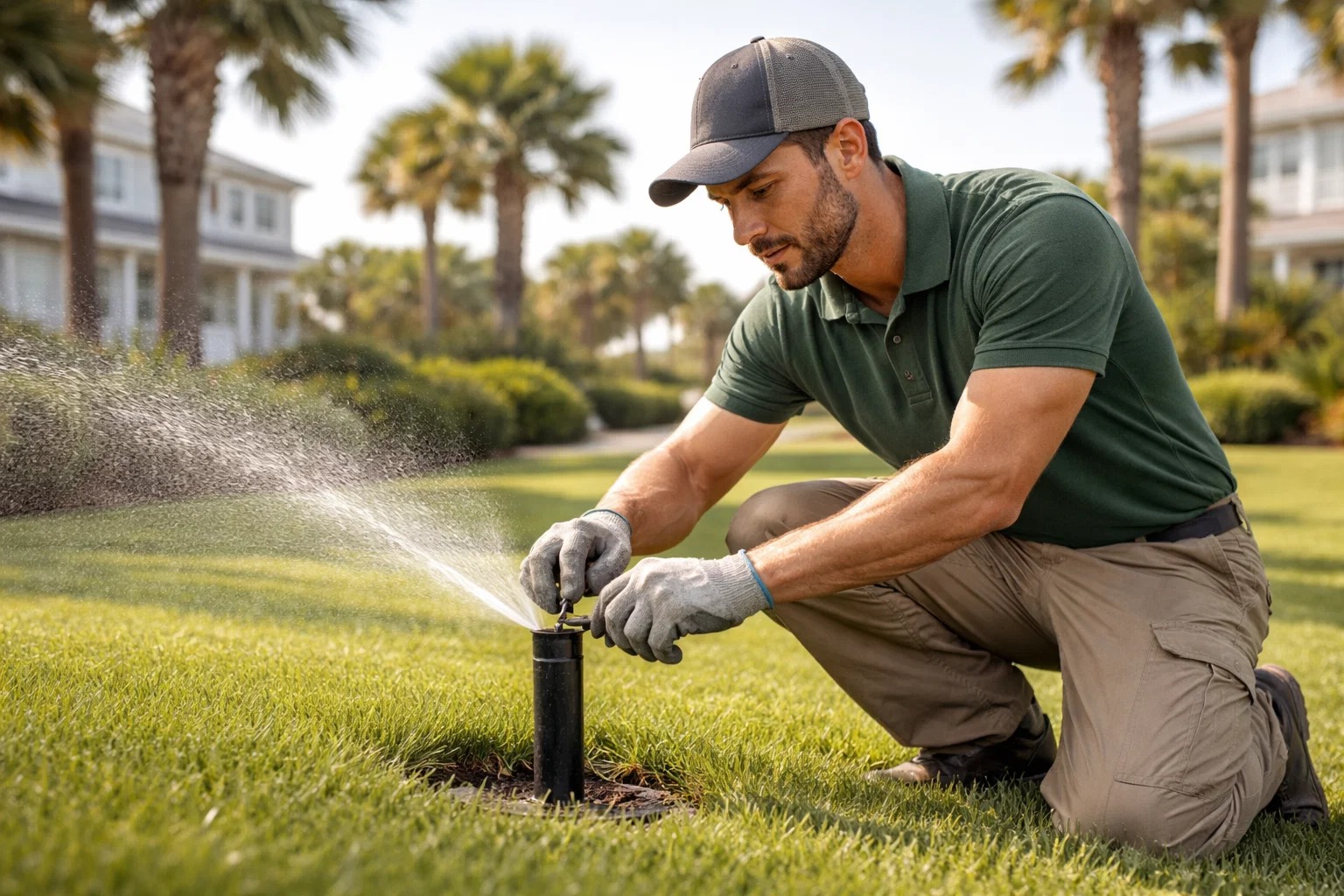

In coastal South Carolina, ground cover isn’t just about looks. Mulch and pine straw play a critical role in protecting soil, retaining moisture, controlling weeds, and supporting healthy plants in a challenging environment shaped by sandy soils, heavy rain, salt air, and intense summer heat.
Homeowners, HOAs, and commercial property managers across North Myrtle Beach, Little River, Loris, and the surrounding Grand Strand often ask the same question:
Is mulch or pine straw better for my landscape?
The answer depends on your property, plantings, maintenance expectations, and long-term goals. Let’s break it down clearly — without sales fluff — so you can make the right choice for your landscape.
Why Ground Cover Matters in Coastal Carolina
Without proper ground cover, coastal landscapes suffer quickly. Bare soil leads to:
- Rapid moisture loss in sandy soils
- Weed infestation
- Soil erosion during heavy rain
- Root temperature stress
- Declining plant health
Mulch and pine straw act as a protective layer that stabilizes soil and supports long-term landscape success.
What Is Mulch?
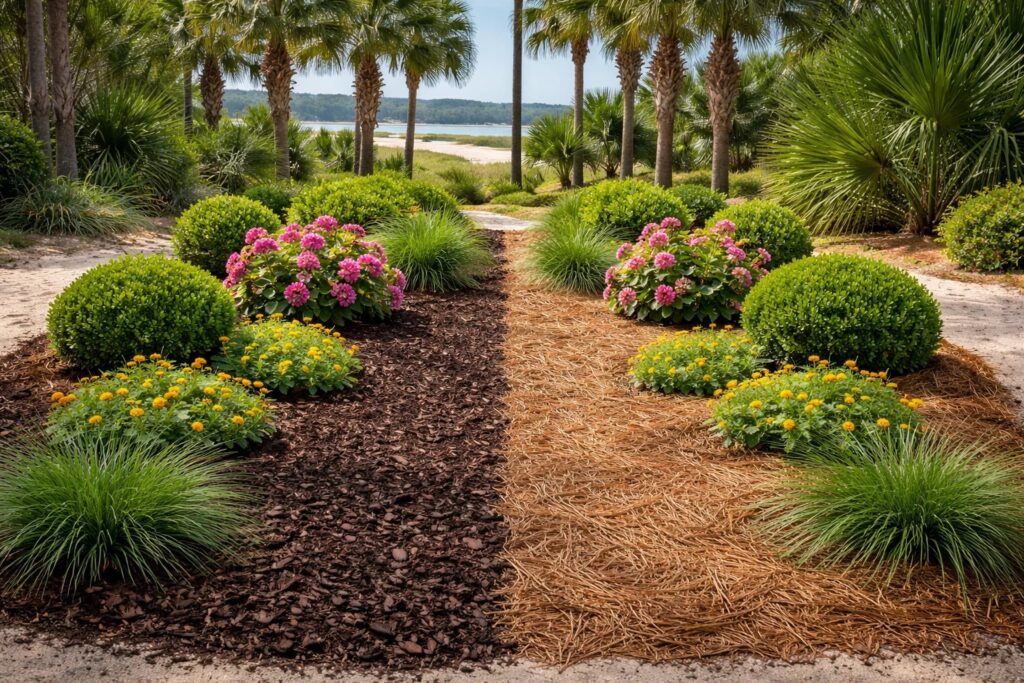
Mulch is typically made from shredded hardwood, bark, or wood chips. It’s widely used in residential, HOA, and commercial landscapes.
Benefits of Mulch
- Excellent moisture retention
- Strong weed suppression
- Insulates roots from temperature swings
- Improves soil structure as it breaks down
- Clean, finished appearance
Mulch is especially effective in ornamental beds, foundation plantings, and high-visibility areas.
Considerations
- Higher upfront cost
- Can wash out if improperly installed
- Needs refreshing as it decomposes
What Is Pine Straw?
Pine straw consists of fallen pine needles, commonly used throughout the Carolinas.
Benefits of Pine Straw
- Allows excellent water penetration
- Naturally resists erosion
- Lightweight and easy to install
- Lower upfront cost
- Works well on slopes and under trees
Pine straw is a traditional and practical option for many coastal landscapes.
Considerations
- Breaks down faster than mulch
- Requires more frequent replenishment
- Offers slightly less weed suppression
Mulch vs Pine Straw: Side-by-Side Comparison
| Feature | Mulch | Pine Straw |
|---|---|---|
| Moisture retention | High | Moderate |
| Weed control | Strong | Moderate |
| Erosion resistance | Moderate | Excellent |
| Appearance | Structured, bold | Natural, soft |
| Longevity | Longer-lasting | Shorter lifespan |
| Cost | Higher upfront | Lower upfront |
Both are effective — the key is choosing the right material for the right area.
Which Is Better for Coastal South Carolina?
Choose Mulch If:
- You want strong weed suppression
- Beds are highly visible
- You prefer a clean, polished look
- You want longer intervals between refreshes
Mulch performs exceptionally well around shrubs, flowers, and building foundations.
Choose Pine Straw If:
- You have sloped areas
- Water drainage is a concern
- Beds sit under pine trees
- You want a natural coastal look
- Budget efficiency matters
Pine straw excels in erosion-prone areas and large natural beds.
Many Landscapes Use Both
In coastal South Carolina, the most effective landscapes often use mulch and pine straw together:
- Mulch for foundation beds and ornamental areas
- Pine straw for wooded sections, slopes, and large beds
Professional design balances performance, appearance, and maintenance needs.
Installation Matters More Than Material
Even the best material fails if installed incorrectly.
Professional installation includes:
- Proper bed preparation
- Weed barrier evaluation
- Correct depth application
- Clean edging
- Even coverage
Poor installation leads to washout, weed growth, and wasted material.
Mulch & Pine Straw for HOAs and Commercial Properties
For HOAs and commercial landscapes, ground cover directly impacts:
- Property appearance
- Maintenance costs
- Resident satisfaction
- Long-term soil health
Professional planning ensures consistency across the property while controlling costs.
Refresh Timing: When Should Beds Be Recovered?
In coastal South Carolina:
- Mulch is typically refreshed once per year
- Pine straw may need refreshing 2–3 times per year
Timing installations before peak heat improves moisture retention and plant health.
Trust KeckCoTurf for Mulch & Pine Straw Installation
At KeckCo Turf & Ornamental Services, we help homeowners, HOAs, and commercial properties choose the right ground cover for their specific landscape needs.
We proudly serve:
- North Myrtle Beach
- Little River
- Loris
- Longs
- Calabash
- Surrounding Grand Strand communities
Our services include:
- Mulch installation
- Pine straw installation
- Bed preparation & edging
- Weed control solutions
- Seasonal refresh planning
If your beds are thinning, washing out, or overrun with weeds, we can help.
Contact KeckCoTurf today to schedule a professional mulch or pine straw installation.
📞 843-273-0735
🌐 https://keckcoturf.com