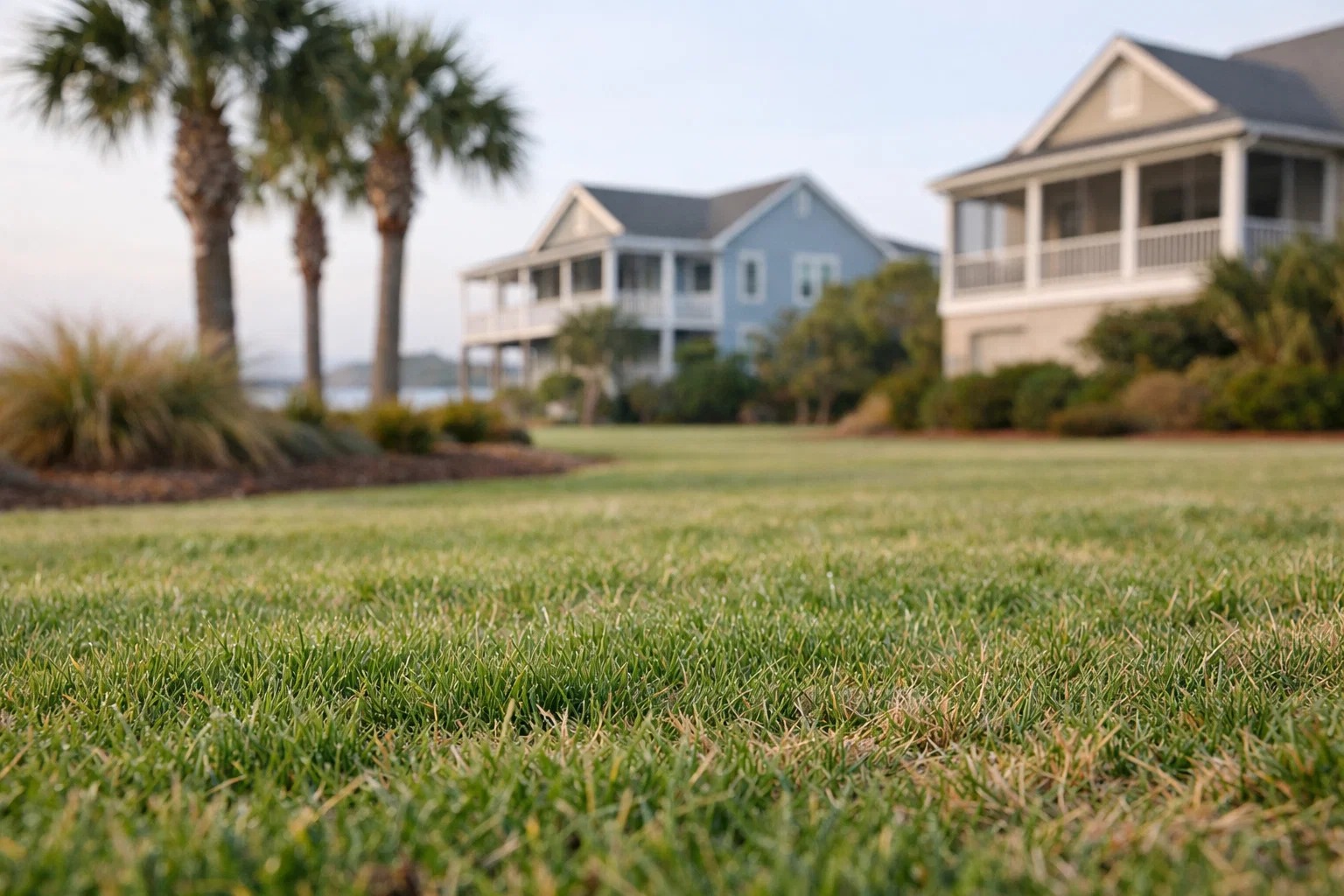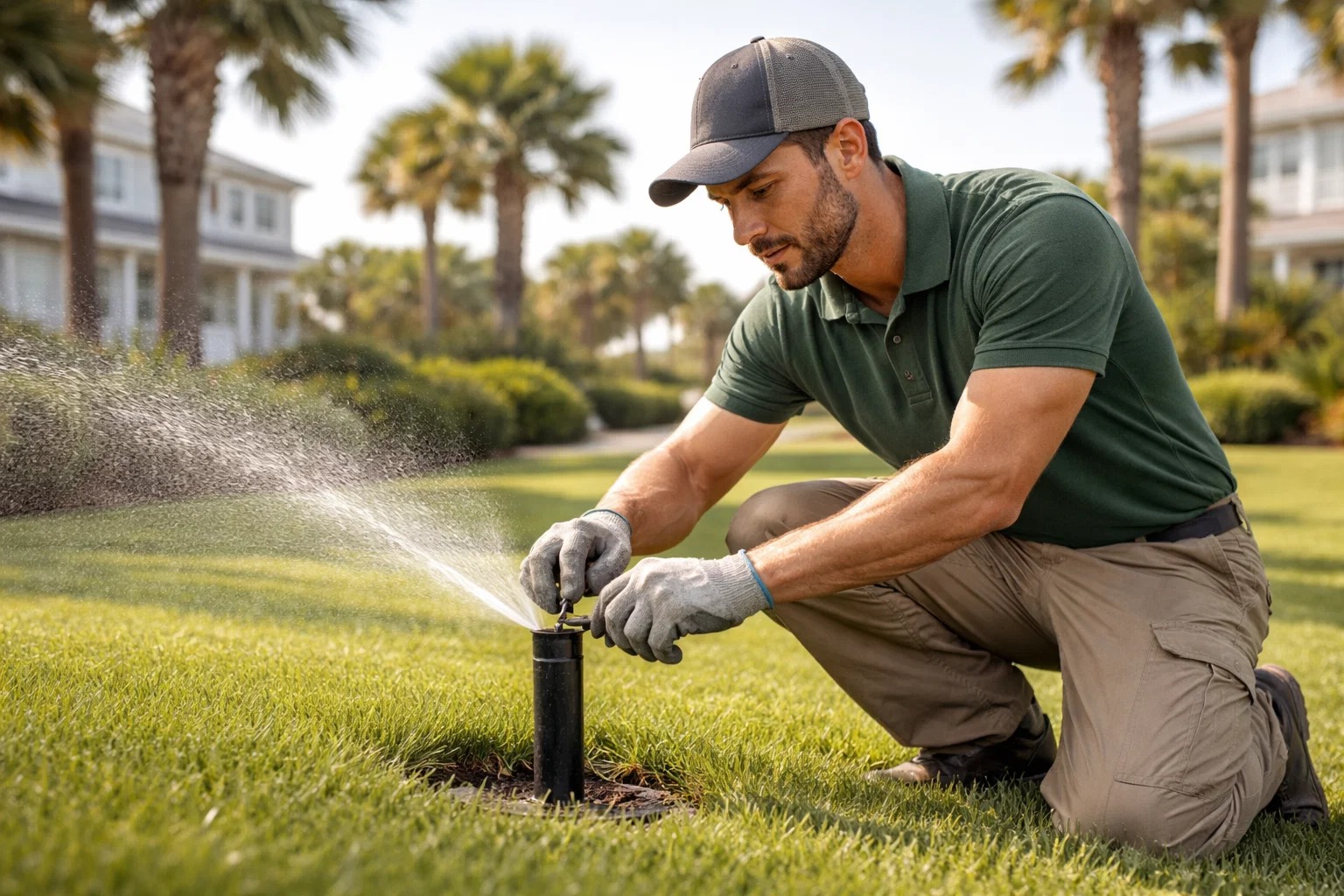

Standing water is one of the most common — and most damaging — landscape problems in coastal South Carolina. After heavy rain, many homeowners and property managers in North Myrtle Beach, Little River, Loris, and surrounding areas notice soggy lawns, pooling water, eroded beds, or turf that never seems to dry.
The challenge isn’t just inconvenience. Poor drainage leads to turf failure, root rot, mosquito breeding, foundation issues, and long-term landscape damage.
Two of the most effective solutions are French drains and catch basins — but they solve different problems. Choosing the wrong system often means wasted money and recurring issues.
Here’s how to understand the difference and determine which drainage solution is right for your coastal yard or property.
Why Drainage Is a Bigger Issue in Coastal South Carolina
Coastal Carolina landscapes face a perfect storm of drainage challenges:
- Sandy soils that shift easily
- Sudden heavy rainfall
- High water tables
- Flat terrain with limited runoff
- Compacted soil from construction and traffic
When water has nowhere to go, it collects in low areas, suffocating roots and weakening turf. Effective drainage systems don’t just move water — they protect the entire landscape ecosystem.
What Is a French Drain?
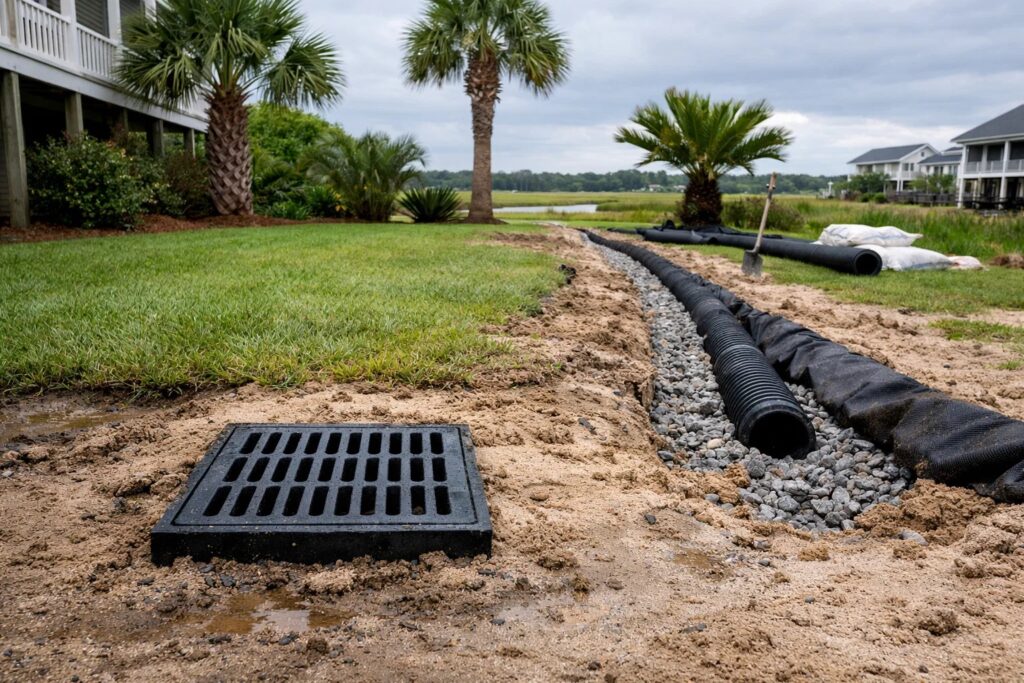
A French drain is a subsurface drainage system designed to move water away from problem areas underground.
How a French Drain Works
- A trench is dug along the problem area
- A perforated pipe is installed
- The trench is filled with gravel
- Water enters the pipe and is redirected away
French drains quietly collect excess groundwater and channel it to a safe discharge point.
Best Uses for French Drains
French drains are ideal when:
- Lawns stay soggy long after rain
- Water seeps from higher ground
- Turf struggles in low-lying areas
- Foundations need protection
- Drainage problems are widespread, not localized
They work especially well in sandy coastal soils where water moves quickly underground.
What Is a Catch Basin?
A catch basin is a surface drainage solution designed to collect visible, fast-moving water.
How a Catch Basin Works
- A grated inlet is installed at ground level
- Water flows directly into the basin
- Debris is trapped before entering pipes
- Water is carried away through solid piping
Catch basins manage surface runoff efficiently during heavy storms.
Best Uses for Catch Basins
Catch basins are ideal when:
- Water pools in a specific low spot
- Driveways or patios flood
- Downspouts release large volumes of water
- Stormwater moves quickly across surfaces
They are often used near hardscapes and property entrances.
French Drain vs Catch Basin: Key Differences
| Feature | French Drain | Catch Basin |
|---|---|---|
| Water type | Subsurface groundwater | Surface runoff |
| Visibility | Hidden underground | Visible surface grate |
| Best for | Persistent soggy areas | Flooding during storms |
| Debris handling | Minimal | Traps leaves and sediment |
| Installation depth | Deeper | Shallow |
In many coastal properties, both systems work together to fully manage water.
Why One-Size-Fits-All Drainage Solutions Fail
Many drainage failures happen because:
- The wrong system was installed
- Grading issues were ignored
- Discharge points were poorly planned
- Soil conditions weren’t evaluated
In coastal South Carolina, effective drainage requires site-specific analysis, not guesswork.
Drainage Solutions for HOAs & Commercial Properties
For HOAs, apartment communities, and commercial properties, drainage problems escalate quickly due to scale.
Professional drainage planning helps:
- Protect turf across large areas
- Reduce mosquito complaints
- Prevent sidewalk and parking lot flooding
- Protect building foundations
- Avoid costly turf replacement
Well-designed drainage systems reduce maintenance costs and improve property safety.
The Importance of Professional Drainage Design
Professional drainage installation includes:
- Site elevation analysis
- Soil evaluation
- Water flow mapping
- Correct pipe sizing
- Proper discharge planning
This ensures water moves away from landscapes — not into new problem areas.
Why Drainage Problems Should Never Be Ignored
Standing water doesn’t fix itself. Over time it causes:
- Turf death
- Root disease
- Erosion
- Structural damage
- Increased pest activity
Early intervention saves thousands in future repairs.
Solve Drainage Problems the Right Way with KeckCoTurf
At KeckCo Turf & Ornamental Services, we design and install custom drainage solutions tailored to coastal South Carolina’s unique conditions.
We serve:
- North Myrtle Beach
- Little River
- Loris
- Longs
- Calabash
- Surrounding Grand Strand communities
Our drainage services include:
- French drain installation
- Catch basin installation
- Grading correction
- Stormwater management
- Integrated drainage systems
If standing water is affecting your lawn, landscape, or property — don’t wait.
Contact KeckCoTurf today for a professional drainage evaluation and solution.
📞 843-273-0735
🌐 https://keckcoturf.com