
How to Protect Ornamental Beds Before a Tropical Storm
When the National Hurricane Center puts the Grand Strand in a tropical storm watch or warning, most North Myrtle Beach homeowners focus on windows, shutters, and sandbags — and rightfully so. But the ornamental landscape often gets overlooked in the pre-storm rush, and that oversight can mean weeks of cleanup and hundreds or thousands of dollars in plant replacement after the storm passes. A well-planted coastal Carolina landscape can weather most tropical storms with minimal lasting damage if the right steps are taken in the hours and days before a system makes landfall.
The threat to ornamental beds from a tropical storm isn’t just wind and physical damage — it’s the combination of wind, salt spray, flooding, and saturated soil that follows. Each of these stressors affects plants differently, and protecting against them requires a specific sequence of actions. Here’s what to prioritize, in order, when a storm is tracking toward the North Myrtle Beach area.
Understanding What a Tropical Storm Actually Does to Ornamental Plantings
Most homeowners think of wind as the primary threat to landscape plantings during a tropical storm, and wind damage is certainly real — broken branches, uprooted shrubs, and toppled trees are all common outcomes in coastal SC storms. But for ornamental beds specifically, salt spray is often the most widespread and damaging threat, particularly for plantings that survive the storm physically intact.
Tropical storms and hurricanes push ocean water and salt spray inland far beyond the immediate beachfront — sometimes several miles. Concentrated salt deposits on foliage draw moisture out of leaf tissue through osmosis, causing the browning, scorching, and dieback known as salt burn. Unlike wind damage, which is immediate and obvious, salt damage typically appears in the days following a storm, when homeowners may not immediately connect the browning they’re seeing to salt exposure from the storm.
Saturated soil is the other major post-storm threat to ornamental plantings in North Myrtle Beach. Most coastal SC ornamental plants — including many natives — tolerate brief flooding, but extended root zone saturation (more than 48 to 72 hours) can cause root suffocation and long-term decline even in species that appear physically undamaged after a storm. The sandy soil throughout most of Horry County actually provides some protection here, draining more quickly than clay-based soils — but low-lying areas and beds with poor drainage are still vulnerable to extended saturation after significant rainfall events.
Pre-Storm Checklist: What to Do 24–72 Hours Before Landfall
The pre-storm window is when the most meaningful protective actions can be taken. Once tropical storm-force winds arrive — sustained winds above 39 mph — outdoor work becomes dangerous. Everything on this list needs to happen before that threshold is reached, ideally with 24 hours to spare.
-
1Move all container plants indoors or into the garage. Pots, planters, hanging baskets, and window boxes should come inside before the wind arrives. Even heavy pots become dangerous projectiles in tropical storm-force winds. Plants too large to move should be laid on their sides in a sheltered location — against a wall or fence on the leeward side of the house — rather than left standing upright.
-
2Remove dead, weak, or crossing branches from shrubs and small trees. Dead wood and structurally weak branches that would fail in a storm anyway are better removed cleanly before the storm than left to snap under wind load, potentially damaging surrounding plants or structures. Make proper pruning cuts — no stubs, no tears. Limit pruning to clearly compromised material; don’t give healthy plants a pre-storm haircut.
-
3Stake newly planted or top-heavy specimens. Any plant installed within the past twelve months that hasn’t had time to establish a full root system is vulnerable to wind throw — the roots simply can’t anchor the plant adequately yet. Drive stakes on the windward side and use soft ties (not wire) to provide temporary support. Remove stakes promptly after the storm passes.
-
4Check and clear bed drainage pathways. Ensure that mulch and plant material aren’t blocking drainage outlets from beds, and that downspout extensions are directing water away from foundation plantings. In North Myrtle Beach’s sandy soil, most beds drain relatively quickly, but any obstruction to natural drainage can significantly extend soil saturation time during a heavy rainfall event.
-
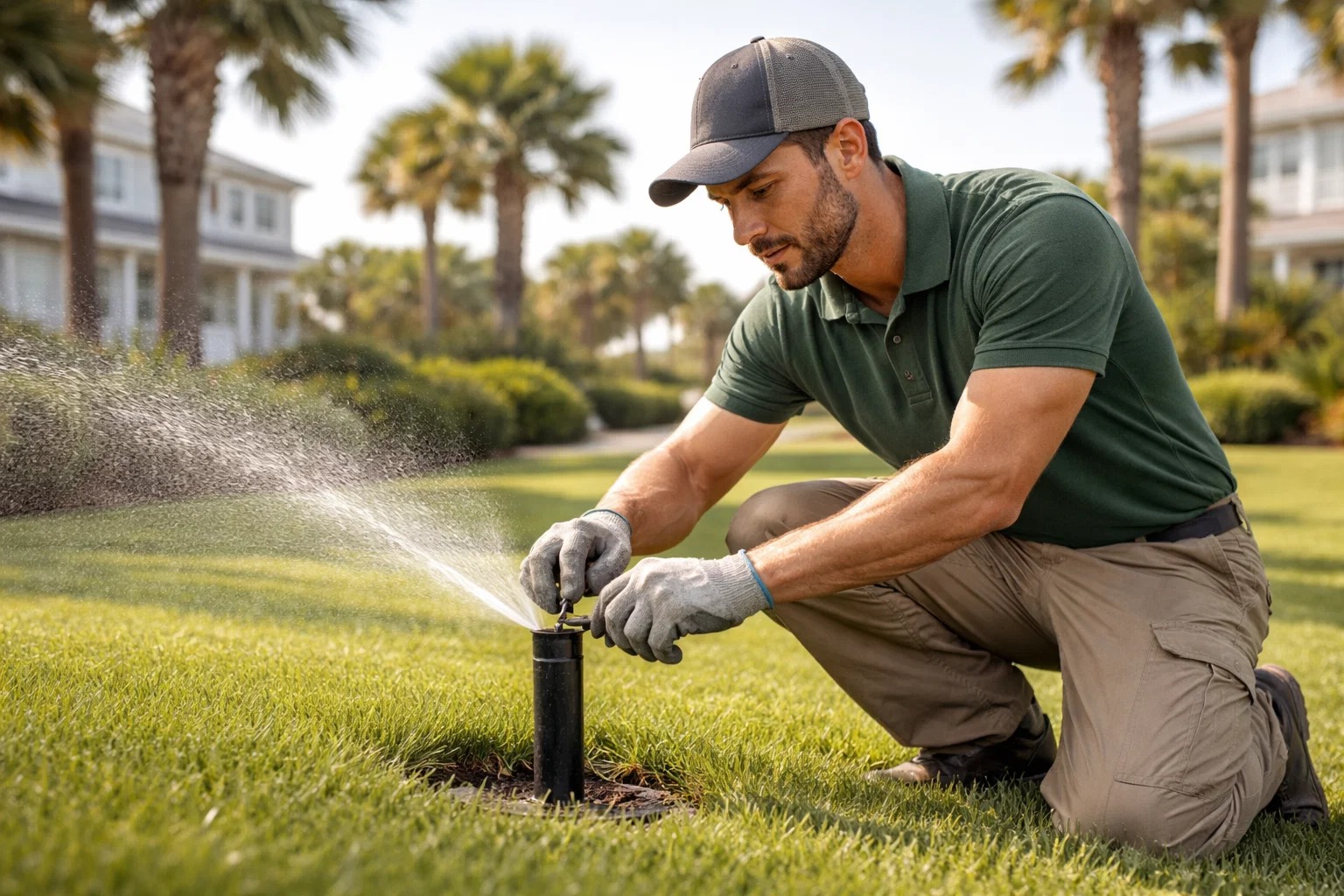
5Turn off your irrigation system. A tropical storm will deliver far more water than your landscape needs. Shut off your controller and leave it off for at least a week after the storm passes. Running irrigation on waterlogged soil prolongs root saturation and provides no benefit to plants that are already dealing with more moisture than they can use.
-
6Photograph your landscape before the storm. A pre-storm photo record of your beds and plantings is valuable for insurance documentation if significant damage occurs. Walk the property and photograph each bed, notable specimen plants, and any structures near plantings. Store photos somewhere accessible (cloud storage) so they’re available even if you’ve evacuated.
Plants That Need Special Attention Before a Storm
Not all landscape plants face the same risk level in a tropical storm. Species and planting situations that warrant extra attention in the pre-storm window include those that are particularly vulnerable to wind, salt spray, or flooding — and those that represent significant investment or irreplaceable landscape value.
Newly installed plantings (less than 12–18 months old). Root systems that haven’t fully established can’t anchor plants adequately in sustained tropical storm winds. Any specimen planted in the past year and a half should be assessed for staking support. This is particularly true for larger shrubs, ornamental trees, and palms that have significant wind-catching canopy relative to their root establishment.
Palms. Established palms are actually among the most storm-resistant landscape plants in coastal SC — their flexible trunks and self-pruning frond structure evolved in hurricane-prone environments. However, recently transplanted palms with limited root establishment are vulnerable. Remove any dead or dying fronds before a storm (they become projectiles) but leave green fronds in place — the canopy provides little wind resistance and healthy fronds should not be removed pre-storm.
Broadleaf evergreens in exposed positions. Plants like Indian hawthorn, Loropetalum, and Otto Luyken laurel in exposed, oceanside-facing beds are particularly vulnerable to salt spray damage. If you have valuable specimens in highly exposed positions, temporary burlap wrapping on the windward face can reduce direct salt spray contact, though this is practical only for smaller specimens and only when time allows.
Tall ornamental grasses. Established clumps of muhly grass, miscanthus, or pampas grass can be loosely bundled with twine to reduce wind shredding and flopping. This takes only a few minutes per clump and significantly reduces the amount of post-storm tidying required. Remove the twine within a day or two after the storm passes to allow the plants to resume their natural form.
What Not to Do Before a Tropical Storm Hits
Pre-storm anxiety often leads homeowners to take actions that feel productive but actually increase plant damage rather than reducing it. These are the most common mistakes to avoid in the hours before a tropical system arrives on the Grand Strand.
Don’t heavily prune healthy shrubs and trees. The instinct to “cut back” plants before a storm to reduce wind resistance is understandable but counterproductive for most ornamental species. Pruning wounds on shrubs and trees expose fresh tissue to salt spray, wind, and rain-borne pathogens. Freshly cut branch tips are among the first things to show salt damage post-storm. Established, structurally sound plants are better left with their natural canopy — they’ve weathered storms before.
Don’t stake or support plants with rigid ties or wire. If staking newly installed plants, use flexible ties — strips of fabric, rubber tree ties, or commercial soft ties — never wire, zip ties, or anything that doesn’t flex with the plant. Rigid ties on flexible plants create pivot points where stem breakage occurs under wind load. The tie should support the plant while still allowing some movement.
Don’t wait until the last minute. Tropical storm watches and warnings are issued with sufficient lead time to complete pre-storm landscape tasks safely, but only if you start when the watch is issued. By the time a warning is upgraded and the outer bands arrive, outdoor work is both less effective and increasingly dangerous. Make the call to begin pre-storm landscape prep when a watch is issued for the North Myrtle Beach area, not when a warning replaces it.
Don’t ignore the irrigation system. Leaving your irrigation system on an automatic schedule through a tropical storm guarantees waterlogged soil for days longer than necessary after the storm. A single irrigation cycle on soil that’s absorbed ten inches of storm rainfall can extend saturation time by twenty-four hours or more — meaningful time when it comes to root oxygen deprivation.
Post-Storm Recovery: The First Steps After the System Passes
The 48 to 72 hours immediately following a tropical storm are critical for ornamental landscape recovery. What you do — and don’t do — in this window significantly affects how quickly your beds recover and how much plant material ultimately survives.
Rinse with fresh water as soon as conditions allow. Salt spray removal is time-sensitive — the longer salt deposits remain on foliage and in the soil surface, the more damage accumulates. As soon as it’s safe to work outdoors after the storm passes, use a garden hose to rinse foliage and the soil surface in exposed beds. This doesn’t require high pressure — a gentle rinse is sufficient to dilute and displace salt deposits. For larger properties, run your irrigation system for a short flush cycle specifically for this purpose.
Walk and document before you clean up. Before cutting anything, walk the entire property and photograph the damage. This documentation matters for insurance purposes and also helps you prioritize — not everything that looks damaged needs immediate attention, and some plants that look severely stressed post-storm will recover fully once salt is rinsed and normal conditions resume.
Remove broken branches cleanly and promptly. Broken or hanging branches should be removed with proper pruning cuts as soon as conditions allow. Jagged breaks and torn stubs are entry points for fungal disease — in the humid, warm post-storm environment along the Grand Strand, disease establishment in wound sites happens quickly. Cut to the branch collar, never leave stubs, and don’t apply wound sealers (research shows they inhibit natural compartmentalization in most species).
Wait on fertilizer. Storm-stressed plants should not be fertilized for at least three to four weeks after the event. Pushing new growth on stressed root systems diverts limited resources from recovery and produces tender tissue that’s vulnerable to the secondary fungal problems common in post-storm coastal environments. Let plants stabilize and show signs of new growth on their own before resuming any fertilization program.
Related Reading from the KeckCo Blog
Frequently Asked Questions
Should I prune my shrubs before a tropical storm hits North Myrtle Beach?
Light selective pruning of dead wood and weak branches is beneficial before a storm — removing material that could snap and become a projectile reduces both plant damage and property risk. However, heavy pruning right before a tropical storm is counterproductive. Fresh cuts expose plant tissue to high winds, salt spray, and rain-borne pathogens at exactly the wrong time. Limit pre-storm pruning to removing clearly dead, diseased, or structurally compromised branches and leave healthy material in place.
How do I protect potted plants before a tropical storm?
Move all container plants indoors or into a garage before tropical storm-force winds arrive. Even heavy ceramic or concrete pots become dangerous projectiles in sustained winds above 40 mph. Plants too large to move should be laid on their sides in a sheltered location rather than left standing. Remove any hanging baskets and store pot saucers that can become airborne. This is one of the most time-sensitive pre-storm tasks because container plants are both among the most vulnerable and the most easily protected.
Will my ornamental plants recover from tropical storm damage?
Most established ornamental shrubs and trees in coastal Carolina landscapes recover from tropical storm damage, though the recovery timeline varies significantly by species and damage severity. Salt spray damage, which causes leaf browning and dieback, typically appears in the days following a storm and is usually cosmetic on established plants — new growth replaces damaged foliage within weeks. Physical damage from broken branches requires prompt removal to prevent disease entry. Plants that are completely uprooted or had their root zones flooded for extended periods face the most challenging recovery.
Should I remove mulch from my beds before a tropical storm?
No — in most cases, keeping mulch in place before a storm is the right call. A properly applied layer of mulch helps protect root zones from the saturated soil conditions that accompany heavy rainfall, reduces erosion of sandy coastal soil during heavy rain events, and insulates plant roots from the temperature fluctuations that follow storm passage. The exception is if mulch is very loose or freshly applied and hasn’t settled — in that case, light watering to help it compact before the storm can reduce displacement.
What should I do with my ornamental beds right after a tropical storm?
The first priority after a storm passes is a thorough walkthrough to assess damage before attempting any cleanup. Note which plants have broken branches, which have been uprooted, and which show signs of salt spray burn. Remove broken branches cleanly with proper pruning cuts — don’t tear or leave jagged stubs. Rinse foliage with fresh water as soon as possible to remove salt spray deposits. Wait at least two weeks before fertilizing any storm-stressed plants, as pushing new growth too soon after storm damage increases disease vulnerability.
How does salt spray from a tropical storm damage plants in North Myrtle Beach?
Tropical storms and hurricanes push concentrated ocean salt spray inland — sometimes miles from the coast — depositing it on foliage and into the soil. Salt draws moisture out of leaf tissue through osmosis, causing the brown, scorched appearance known as salt burn. In severe cases, salt can accumulate in soil to levels that interfere with root water uptake for weeks after a storm. Rinsing plants and soil with fresh water immediately after a storm, as conditions allow, significantly reduces salt damage on ornamental plantings throughout the Grand Strand.
Does KeckCo help with storm prep and recovery for ornamental landscapes in North Myrtle Beach?
Yes. KeckCo Turf and Ornamental Services provides pre-storm landscape preparation and post-storm cleanup and recovery services across North Myrtle Beach, Little River, Myrtle Beach, and the Grand Strand. From pre-storm pruning and securing to post-storm debris removal, salt rinse treatments, and plant health assessment, we help coastal SC homeowners protect their landscape investment before storms hit and restore it efficiently after they pass. Call 843-273-0735 or visit keckcoturf.com.
A tropical storm watch on the Grand Strand is the signal to act, not to wait and see. The actions that protect your ornamental beds — moving containers, removing dead wood, staking new plants, shutting off irrigation — take a few hours at most and can save weeks of post-storm cleanup and significant plant replacement costs. And when the storm passes, the priority is fresh water on foliage and a careful assessment before any cutting begins. The landscape that was thoughtfully prepared before the storm is the one that looks like itself again soonest after it.
Need Help Preparing or Recovering Your Landscape Before or After a Storm?
KeckCo Turf and Ornamental Services provides pre-storm landscape preparation and post-storm cleanup and recovery across North Myrtle Beach, Little River, Myrtle Beach, and the Grand Strand. When a storm is tracking toward the coast, we help you protect what you’ve built — and restore it efficiently when the system passes.