
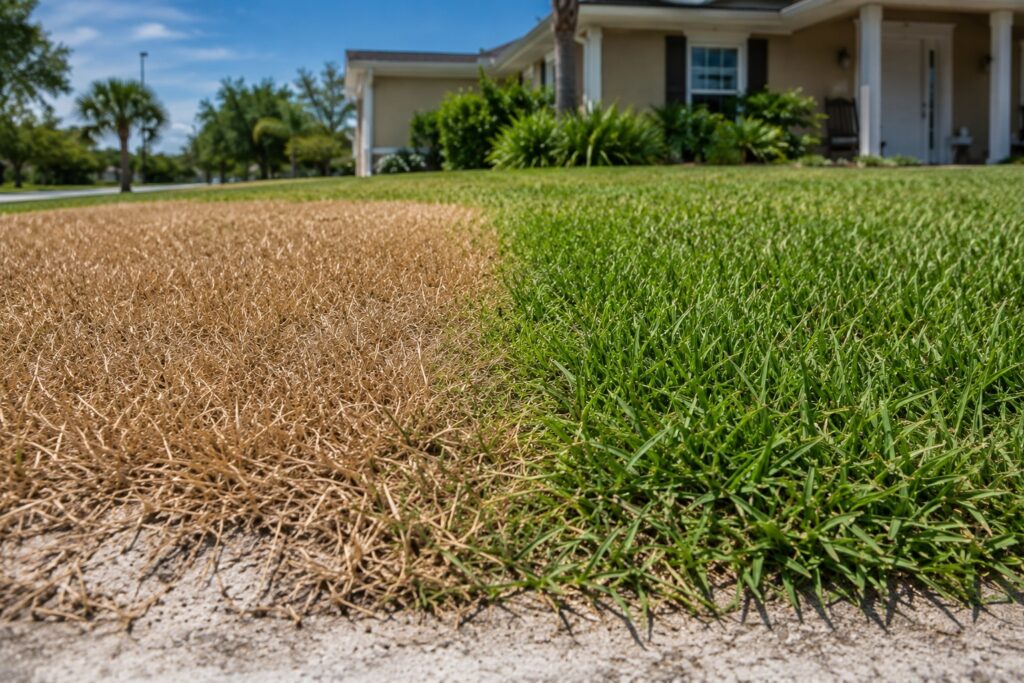
Every August, KeckCo gets the same worried phone calls from North Myrtle Beach homeowners: “My lawn was fine in June, and now it’s brown and crunchy — did I kill it?” In most cases, the answer is no. What looks like a dying lawn is often centipede grass going dormant, a normal survival response to the peak stress of coastal summer heat.
Knowing the difference between dormancy and a genuinely dying lawn can save you money, stress, and unnecessary treatments. Here’s how to tell what’s really happening in your yard this August, and what to do about it.
What lawn dormancy actually is
Dormancy is a survival mechanism. When centipede grass faces extended heat and moisture stress, it can shut down active growth and shift energy to protecting its root system rather than maintaining green leaf blades. The grass essentially goes into a protective sleep mode until conditions improve.
This is different from disease, pest damage, or true death — it’s a built-in defense that allows the grass to survive conditions it can’t actively grow through, then green back up once stress eases.
Dormant vs. dead: how to tell the difference
The simplest test is the tug test. Grab a small handful of brown grass and pull gently. If the blades come up easily with little resistance and the roots look dried out or absent, that area may have died rather than gone dormant. If the grass resists being pulled and you can see white or light-colored roots still anchored in the soil, it’s very likely just dormant.
Dormant lawns also tend to brown fairly evenly across the yard, while dead patches from disease or grub damage are usually more localized and irregular in shape.
Why August heat triggers dormancy faster here
North Myrtle Beach summers combine high air temperature with intense humidity and strong sun reflecting off sandy soil, which heats the root zone faster than it would in shadier, more moisture-retentive inland soils. Centipede grass, while well-suited to coastal conditions overall, has a relatively shallow root system that makes it more prone to heat-triggered dormancy than deeper-rooted grass types.
Salt air exposure can compound this stress along oceanfront and near-coastal properties, adding another layer of strain that pushes grass into dormancy sooner than inland Horry County lawns might experience.
What to do for a dormant lawn
1Reduce foot traffic on dormant areas — walking on stressed grass can damage the crowns that are needed for recovery.
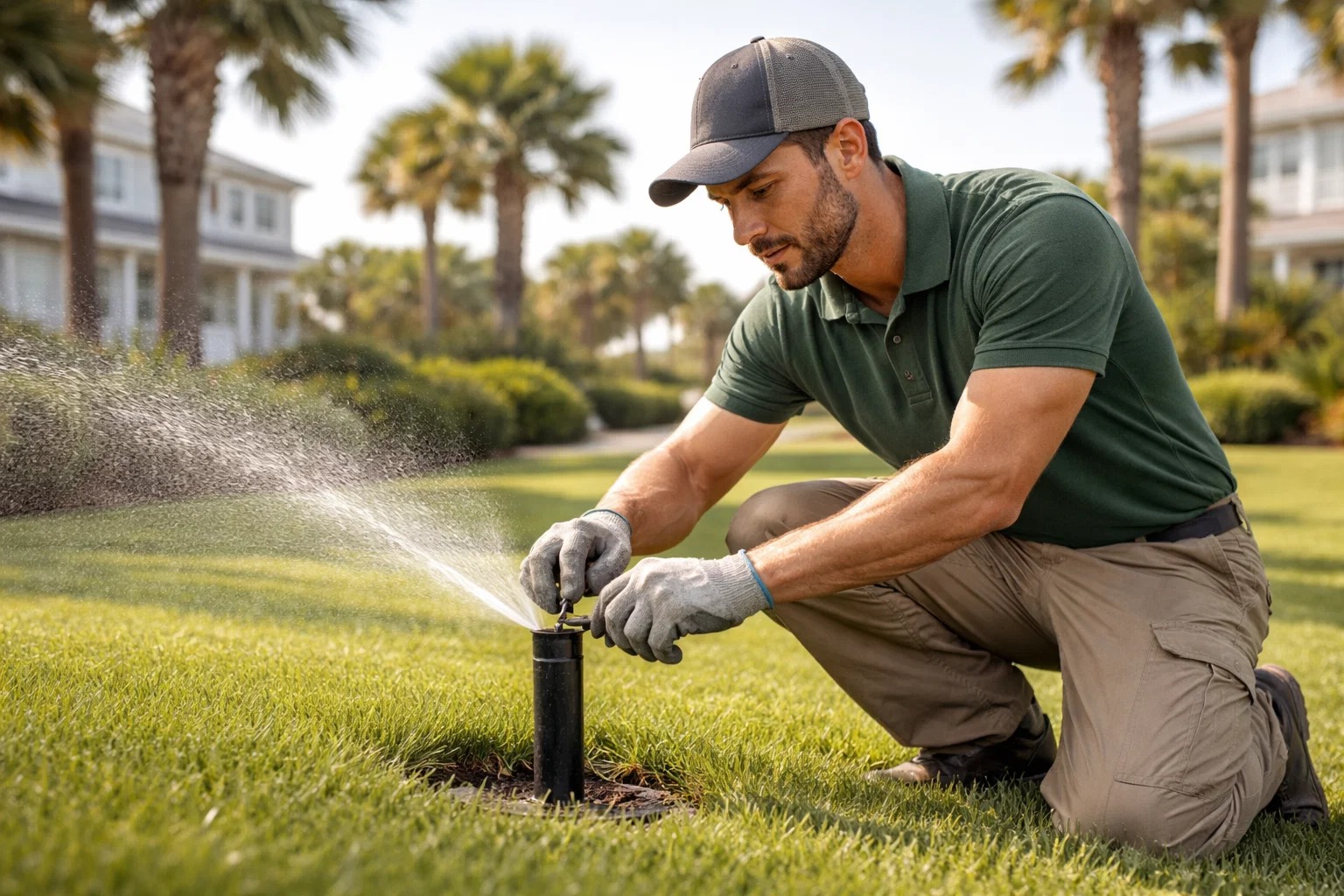
2Keep watering on a light maintenance schedule, even though the lawn isn’t actively growing, to keep roots from drying out completely.
3Hold off on fertilizer until the lawn shows signs of greening back up.
4Avoid mowing dormant grass shorter than usual; let it be until active growth resumes.
Mistakes that turn dormancy into real damage
The biggest mistake homeowners make is overwatering in an attempt to “fix” the brown color, which can actually promote fungal issues in our humid coastal climate without speeding up recovery. The second most common mistake is applying fertilizer to dormant grass, which can stress already-strained roots rather than help them.
Frequently Asked Questions
How do I know if my lawn is dormant or dead?
Try the tug test: gently pull on a handful of brown grass. If it resists and you see pale roots still anchored in the soil, it’s likely dormant. If it pulls up easily with dry, absent roots, that area may be dead and could need reseeding or sod repair.
Should I water a dormant lawn in North Myrtle Beach?
Yes, but lightly. A dormant lawn isn’t actively growing, but it still needs enough moisture to keep its roots and crowns alive. Avoid heavy daily watering, which can promote fungal problems in our humid coastal air without speeding recovery.
Will my lawn green back up after going dormant?
In most cases, yes. Dormancy is a normal stress response, and centipede grass in North Myrtle Beach typically recovers its color once temperatures moderate and consistent rainfall or proper watering resumes.
Should I fertilize a dormant lawn to help it recover faster?
No. Fertilizing dormant grass can add stress to roots that are already struggling rather than speed up recovery. Wait until you see new green growth before resuming a fertilization schedule.
Why does my lawn go dormant earlier than my neighbor’s?
Differences in soil depth, sun exposure, irrigation coverage, and proximity to salt air can all affect timing. Oceanfront and near-coastal properties in North Myrtle Beach often experience added salt stress that can trigger dormancy sooner than more inland Horry County yards.
Can I walk on a dormant lawn?
It’s best to minimize foot traffic on dormant grass. The crowns at the base of the plant are still alive and needed for recovery, and excess traffic can damage them, turning temporary dormancy into lasting bare patches.
Does KeckCo offer lawn evaluations to check if dormancy is something more serious?
Yes, KeckCo provides on-site evaluations for North Myrtle Beach, Little River, and Myrtle Beach homeowners who aren’t sure whether their lawn is dormant, drought-stressed, or dealing with a pest or disease issue. Call 843-273-0735 to schedule a visit.
A brown lawn in August doesn’t automatically mean a dead lawn — in most North Myrtle Beach yards, it’s simply centipede grass protecting itself through the hottest part of the year. With light watering, patience, and a few adjustments to your routine, most dormant lawns bounce back fully once conditions ease.
Not Sure If Your Lawn Is Dormant or in Trouble?
KeckCo Turf and Ornamental Services can take a look and give you a clear answer, backed by decades of coastal turf experience.
📞 843-273-0735 🌐 keckcoturf.com