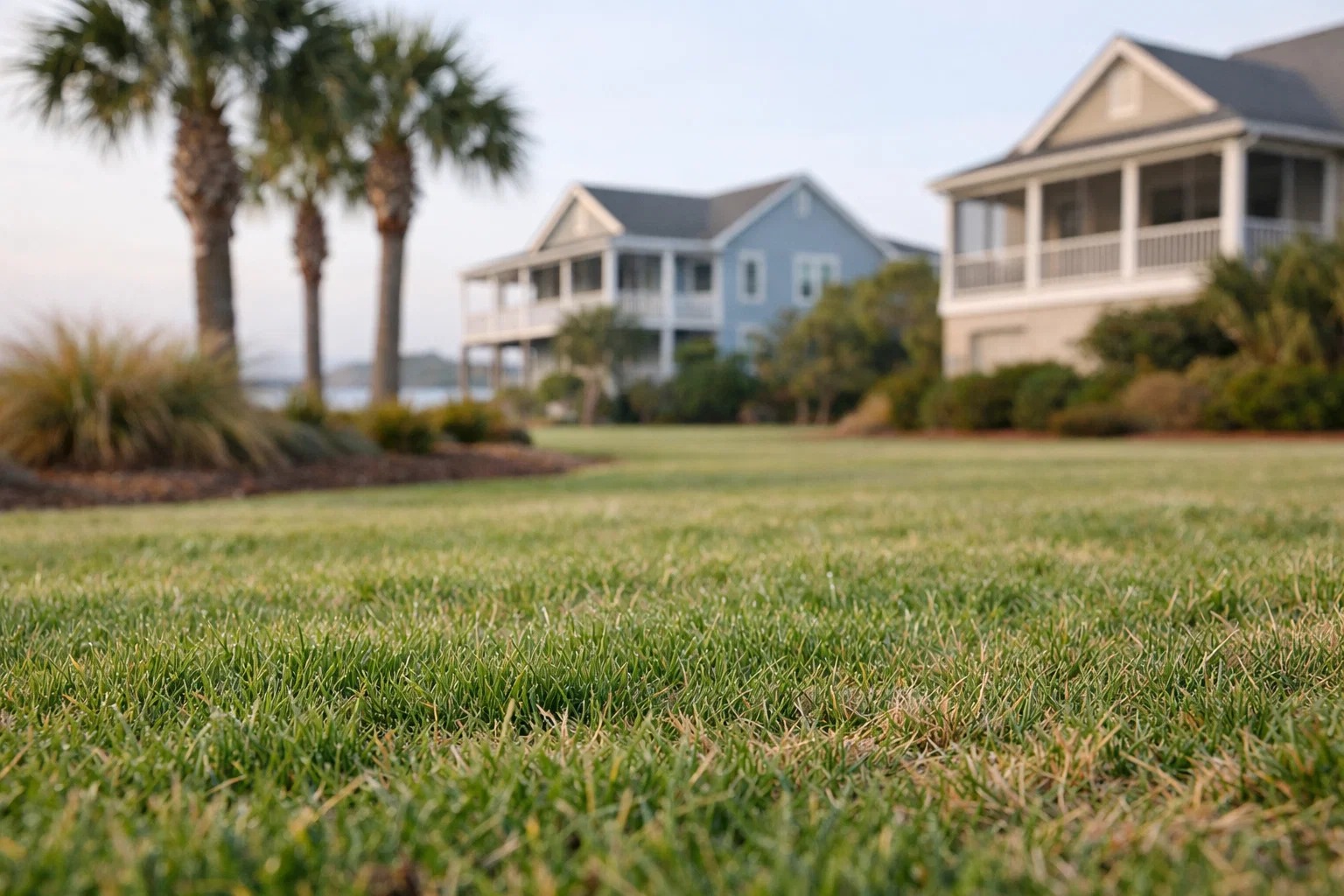

For Little River homeowners, spring doesn’t just mean warmer weather and longer days — it means the start of lawn season, and that means your irrigation system needs to come back online. After sitting idle through winter, even a well-maintained system almost always has something that needs attention before you hand it the responsibility of keeping your lawn alive through a coastal Carolina summer.
Getting your irrigation startup right in Little River is a little different from what you’d read in a national guide. The salt air, sandy soil, and mild but occasionally freezing winters along the Intracoastal Waterway corridor create specific conditions that affect how systems perform and what to look for in spring. This guide walks you through every step — from the first zone check to setting your seasonal schedule — so your system is dialed in before the heat arrives.
When to start your irrigation system in Little River
Little River sits at the northern edge of the Grand Strand, and its position along the Intracoastal Waterway means it can see brief but genuine freezing events in January and February that communities further south don’t always experience. This matters for irrigation startup timing — turning a system on too early risks a late freeze damaging exposed components, backflow preventers, and above-ground pipe sections that weren’t fully drained over winter.
The safe window for irrigation startup in Little River is typically mid-March through early April. By mid-March, the risk of hard freezes (below 28°F) drops significantly in coastal Horry County, and your warm-season turf is beginning to break dormancy and will soon need supplemental water beyond what spring rainfall provides. Waiting until the lawn shows clear signs of green-up is a reliable cue — if the grass is actively growing, it’s safe to have the system running.
Don’t be tempted to start early after a warm February week. Coastal weather along the Little River and Calabash corridor can reverse quickly, and a late freeze after you’ve pressurized the system is far more damaging than waiting an extra two weeks. Patience in March saves a repair call in April.
What winter does to irrigation systems on the coast
Coastal Little River winters are mild compared to most of the country, but they’re not without impact on irrigation systems. The combination of salt air, occasional freezes, and months of inactivity creates a predictable set of issues that show up at startup every spring — and knowing what to look for makes the process faster and prevents you from running a damaged system for weeks before noticing a problem.
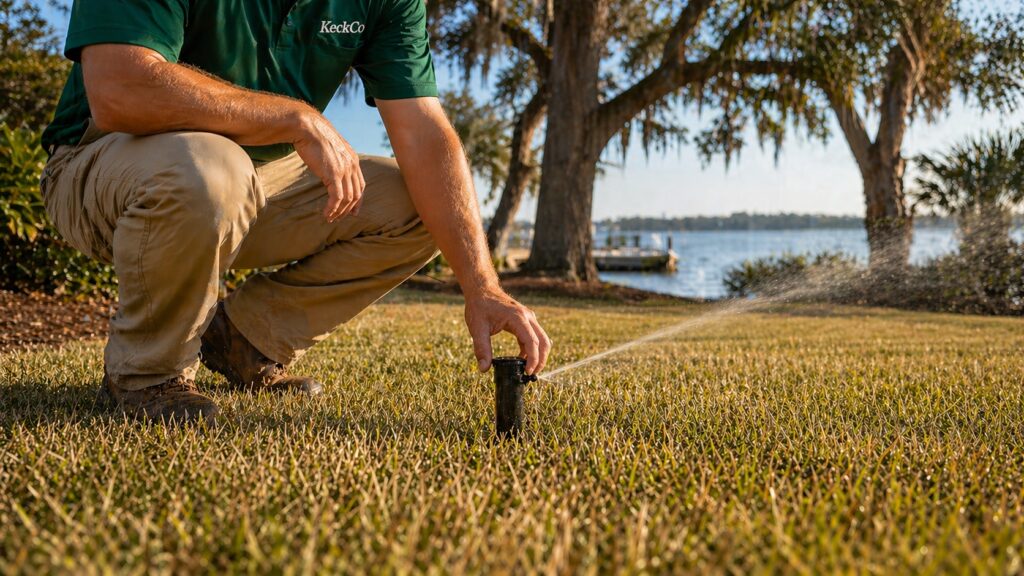
Salt air is the most underappreciated factor. Sprinkler heads, especially those with metal components, are exposed to salt-laden coastal air all winter. Corrosion on stems, nozzles, and adjustment screws is common in Little River properties, particularly those within half a mile of the waterway or ocean. A head that turned freely in October may be stiff or seized by March. Forcing a corroded head can break the stem — inspect before operating.
Sandy soil movement is another coastal-specific issue. Little River’s light sandy soil shifts with heavy rain, foot traffic, and lawn equipment over winter. Sprinkler heads that were flush with the ground in fall may be sitting too high, tilted, or partially buried by spring. Even small shifts in head position dramatically change spray coverage, creating wet spots and dry zones that stress the lawn unevenly heading into summer.
The spring inspection: zone by zone
The most important rule of irrigation startup is this: never turn the system on and walk away. Run each zone manually while you watch it. Every zone, every head, from start to finish. It takes longer than flipping the main timer on, but it’s the only way to catch problems before they run undetected for days or weeks — silently overwatering one corner of the lawn and leaving another dry.
Start at the controller. Check that the programming still matches your zones — power outages and battery backup failures over winter can reset or corrupt timer settings. Verify each zone is assigned correctly, the run times are reasonable for spring (more on that shortly), and the rain sensor is functioning. A rain sensor stuck in the “off” position will run your system right through a downpour, wasting water and waterlogging your sandy soil.
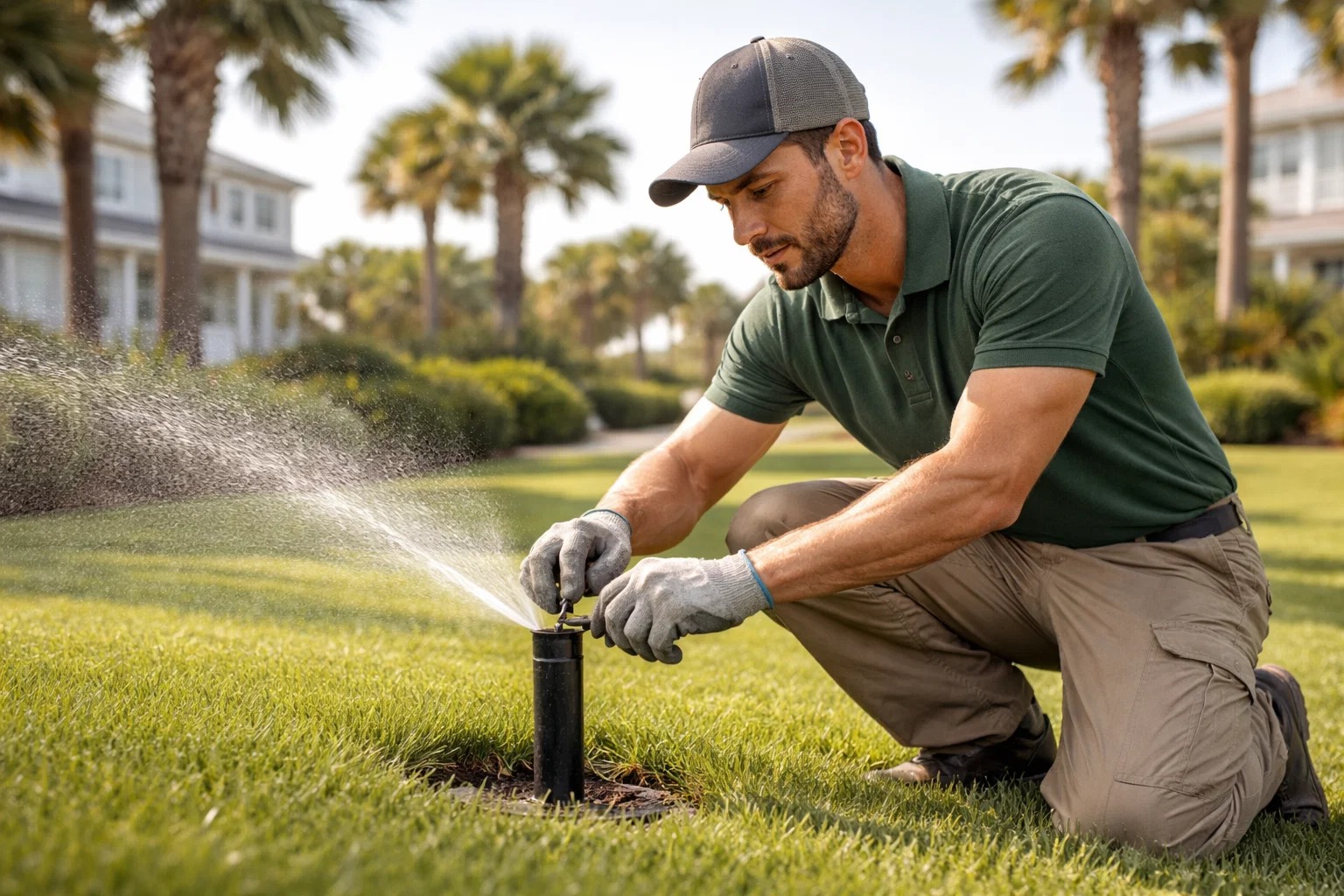
Run each zone for two to three minutes and walk the entire coverage area. Note any heads that aren’t rising, spray patterns that are off-target, areas with noticeably more or less coverage than expected, and any visible leaks at the head base or along lateral lines. Mark problem spots with a flag or stake so you can address them systematically rather than trying to remember where each issue was at the end of the walkthrough.
Checking and adjusting sprinkler heads
Sprinkler heads are the most maintenance-intensive part of any residential irrigation system, and coastal Little River properties tend to need more head attention at startup than inland properties. Between soil movement, salt corrosion, and winter foot traffic from lawn care or holiday activities, it’s common to find three to five heads per zone that need some level of adjustment or replacement at the start of every season.
Check each head for proper height — the top of the head should sit flush with the surrounding soil when retracted, not above or below it. A head sitting too high gets clipped by mower blades; a head sitting too low doesn’t pop up fully under pressure and throws a distorted spray pattern. Adjusting height usually means digging around the base, adding or removing soil, and resetting the head position — a fifteen-minute job per head that pays dividends all season.
Nozzle inspection is equally important. Remove and clean nozzles that are clogged with debris, sand, or mineral deposits from hard coastal water. Check rotation on rotor heads — a rotor that’s stuck turning in one direction will create a soaked strip and a dry arc. Most rotors have an adjustment screw that sets the arc; reset these to match your coverage area if they’ve drifted over winter. Replace any head that is cracked, won’t retract fully, or leaks around the base even when the zone is off.
Setting the right spring watering schedule
One of the most common irrigation mistakes in Little River — and across the Grand Strand — is running the same watering schedule year-round, or jumping straight from winter inactivity to a full summer schedule the moment the system starts up. Neither approach serves your lawn well. Spring watering needs are dramatically lower than summer, and overwatering in March and April is one of the primary causes of large patch fungus in St. Augustine and zoysia lawns along the coast.
A good spring starting point for Little River warm-season turf is one deep watering cycle per week, delivering approximately one inch of water across the lawn. Run the system early in the morning — between 4am and 7am is ideal — so the water has time to soak in and the grass surface dries before midday. Evening watering leaves blades wet overnight, which is exactly the condition that favors fungal disease in the humid coastal environment.
Increase frequency gradually as temperatures climb through April and May. By June, when Little River daytime highs are regularly in the upper 80s and 90s and evapotranspiration rates peak, you’ll likely be running two to three times per week. But in March, one cycle per week is almost always sufficient — and often more than enough if spring rainfall is normal. Use your rain sensor and let the system skip cycles automatically when nature does the job for you.
How Little River’s sandy soil changes your irrigation needs
Irrigation in Little River behaves differently than irrigation in most other parts of South Carolina, and it’s almost entirely because of the soil. The light, sandy, low-organic-matter soil that characterizes most of coastal Horry County drains exceptionally fast. Water moves through it quickly and doesn’t hold moisture the way clay-loam soils do. This has a direct impact on how you should program your system — and ignoring it leads to both wasted water and chronically stressed turf.
Sandy soil responds better to shorter, more frequent watering cycles than to long, infrequent ones. A single 20-minute zone run may push water below the root zone before the roots can absorb it — essentially irrigating several inches below where your turf actually lives. A more effective approach is cycle-and-soak: run each zone for eight to ten minutes, pause for 30 to 60 minutes to let the water absorb, then run again. Many modern controllers have a cycle-and-soak setting built in; if yours does, spring is the perfect time to configure it.
The fast drainage of sandy soil also means that nutrients applied after irrigation leach out more quickly than in heavier soils. This is worth keeping in mind when you’re coordinating your spring fertilization program alongside your irrigation startup — over-irrigating right after a fertilizer application pushes the product below the root zone before the turf can use it. Coordinate your first spring fertilization with a period of moderate, not heavy, irrigation.
Common irrigation startup mistakes to avoid
The single most common mistake Little River homeowners make at irrigation startup is turning the system on without inspecting it first. The assumption that “it worked fine last fall” leads to systems running with broken heads, misaligned rotors, and cracked laterals for weeks before the damage becomes visible in the lawn. A 30-minute zone-by-zone walkthrough at startup prevents problems that would otherwise go undetected until July, when the drought stress they’ve been causing is suddenly impossible to ignore.
Running the summer schedule from day one is the second major mistake. Homeowners who set their timer in June and leave it unchanged through the following spring are massively overwatering their lawns in March — pushing sandy soil past saturation, encouraging shallow rooting, and creating the wet conditions that fuel fungal disease. Set a calendar reminder each March to review and reduce your irrigation schedule for spring, and each June to scale it back up.
Neglecting the backflow preventer is a mistake that can have consequences beyond just your lawn. The backflow preventer protects your home’s drinking water supply from contamination by the irrigation system. Inspect it visually at startup for cracks, corrosion, and proper operation. In Little River, where salt air accelerates corrosion on metal fixtures, backflow preventers on older systems should be inspected by a licensed professional every two to three years.
Frequently Asked Questions
Common irrigation startup questions from Little River and coastal SC homeowners.
Mid-March to early April is the safe startup window for most Little River properties. Wait until your 10-day forecast shows no nights below 35°F before pressurizing the system. Starting too early after a mild February risks freeze damage if temperatures dip again — a common pattern in the northern Grand Strand corridor where Little River sits.
One deep watering cycle per week is the right starting point for spring in Little River. Warm-season grasses like centipede, zoysia, and St. Augustine are just breaking dormancy in March and April and don’t need frequent irrigation. Increase to two times per week in May as temperatures rise, and two to three times per week by June when the coastal heat and evaporation rates peak. Always let your rain sensor skip cycles when nature provides adequate moisture.
Yes — salt air accelerates corrosion on metal components including sprinkler head stems, nozzles, adjustment screws, and backflow preventers. Properties within half a mile of the Intracoastal Waterway or the ocean tend to see more corrosion-related issues at startup than those further inland. Inspect all metal components carefully before running the system under pressure, and consider upgrading older metal heads to corrosion-resistant models if you’re replacing them anyway.
Little River’s sandy coastal soil drains much faster than clay or loam soils. Water moves through the profile quickly, often below the root zone before it can be absorbed. The solution is a cycle-and-soak approach: run each zone for two shorter periods with a 30–60 minute gap between them rather than one long run. This gives the water time to absorb into the sandy soil rather than draining past the roots. Many modern controllers have a built-in cycle-and-soak function — check your manual or call a professional to configure it.
Start at the controller — verify programming and zone assignments haven’t been reset over winter. Then run each zone manually while you walk the coverage area, watching every head. Look for heads that aren’t rising, cracked or seized heads, off-target spray patterns, and any leaks at the base of heads or along lateral lines. Finish with a visual inspection of the backflow preventer for cracks or corrosion. The whole process takes 30–45 minutes and prevents weeks of undetected problems.
The most obvious signs are visible water pooling around a head or along a lateral line during or after a zone run. Subtler signs include one area of the lawn that stays consistently wetter or greener than surrounding areas, an unusually high water bill, or a zone that takes noticeably longer to reach operating pressure than others. In Little River’s sandy soil, lateral line leaks can sometimes appear as a strip of lush green grass above the leak location — the underground leak is essentially providing drip irrigation to the turf above it.
If your system is more than five years old, hasn’t been professionally serviced recently, or you’re finding multiple issues during your own inspection, a professional startup service is worth the investment. A technician can pressure-test the system, calibrate head output, reprogram the controller for seasonal efficiency, and identify problems that aren’t visible during a basic walkthrough. For Little River properties near the waterway, annual professional inspection is particularly worthwhile given the accelerated corrosion from salt air.
Yes — KeckCo Turf and Ornamental Services provides irrigation startup, inspection, repair, and seasonal programming services throughout Little River, North Myrtle Beach, Myrtle Beach, and the surrounding Grand Strand communities. We’re familiar with the specific challenges of coastal Horry County irrigation — sandy soil drainage, salt air corrosion, and waterway-adjacent properties. Call 843-273-0735 or visit keckcoturf.com to schedule your spring irrigation service.
Getting your irrigation system right at the start of spring sets the tone for your entire lawn season. In Little River, where sandy soil, salt air, and the unique coastal microclimate all factor in, a thoughtful startup isn’t just about turning the water back on — it’s about making sure every zone, every head, and every schedule setting is working with your property’s specific conditions instead of against them.
Thirty minutes of careful inspection in March prevents months of problems. Your lawn — and your water bill — will thank you for it.
Let KeckCo get your system ready for spring.
KeckCo Turf and Ornamental Services handles irrigation startup, inspection, head adjustment, and seasonal programming for homeowners throughout Little River and the Grand Strand. We know the sandy soil, the salt air, and the coastal conditions that make irrigation here different — and we set your system up to work with all of it. Call today to schedule your spring irrigation service.