

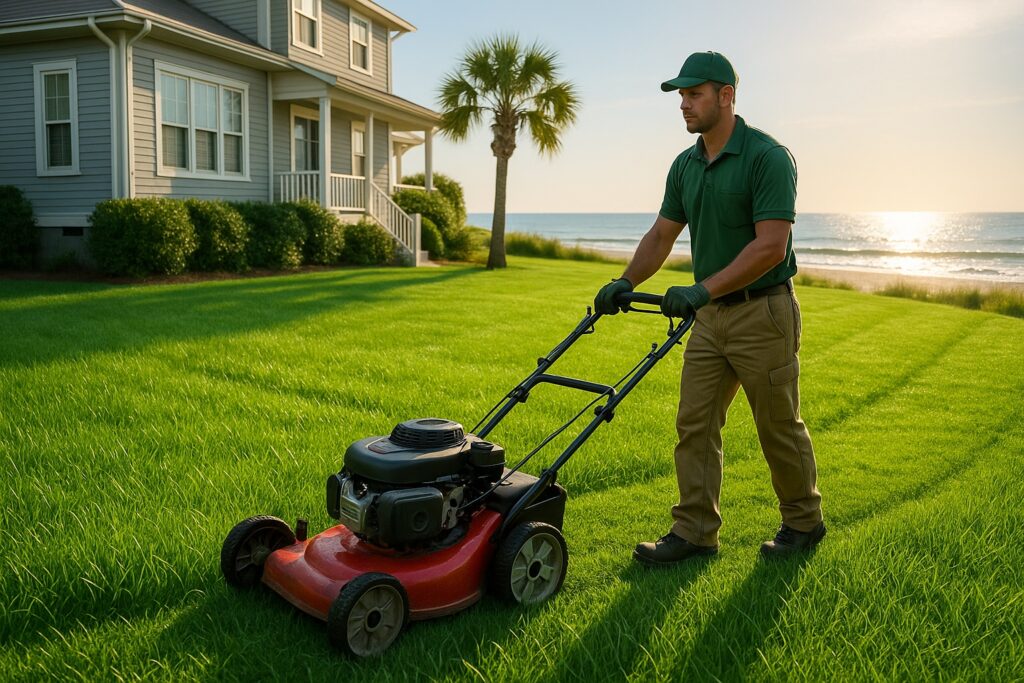
A beautiful lawn is more than just a patch of green—it’s the stage on which your entire landscape performs. A well-maintained yard frames your home, complements your hardscapes, and gives every visitor a sense of pride and care before they even reach the front door. In the coastal climate of North Myrtle Beach, where sunlight, salt air, and sandy soil create unique challenges, proper mowing plays a major role in keeping turf healthy and vibrant year-round.
Yet, even the most dedicated homeowners can make mowing mistakes that damage grass and undo months of care. Whether it’s cutting too short, mowing too often, or using dull blades, these common errors weaken your lawn’s root system and make it more vulnerable to pests, drought, and disease. At KeckCo Turf and Ornamental Services, we’ve seen it all—and we’re here to help you fix it.
Mowing Too Short: The Fastest Way to Weaken Your Lawn
The biggest mistake most homeowners make is mowing their grass too short. Known as scalping, this practice removes too much of the blade surface, where photosynthesis happens. Without enough leaf tissue, grass can’t produce the energy it needs to grow strong roots, repair itself, or resist heat and drought.
In the North Myrtle Beach area, where sandy soils already struggle to hold water, scalping amplifies stress. Cutting turf below the recommended height—typically 2.5 to 3 inches for most warm-season grasses like Bermuda, Zoysia, and Centipede—can thin out your lawn and create bare spots where weeds quickly take hold.
The fix is simple: raise your mower deck. Grass that’s slightly taller shades its own roots, keeps soil cooler, and conserves moisture. A good rule of thumb is the “one-third rule”—never remove more than one-third of the grass blade in a single mow. This approach allows steady, even growth that strengthens turf over time.
Dull Blades: Invisible Damage That Shows Later
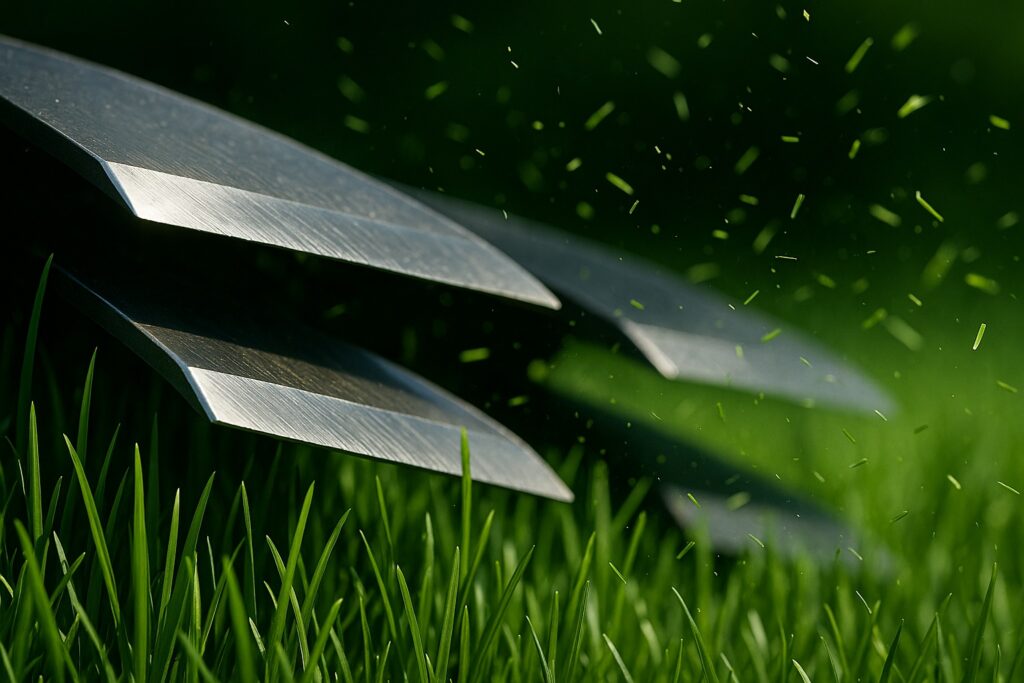
If your lawn looks ragged or dull even after mowing, your mower blades may be to blame. Dull blades don’t cut—they tear. Torn grass tips dry out, turning brown and giving the entire yard a tired, patchy look. Worse, those frayed edges become open doors for fungi and diseases.
To prevent this, sharpen mower blades every 20 to 25 hours of use, or at least three times during the growing season. The difference is dramatic: sharp blades slice cleanly through grass, sealing the edges and promoting quick recovery. It’s one of the smallest maintenance habits with the biggest visual payoff.
Ignoring Grass Type and Season
Each grass species has its own ideal mowing height, and sticking to it can mean the difference between a lawn that thrives and one that just survives.
- Bermuda grass: 1–2 inches. Mow frequently during summer when it grows fast.
- Zoysia grass: 1.5–2.5 inches. Too short, and it thins out quickly.
- Centipede grass: 2–2.5 inches. Never scalp—it struggles to recover.
- St. Augustine grass: 2.5–3.5 inches. Taller mowing helps it crowd out weeds.
Mowing at the right height based on seasonal growth patterns also matters. In spring and fall, when growth slows, raise the mower slightly to protect roots and minimize stress. In summer, maintain consistent cutting but avoid mowing during the heat of the day.
Mowing Wet Grass or with the Wrong Pattern
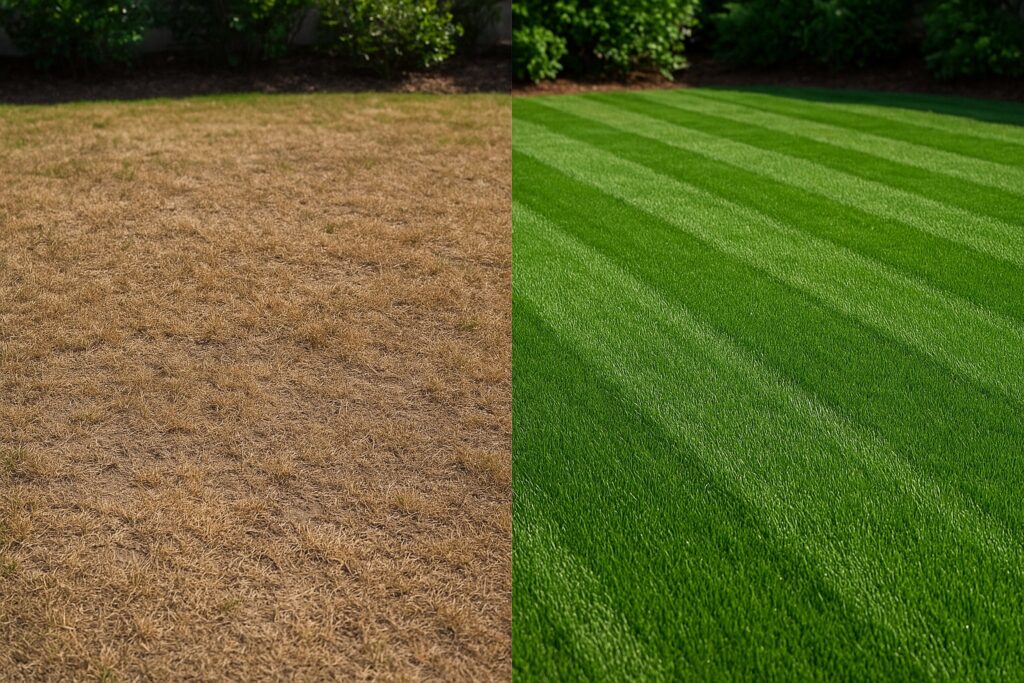
It’s tempting to mow right after rain, but wet grass clumps together, bogs down the mower, and leaves ruts in the soil. Those ruts trap moisture and suffocate roots, while clippings clumped together block sunlight. Always mow when the grass is dry enough that no water sticks to your shoes.
Additionally, vary your mowing pattern each time. Mowing in the same direction creates compacted tracks and uneven turf. Changing direction encourages upright growth and helps avoid soil compaction.
The Hidden Impact of Mowing on Lawn Health
Mowing isn’t just about appearance—it’s a critical form of turf management. Every pass of the mower affects the balance of root growth, nutrient use, and stress recovery. Cutting correctly encourages deeper roots, stronger blades, and a more resilient lawn that resists disease naturally. Done wrong, mowing weakens the entire system.
A healthy mowing routine goes hand-in-hand with proper fertilization, irrigation, and aeration. At KeckCo Turf and Ornamental Services, our team designs mowing and maintenance schedules that suit the specific soil and climate conditions of North Myrtle Beach—keeping lawns lush and green through every season.
Strong Lawns Start with Smart Mowing
If your lawn looks tired or patchy despite regular mowing, the problem might not be your grass—it might be your mowing habits. By adjusting blade height, keeping equipment sharp, and timing cuts correctly, you can turn mowing from a chore into a science that transforms your yard’s health.
Your lawn is one of your home’s most valuable assets. Treat it like an investment. A well-maintained lawn not only boosts curb appeal but also protects soil, cools your property, and creates a welcoming outdoor space for family and friends.
Let KeckCo Keep Your Lawn in Top Shape
If you want professional care that goes beyond mowing, KeckCo Turf and Ornamental Services is ready to help. We specialize in turf health, ornamental care, irrigation, and complete landscape management across North Myrtle Beach and surrounding areas. Call 843-273-0735 or visit https://keckcoturf.com/ to schedule a service or request a quote today.